

324
6 Shocks and Surprises: Refining the Elementary Model
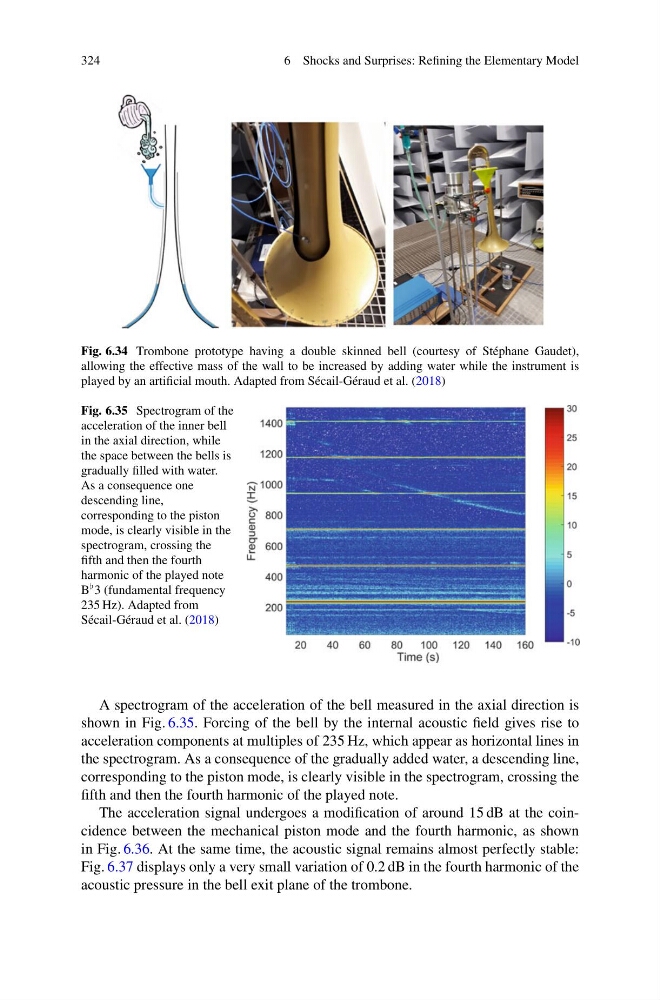
Fig. 6.34 Trombone prototype having a double skinned bell (courtesy of Stéphane Gaudet),
allowing the effective mass of the wall to be increased by adding water while the instrument is
played by an artificial mouth. Adapted from Sécail-Géraud et al. (2018)
Fig. 6.35 Spectrogram of the
acceleration of the inner bell
in the axial direction, while
the space between the bells is
gradually filled with water.
As a consequence one
descending line,
corresponding to the piston
mode, is clearly visible in the
spectrogram, crossing the
fifth and then the fourth
harmonic of the played note
B 3 (fundamental frequency
235 Hz). Adapted from
Sécail-Géraud et al. (2018)
A spectrogram of the acceleration of the bell measured in the axial direction is
shown in Fig. 6.35. Forcing of the bell by the internal acoustic field gives rise to
acceleration components at multiples of 235 Hz, which appear as horizontal lines in
the spectrogram. As a consequence of the gradually added water, a descending line,
corresponding to the piston mode, is clearly visible in the spectrogram, crossing the
fifth and then the fourth harmonic of the played note.
The acceleration signal undergoes a modification of around 15 dB at the coincidence between the mechanical piston mode and the fourth harmonic, as shown
in Fig. 6.36. At the same time, the acoustic signal remains almost perfectly stable:
Fig. 6.37 displays only a very small variation of 0.2 dB in the fourth harmonic of the
acoustic pressure in the bell exit plane of the trombone.
6 Shocks and Surprises: Refining the Elementary Model
Fig. 6.34 Trombone prototype having a double skinned bell (courtesy of Stéphane Gaudet),
allowing the effective mass of the wall to be increased by adding water while the instrument is
played by an artificial mouth. Adapted from Sécail-Géraud et al. (2018)
Fig. 6.35 Spectrogram of the
acceleration of the inner bell
in the axial direction, while
the space between the bells is
gradually filled with water.
As a consequence one
descending line,
corresponding to the piston
mode, is clearly visible in the
spectrogram, crossing the
fifth and then the fourth
harmonic of the played note
B 3 (fundamental frequency
235 Hz). Adapted from
Sécail-Géraud et al. (2018)
A spectrogram of the acceleration of the bell measured in the axial direction is
shown in Fig. 6.35. Forcing of the bell by the internal acoustic field gives rise to
acceleration components at multiples of 235 Hz, which appear as horizontal lines in
the spectrogram. As a consequence of the gradually added water, a descending line,
corresponding to the piston mode, is clearly visible in the spectrogram, crossing the
fifth and then the fourth harmonic of the played note.
The acceleration signal undergoes a modification of around 15 dB at the coincidence between the mechanical piston mode and the fourth harmonic, as shown
in Fig. 6.36. At the same time, the acoustic signal remains almost perfectly stable:
Fig. 6.37 displays only a very small variation of 0.2 dB in the fourth harmonic of the
acoustic pressure in the bell exit plane of the trombone.