

4.5 Mutes
173
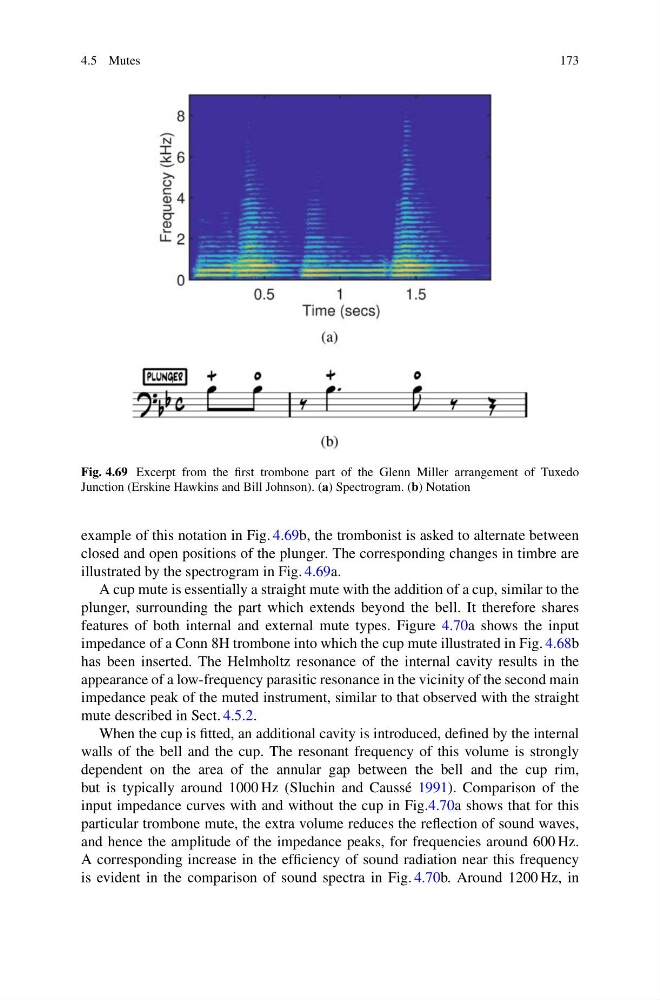
Fig. 4.69 Excerpt from the first trombone part of the Glenn Miller arrangement of Tuxedo
Junction (Erskine Hawkins and Bill Johnson). (a) Spectrogram. (b) Notation
example of this notation in Fig. 4.69b, the trombonist is asked to alternate between
closed and open positions of the plunger. The corresponding changes in timbre are
illustrated by the spectrogram in Fig. 4.69a.
A cup mute is essentially a straight mute with the addition of a cup, similar to the
plunger, surrounding the part which extends beyond the bell. It therefore shares
features of both internal and external mute types. Figure 4.70a shows the input
impedance of a Conn 8H trombone into which the cup mute illustrated in Fig. 4.68b
has been inserted. The Helmholtz resonance of the internal cavity results in the
appearance of a low-frequency parasitic resonance in the vicinity of the second main
impedance peak of the muted instrument, similar to that observed with the straight
mute described in Sect. 4.5.2.
When the cup is fitted, an additional cavity is introduced, defined by the internal
walls of the bell and the cup. The resonant frequency of this volume is strongly
dependent on the area of the annular gap between the bell and the cup rim,
but is typically around 1000 Hz (Sluchin and Caussé 1991). Comparison of the
input impedance curves with and without the cup in Fig.4.70a shows that for this
particular trombone mute, the extra volume reduces the reflection of sound waves,
and hence the amplitude of the impedance peaks, for frequencies around 600 Hz.
A corresponding increase in the efficiency of sound radiation near this frequency
is evident in the comparison of sound spectra in Fig. 4.70b. Around 1200 Hz, in
173
Fig. 4.69 Excerpt from the first trombone part of the Glenn Miller arrangement of Tuxedo
Junction (Erskine Hawkins and Bill Johnson). (a) Spectrogram. (b) Notation
example of this notation in Fig. 4.69b, the trombonist is asked to alternate between
closed and open positions of the plunger. The corresponding changes in timbre are
illustrated by the spectrogram in Fig. 4.69a.
A cup mute is essentially a straight mute with the addition of a cup, similar to the
plunger, surrounding the part which extends beyond the bell. It therefore shares
features of both internal and external mute types. Figure 4.70a shows the input
impedance of a Conn 8H trombone into which the cup mute illustrated in Fig. 4.68b
has been inserted. The Helmholtz resonance of the internal cavity results in the
appearance of a low-frequency parasitic resonance in the vicinity of the second main
impedance peak of the muted instrument, similar to that observed with the straight
mute described in Sect. 4.5.2.
When the cup is fitted, an additional cavity is introduced, defined by the internal
walls of the bell and the cup. The resonant frequency of this volume is strongly
dependent on the area of the annular gap between the bell and the cup rim,
but is typically around 1000 Hz (Sluchin and Caussé 1991). Comparison of the
input impedance curves with and without the cup in Fig.4.70a shows that for this
particular trombone mute, the extra volume reduces the reflection of sound waves,
and hence the amplitude of the impedance peaks, for frequencies around 600 Hz.
A corresponding increase in the efficiency of sound radiation near this frequency
is evident in the comparison of sound spectra in Fig. 4.70b. Around 1200 Hz, in