

62
3 System Design of Lunar Lander
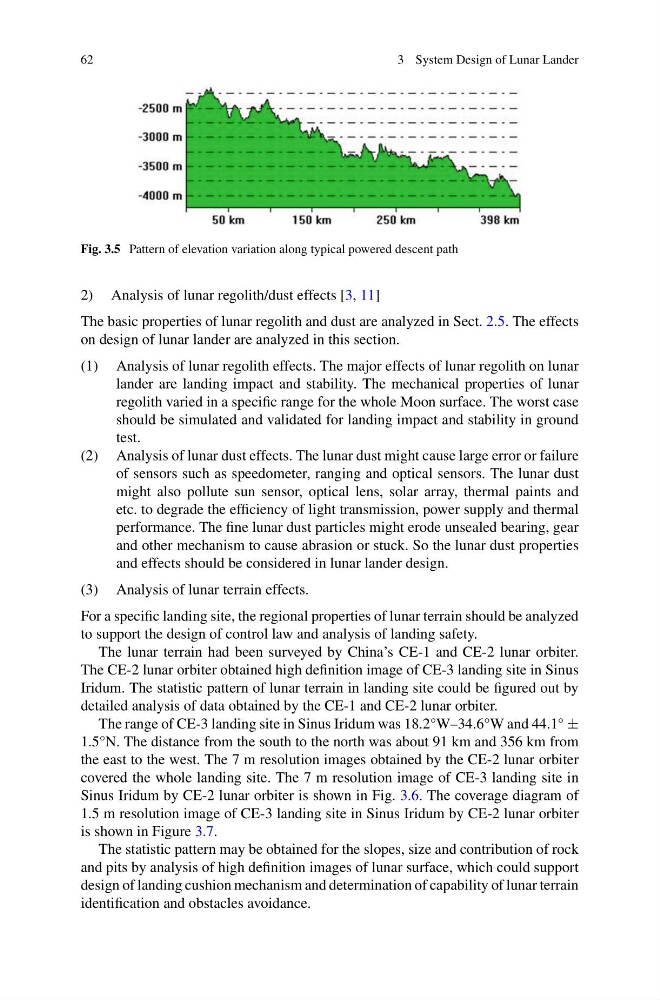
Fig. 3.5 Pattern of elevation variation along typical powered descent path
2) Analysis of lunar regolith/dust effects [3, 11]
The basic properties of lunar regolith and dust are analyzed in Sect. 2.5. The effects
on design of lunar lander are analyzed in this section.
(1) Analysis of lunar regolith effects. The major effects of lunar regolith on lunar
lander are landing impact and stability. The mechanical properties of lunar
regolith varied in a specific range for the whole Moon surface. The worst case
should be simulated and validated for landing impact and stability in ground
test.
(2) Analysis of lunar dust effects. The lunar dust might cause large error or failure
of sensors such as speedometer, ranging and optical sensors. The lunar dust
might also pollute sun sensor, optical lens, solar array, thermal paints and
etc. to degrade the efficiency of light transmission, power supply and thermal
performance. The fine lunar dust particles might erode unsealed bearing, gear
and other mechanism to cause abrasion or stuck. So the lunar dust properties
and effects should be considered in lunar lander design.
(3) Analysis of lunar terrain effects.
For a specific landing site, the regional properties of lunar terrain should be analyzed
to support the design of control law and analysis of landing safety.
The lunar terrain had been surveyed by China’s CE-1 and CE-2 lunar orbiter.
The CE-2 lunar orbiter obtained high definition image of CE-3 landing site in Sinus
Iridum. The statistic pattern of lunar terrain in landing site could be figured out by
detailed analysis of data obtained by the CE-1 and CE-2 lunar orbiter.
The range of CE-3 landing site in Sinus Iridum was 18.2°W–34.6°W and 44.1° ±
1.5°N. The distance from the south to the north was about 91 km and 356 km from
the east to the west. The 7 m resolution images obtained by the CE-2 lunar orbiter
covered the whole landing site. The 7 m resolution image of CE-3 landing site in
Sinus Iridum by CE-2 lunar orbiter is shown in Fig. 3.6. The coverage diagram of
1.5 m resolution image of CE-3 landing site in Sinus Iridum by CE-2 lunar orbiter
is shown in Figure 3.7.
The statistic pattern may be obtained for the slopes, size and contribution of rock
and pits by analysis of high definition images of lunar surface, which could support
design of landing cushion mechanism and determination of capability of lunar terrain
identification and obstacles avoidance.
3 System Design of Lunar Lander
Fig. 3.5 Pattern of elevation variation along typical powered descent path
2) Analysis of lunar regolith/dust effects [3, 11]
The basic properties of lunar regolith and dust are analyzed in Sect. 2.5. The effects
on design of lunar lander are analyzed in this section.
(1) Analysis of lunar regolith effects. The major effects of lunar regolith on lunar
lander are landing impact and stability. The mechanical properties of lunar
regolith varied in a specific range for the whole Moon surface. The worst case
should be simulated and validated for landing impact and stability in ground
test.
(2) Analysis of lunar dust effects. The lunar dust might cause large error or failure
of sensors such as speedometer, ranging and optical sensors. The lunar dust
might also pollute sun sensor, optical lens, solar array, thermal paints and
etc. to degrade the efficiency of light transmission, power supply and thermal
performance. The fine lunar dust particles might erode unsealed bearing, gear
and other mechanism to cause abrasion or stuck. So the lunar dust properties
and effects should be considered in lunar lander design.
(3) Analysis of lunar terrain effects.
For a specific landing site, the regional properties of lunar terrain should be analyzed
to support the design of control law and analysis of landing safety.
The lunar terrain had been surveyed by China’s CE-1 and CE-2 lunar orbiter.
The CE-2 lunar orbiter obtained high definition image of CE-3 landing site in Sinus
Iridum. The statistic pattern of lunar terrain in landing site could be figured out by
detailed analysis of data obtained by the CE-1 and CE-2 lunar orbiter.
The range of CE-3 landing site in Sinus Iridum was 18.2°W–34.6°W and 44.1° ±
1.5°N. The distance from the south to the north was about 91 km and 356 km from
the east to the west. The 7 m resolution images obtained by the CE-2 lunar orbiter
covered the whole landing site. The 7 m resolution image of CE-3 landing site in
Sinus Iridum by CE-2 lunar orbiter is shown in Fig. 3.6. The coverage diagram of
1.5 m resolution image of CE-3 landing site in Sinus Iridum by CE-2 lunar orbiter
is shown in Figure 3.7.
The statistic pattern may be obtained for the slopes, size and contribution of rock
and pits by analysis of high definition images of lunar surface, which could support
design of landing cushion mechanism and determination of capability of lunar terrain
identification and obstacles avoidance.