

3.3 Mission Analysis
63
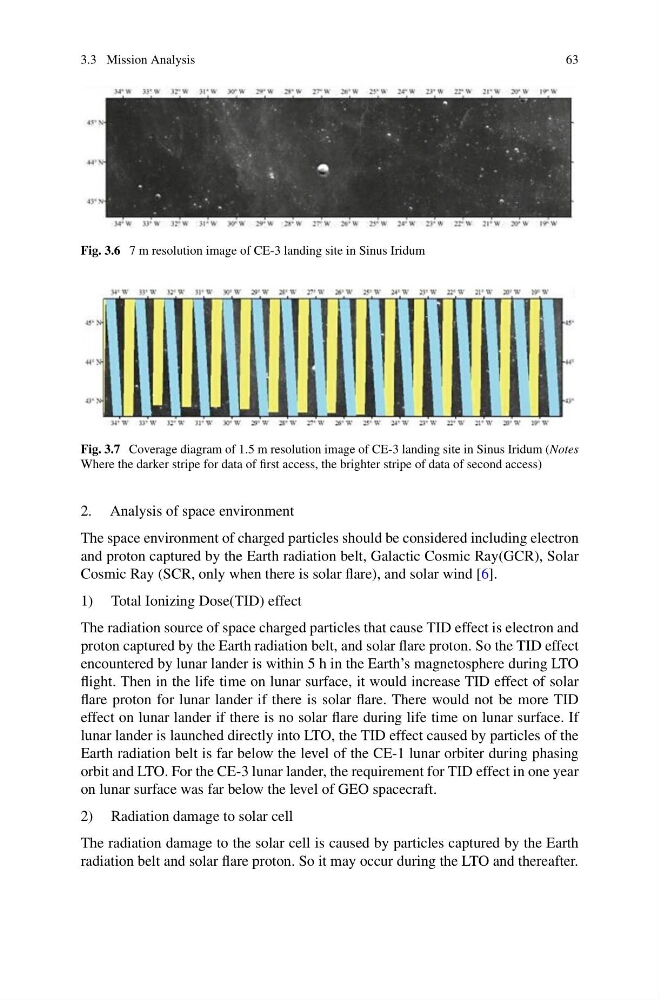
Fig. 3.6 7 m resolution image of CE-3 landing site in Sinus Iridum
Fig. 3.7 Coverage diagram of 1.5 m resolution image of CE-3 landing site in Sinus Iridum (Notes
Where the darker stripe for data of first access, the brighter stripe of data of second access)
2. Analysis of space environment
The space environment of charged particles should be considered including electron
and proton captured by the Earth radiation belt, Galactic Cosmic Ray(GCR), Solar
Cosmic Ray (SCR, only when there is solar flare), and solar wind [6].
1) Total Ionizing Dose(TID) effect
The radiation source of space charged particles that cause TID effect is electron and
proton captured by the Earth radiation belt, and solar flare proton. So the TID effect
encountered by lunar lander is within 5 h in the Earth’s magnetosphere during LTO
flight. Then in the life time on lunar surface, it would increase TID effect of solar
flare proton for lunar lander if there is solar flare. There would not be more TID
effect on lunar lander if there is no solar flare during life time on lunar surface. If
lunar lander is launched directly into LTO, the TID effect caused by particles of the
Earth radiation belt is far below the level of the CE-1 lunar orbiter during phasing
orbit and LTO. For the CE-3 lunar lander, the requirement for TID effect in one year
on lunar surface was far below the level of GEO spacecraft.
2) Radiation damage to solar cell
The radiation damage to the solar cell is caused by particles captured by the Earth
radiation belt and solar flare proton. So it may occur during the LTO and thereafter.
63
Fig. 3.6 7 m resolution image of CE-3 landing site in Sinus Iridum
Fig. 3.7 Coverage diagram of 1.5 m resolution image of CE-3 landing site in Sinus Iridum (Notes
Where the darker stripe for data of first access, the brighter stripe of data of second access)
2. Analysis of space environment
The space environment of charged particles should be considered including electron
and proton captured by the Earth radiation belt, Galactic Cosmic Ray(GCR), Solar
Cosmic Ray (SCR, only when there is solar flare), and solar wind [6].
1) Total Ionizing Dose(TID) effect
The radiation source of space charged particles that cause TID effect is electron and
proton captured by the Earth radiation belt, and solar flare proton. So the TID effect
encountered by lunar lander is within 5 h in the Earth’s magnetosphere during LTO
flight. Then in the life time on lunar surface, it would increase TID effect of solar
flare proton for lunar lander if there is solar flare. There would not be more TID
effect on lunar lander if there is no solar flare during life time on lunar surface. If
lunar lander is launched directly into LTO, the TID effect caused by particles of the
Earth radiation belt is far below the level of the CE-1 lunar orbiter during phasing
orbit and LTO. For the CE-3 lunar lander, the requirement for TID effect in one year
on lunar surface was far below the level of GEO spacecraft.
2) Radiation damage to solar cell
The radiation damage to the solar cell is caused by particles captured by the Earth
radiation belt and solar flare proton. So it may occur during the LTO and thereafter.