

16.5 Calibration and Special Testing
537
Table 16.8 Calibration and special tests of descent camera
Tests
Purpose
Flat fielding calibration
Camera dark current detection and relative radiation
calibration
Absolute radiation calibration
To establish the quantitative relationship between the
camera output signal and the radiance of the target
Interior orientation elements calibration To measure the focal length and main point location
Video test
To evaluate the image quality of dynamic camera at
different lighting and imaging distance
Automatic exposure test
To evaluate the function of automatic exposure
imaging under different light intensity
Image compression test
To evaluate image quality difference and data rate
before and after compression
Solar simulator
Camera to be tested
Ground test
equipment
Image acquisition
equipment
Temperature monitoring
equipment
Diaphragm to
eliminate stray light
Radiance
meter
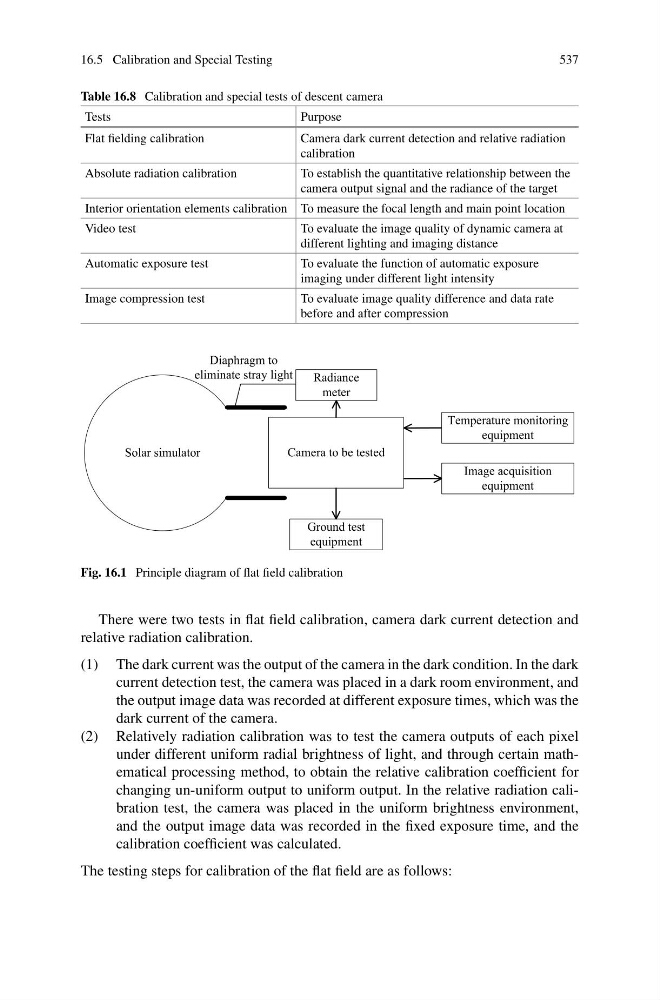
Fig. 16.1 Principle diagram of flat field calibration
There were two tests in flat field calibration, camera dark current detection and
relative radiation calibration.
(1) The dark current was the output of the camera in the dark condition. In the dark
current detection test, the camera was placed in a dark room environment, and
the output image data was recorded at different exposure times, which was the
dark current of the camera.
(2) Relatively radiation calibration was to test the camera outputs of each pixel
under different uniform radial brightness of light, and through certain mathematical processing method, to obtain the relative calibration coefficient for
changing un-uniform output to uniform output. In the relative radiation calibration test, the camera was placed in the uniform brightness environment,
and the output image data was recorded in the fixed exposure time, and the
calibration coefficient was calculated.
The testing steps for calibration of the flat field are as follows:
537
Table 16.8 Calibration and special tests of descent camera
Tests
Purpose
Flat fielding calibration
Camera dark current detection and relative radiation
calibration
Absolute radiation calibration
To establish the quantitative relationship between the
camera output signal and the radiance of the target
Interior orientation elements calibration To measure the focal length and main point location
Video test
To evaluate the image quality of dynamic camera at
different lighting and imaging distance
Automatic exposure test
To evaluate the function of automatic exposure
imaging under different light intensity
Image compression test
To evaluate image quality difference and data rate
before and after compression
Solar simulator
Camera to be tested
Ground test
equipment
Image acquisition
equipment
Temperature monitoring
equipment
Diaphragm to
eliminate stray light
Radiance
meter
Fig. 16.1 Principle diagram of flat field calibration
There were two tests in flat field calibration, camera dark current detection and
relative radiation calibration.
(1) The dark current was the output of the camera in the dark condition. In the dark
current detection test, the camera was placed in a dark room environment, and
the output image data was recorded at different exposure times, which was the
dark current of the camera.
(2) Relatively radiation calibration was to test the camera outputs of each pixel
under different uniform radial brightness of light, and through certain mathematical processing method, to obtain the relative calibration coefficient for
changing un-uniform output to uniform output. In the relative radiation calibration test, the camera was placed in the uniform brightness environment,
and the output image data was recorded in the fixed exposure time, and the
calibration coefficient was calculated.
The testing steps for calibration of the flat field are as follows: