

7.5 Typical Technology
247
Main Deceleration
Phase
Lunar Surface
Hazard Detection
and Avoidance
Hover
Phase
Hazard
Avoidance Phase
Approaching
Phase
Slow
Descent
Phase
Quick Attitude
Adjustment Phase
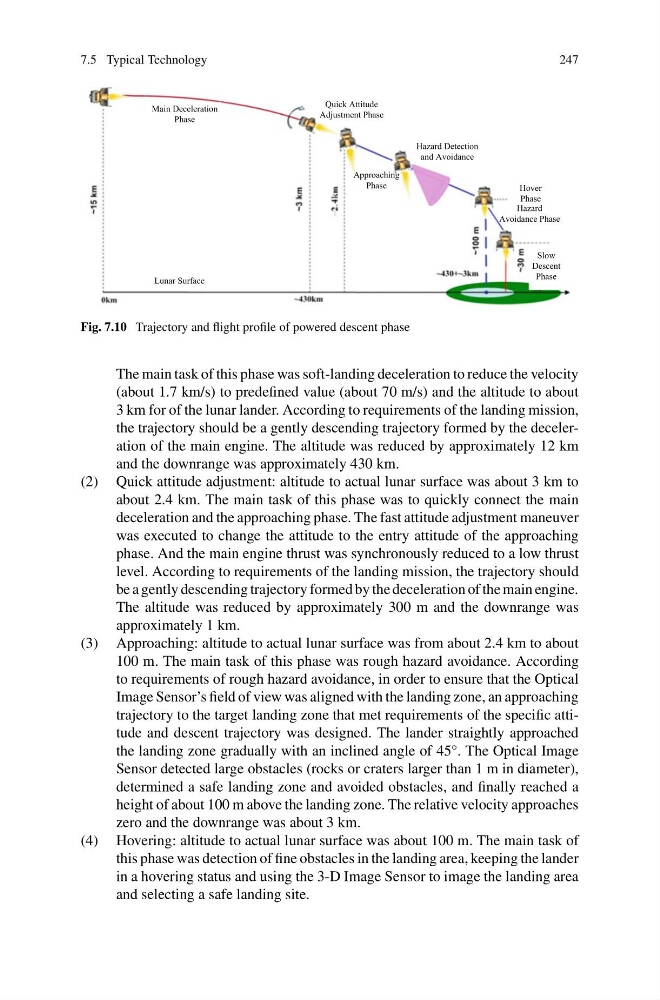
Fig. 7.10 Trajectory and flight profile of powered descent phase
The main task of this phase was soft-landing deceleration to reduce the velocity
(about 1.7 km/s) to predefined value (about 70 m/s) and the altitude to about
3 km for of the lunar lander. According to requirements of the landing mission,
the trajectory should be a gently descending trajectory formed by the deceleration of the main engine. The altitude was reduced by approximately 12 km
and the downrange was approximately 430 km.
(2) Quick attitude adjustment: altitude to actual lunar surface was about 3 km to
about 2.4 km. The main task of this phase was to quickly connect the main
deceleration and the approaching phase. The fast attitude adjustment maneuver
was executed to change the attitude to the entry attitude of the approaching
phase. And the main engine thrust was synchronously reduced to a low thrust
level. According to requirements of the landing mission, the trajectory should
be a gently descending trajectory formed by the deceleration of the main engine.
The altitude was reduced by approximately 300 m and the downrange was
approximately 1 km.
(3) Approaching: altitude to actual lunar surface was from about 2.4 km to about
100 m. The main task of this phase was rough hazard avoidance. According
to requirements of rough hazard avoidance, in order to ensure that the Optical
Image Sensor’s field of view was aligned with the landing zone, an approaching
trajectory to the target landing zone that met requirements of the specific attitude and descent trajectory was designed. The lander straightly approached
the landing zone gradually with an inclined angle of 45°. The Optical Image
Sensor detected large obstacles (rocks or craters larger than 1 m in diameter),
determined a safe landing zone and avoided obstacles, and finally reached a
height of about 100 m above the landing zone. The relative velocity approaches
zero and the downrange was about 3 km.
(4) Hovering: altitude to actual lunar surface was about 100 m. The main task of
this phase was detection of fine obstacles in the landing area, keeping the lander
in a hovering status and using the 3-D Image Sensor to image the landing area
and selecting a safe landing site.
247
Main Deceleration
Phase
Lunar Surface
Hazard Detection
and Avoidance
Hover
Phase
Hazard
Avoidance Phase
Approaching
Phase
Slow
Descent
Phase
Quick Attitude
Adjustment Phase
Fig. 7.10 Trajectory and flight profile of powered descent phase
The main task of this phase was soft-landing deceleration to reduce the velocity
(about 1.7 km/s) to predefined value (about 70 m/s) and the altitude to about
3 km for of the lunar lander. According to requirements of the landing mission,
the trajectory should be a gently descending trajectory formed by the deceleration of the main engine. The altitude was reduced by approximately 12 km
and the downrange was approximately 430 km.
(2) Quick attitude adjustment: altitude to actual lunar surface was about 3 km to
about 2.4 km. The main task of this phase was to quickly connect the main
deceleration and the approaching phase. The fast attitude adjustment maneuver
was executed to change the attitude to the entry attitude of the approaching
phase. And the main engine thrust was synchronously reduced to a low thrust
level. According to requirements of the landing mission, the trajectory should
be a gently descending trajectory formed by the deceleration of the main engine.
The altitude was reduced by approximately 300 m and the downrange was
approximately 1 km.
(3) Approaching: altitude to actual lunar surface was from about 2.4 km to about
100 m. The main task of this phase was rough hazard avoidance. According
to requirements of rough hazard avoidance, in order to ensure that the Optical
Image Sensor’s field of view was aligned with the landing zone, an approaching
trajectory to the target landing zone that met requirements of the specific attitude and descent trajectory was designed. The lander straightly approached
the landing zone gradually with an inclined angle of 45°. The Optical Image
Sensor detected large obstacles (rocks or craters larger than 1 m in diameter),
determined a safe landing zone and avoided obstacles, and finally reached a
height of about 100 m above the landing zone. The relative velocity approaches
zero and the downrange was about 3 km.
(4) Hovering: altitude to actual lunar surface was about 100 m. The main task of
this phase was detection of fine obstacles in the landing area, keeping the lander
in a hovering status and using the 3-D Image Sensor to image the landing area
and selecting a safe landing site.