

158
5 Thermal Control Technology of Lunar Lander
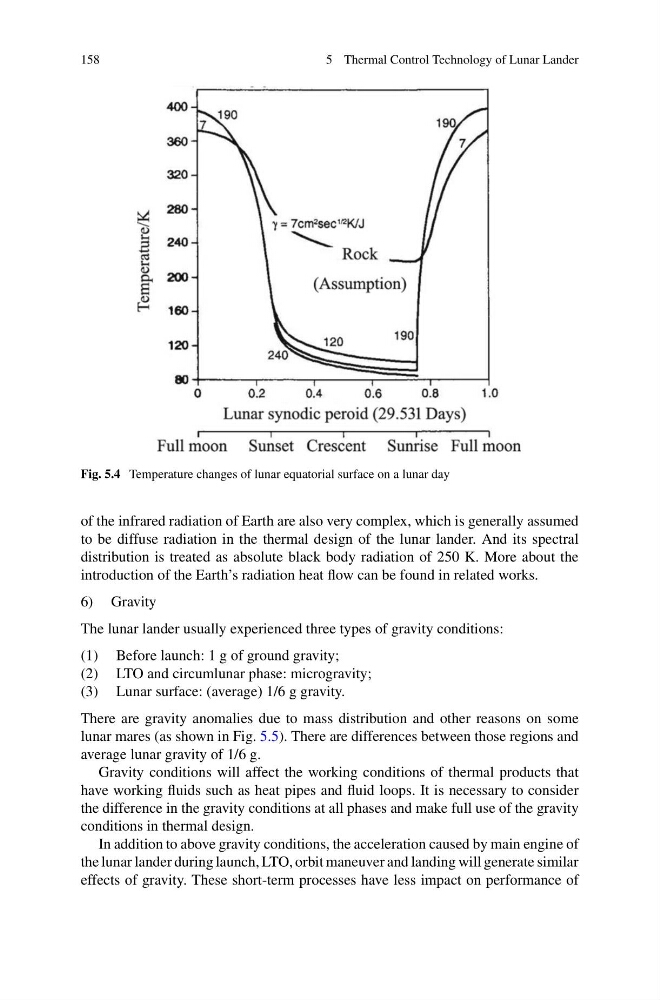
Fig. 5.4 Temperature changes of lunar equatorial surface on a lunar day
of the infrared radiation of Earth are also very complex, which is generally assumed
to be diffuse radiation in the thermal design of the lunar lander. And its spectral
distribution is treated as absolute black body radiation of 250 K. More about the
introduction of the Earth’s radiation heat flow can be found in related works.
6) Gravity
The lunar lander usually experienced three types of gravity conditions:
(1) Before launch: 1 g of ground gravity;
(2) LTO and circumlunar phase: microgravity;
(3) Lunar surface: (average) 1/6 g gravity.
There are gravity anomalies due to mass distribution and other reasons on some
lunar mares (as shown in Fig. 5.5). There are differences between those regions and
average lunar gravity of 1/6 g.
Gravity conditions will affect the working conditions of thermal products that
have working fluids such as heat pipes and fluid loops. It is necessary to consider
the difference in the gravity conditions at all phases and make full use of the gravity
conditions in thermal design.
In addition to above gravity conditions, the acceleration caused by main engine of
the lunar lander during launch, LTO, orbit maneuver and landing will generate similar
effects of gravity. These short-term processes have less impact on performance of
5 Thermal Control Technology of Lunar Lander
Fig. 5.4 Temperature changes of lunar equatorial surface on a lunar day
of the infrared radiation of Earth are also very complex, which is generally assumed
to be diffuse radiation in the thermal design of the lunar lander. And its spectral
distribution is treated as absolute black body radiation of 250 K. More about the
introduction of the Earth’s radiation heat flow can be found in related works.
6) Gravity
The lunar lander usually experienced three types of gravity conditions:
(1) Before launch: 1 g of ground gravity;
(2) LTO and circumlunar phase: microgravity;
(3) Lunar surface: (average) 1/6 g gravity.
There are gravity anomalies due to mass distribution and other reasons on some
lunar mares (as shown in Fig. 5.5). There are differences between those regions and
average lunar gravity of 1/6 g.
Gravity conditions will affect the working conditions of thermal products that
have working fluids such as heat pipes and fluid loops. It is necessary to consider
the difference in the gravity conditions at all phases and make full use of the gravity
conditions in thermal design.
In addition to above gravity conditions, the acceleration caused by main engine of
the lunar lander during launch, LTO, orbit maneuver and landing will generate similar
effects of gravity. These short-term processes have less impact on performance of