

5.3 Thermal Technical Characteristics
159
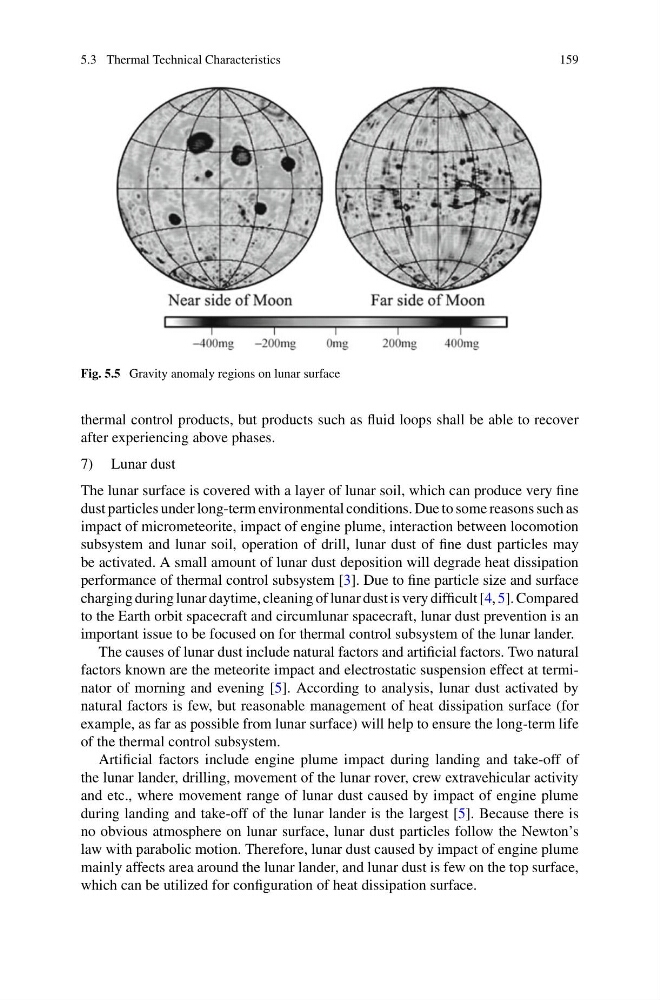
Fig. 5.5 Gravity anomaly regions on lunar surface
thermal control products, but products such as fluid loops shall be able to recover
after experiencing above phases.
7) Lunar dust
The lunar surface is covered with a layer of lunar soil, which can produce very fine
dust particles under long-term environmental conditions. Due to some reasons such as
impact of micrometeorite, impact of engine plume, interaction between locomotion
subsystem and lunar soil, operation of drill, lunar dust of fine dust particles may
be activated. A small amount of lunar dust deposition will degrade heat dissipation
performance of thermal control subsystem [3]. Due to fine particle size and surface
charging during lunar daytime, cleaning of lunar dust is very difficult [4, 5]. Compared
to the Earth orbit spacecraft and circumlunar spacecraft, lunar dust prevention is an
important issue to be focused on for thermal control subsystem of the lunar lander.
The causes of lunar dust include natural factors and artificial factors. Two natural
factors known are the meteorite impact and electrostatic suspension effect at terminator of morning and evening [5]. According to analysis, lunar dust activated by
natural factors is few, but reasonable management of heat dissipation surface (for
example, as far as possible from lunar surface) will help to ensure the long-term life
of the thermal control subsystem.
Artificial factors include engine plume impact during landing and take-off of
the lunar lander, drilling, movement of the lunar rover, crew extravehicular activity
and etc., where movement range of lunar dust caused by impact of engine plume
during landing and take-off of the lunar lander is the largest [5]. Because there is
no obvious atmosphere on lunar surface, lunar dust particles follow the Newton’s
law with parabolic motion. Therefore, lunar dust caused by impact of engine plume
mainly affects area around the lunar lander, and lunar dust is few on the top surface,
which can be utilized for configuration of heat dissipation surface.
159
Fig. 5.5 Gravity anomaly regions on lunar surface
thermal control products, but products such as fluid loops shall be able to recover
after experiencing above phases.
7) Lunar dust
The lunar surface is covered with a layer of lunar soil, which can produce very fine
dust particles under long-term environmental conditions. Due to some reasons such as
impact of micrometeorite, impact of engine plume, interaction between locomotion
subsystem and lunar soil, operation of drill, lunar dust of fine dust particles may
be activated. A small amount of lunar dust deposition will degrade heat dissipation
performance of thermal control subsystem [3]. Due to fine particle size and surface
charging during lunar daytime, cleaning of lunar dust is very difficult [4, 5]. Compared
to the Earth orbit spacecraft and circumlunar spacecraft, lunar dust prevention is an
important issue to be focused on for thermal control subsystem of the lunar lander.
The causes of lunar dust include natural factors and artificial factors. Two natural
factors known are the meteorite impact and electrostatic suspension effect at terminator of morning and evening [5]. According to analysis, lunar dust activated by
natural factors is few, but reasonable management of heat dissipation surface (for
example, as far as possible from lunar surface) will help to ensure the long-term life
of the thermal control subsystem.
Artificial factors include engine plume impact during landing and take-off of
the lunar lander, drilling, movement of the lunar rover, crew extravehicular activity
and etc., where movement range of lunar dust caused by impact of engine plume
during landing and take-off of the lunar lander is the largest [5]. Because there is
no obvious atmosphere on lunar surface, lunar dust particles follow the Newton’s
law with parabolic motion. Therefore, lunar dust caused by impact of engine plume
mainly affects area around the lunar lander, and lunar dust is few on the top surface,
which can be utilized for configuration of heat dissipation surface.