

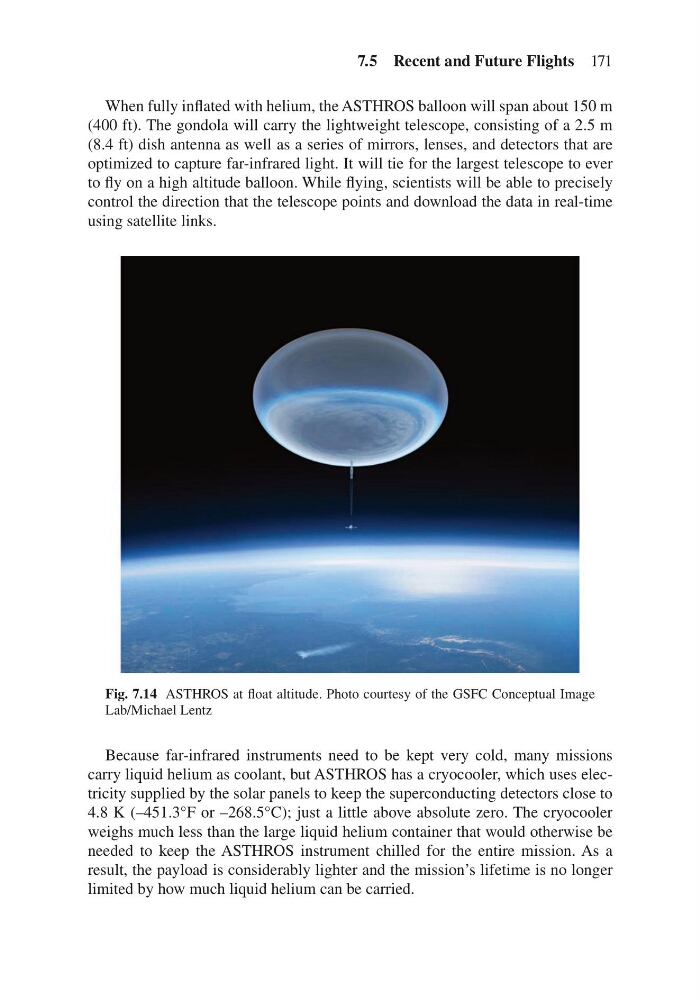
Fig. 7.14 ASTHROS at float altitude. Photo courtesy of the GSFC Conceptual Image
Lab/Michael Lentz
When fully inflated with helium, the ASTHROS balloon will span about 150 m
(400 ft). The gondola will carry the lightweight telescope, consisting of a 2.5 m
(8.4 ft) dish antenna as well as a series of mirrors, lenses, and detectors that are
optimized to capture far-infrared light. It will tie for the largest telescope to ever
to fly on a high altitude balloon. While flying, scientists will be able to precisely
control the direction that the telescope points and download the data in real-time
using satellite links.
Because far-infrared instruments need to be kept very cold, many missions
carry liquid helium as coolant, but ASTHROS has a cryocooler, which uses electricity supplied by the solar panels to keep the superconducting detectors close to
4.8 K (–451.3°F or –268.5°C); just a little above absolute zero. The cryocooler
weighs much less than the large liquid helium container that would otherwise be
needed to keep the ASTHROS instrument chilled for the entire mission. As a
result, the payload is considerably lighter and the mission’s lifetime is no longer
limited by how much liquid helium can be carried.
7.5 Recent and Future Flights 171
Lab/Michael Lentz
When fully inflated with helium, the ASTHROS balloon will span about 150 m
(400 ft). The gondola will carry the lightweight telescope, consisting of a 2.5 m
(8.4 ft) dish antenna as well as a series of mirrors, lenses, and detectors that are
optimized to capture far-infrared light. It will tie for the largest telescope to ever
to fly on a high altitude balloon. While flying, scientists will be able to precisely
control the direction that the telescope points and download the data in real-time
using satellite links.
Because far-infrared instruments need to be kept very cold, many missions
carry liquid helium as coolant, but ASTHROS has a cryocooler, which uses electricity supplied by the solar panels to keep the superconducting detectors close to
4.8 K (–451.3°F or –268.5°C); just a little above absolute zero. The cryocooler
weighs much less than the large liquid helium container that would otherwise be
needed to keep the ASTHROS instrument chilled for the entire mission. As a
result, the payload is considerably lighter and the mission’s lifetime is no longer
limited by how much liquid helium can be carried.
7.5 Recent and Future Flights 171