

reach an altitude of about 40 km (130,000 ft). Though still well below the boundary
of space at 100 km (62 mi), this will be sufficiently high to observe a region of the
electromagnetic spectrum that is inaccessible to telescopes on the ground.
In August 2020, engineers at JPL began integration and testing of the telescope and
its cooling and electronic systems subsystems to verify that they worked as expected.
By testing technologies and providing training for the next generation of engineers
and scientists, the balloon flight will pave the way for future space missions.
ASTHROS will measure the motion and speed of gas around newly formed
stars. During flight, it will study four main targets, including two star-forming
regions in the Milky Way. It will also (for the first time) detect and map the presence of two specific types of nitrogen ions which would reveal places where winds
from massive stars and supernova explosions have reshaped the gas clouds within
star-forming regions. In a process called stellar feedback, such violent outbursts
can, over millions of years, disperse the surrounding material and impede or halt
the process of star formation. But stellar feedback can also cause material to clump
together, accelerating star formation. Without this process, all the available gas and
dust in galaxies like our own would have coalesced into stars long ago. The mission
will provide the first detailed 3D maps of the density, speed and motion of gas in
these regions. The team hopes to gain insight into how stellar feedback works, and
to provide new information to refine computer simulations of how a galaxy evolves.
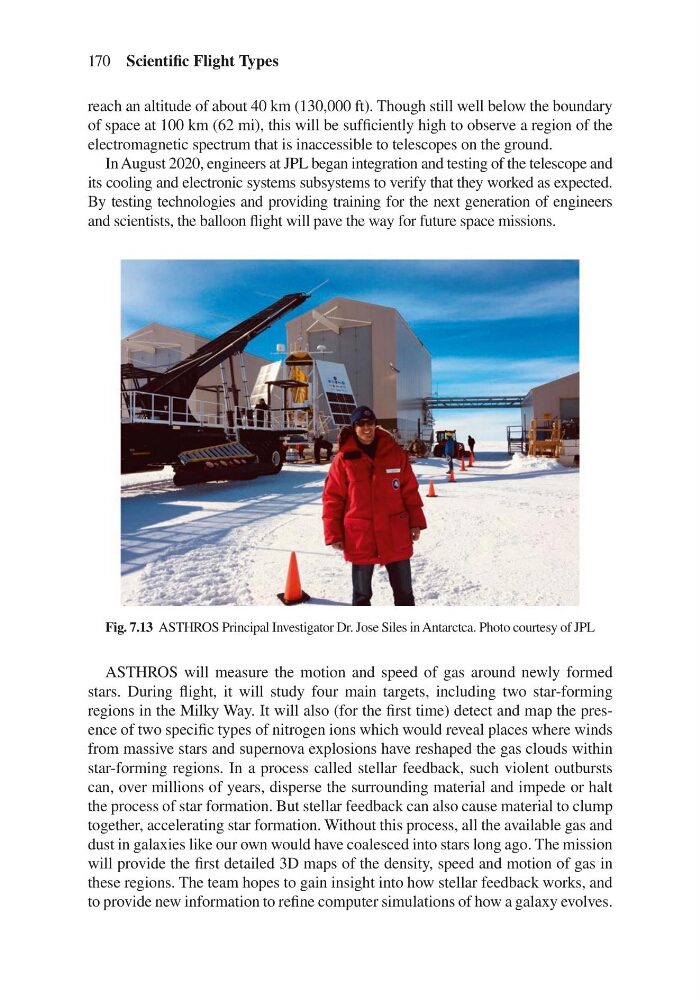
Fig. 7.13 ASTHROS Principal Investigator Dr. Jose Siles in Antarctca. Photo courtesy of JPL
170 Scientific Flight Types
of space at 100 km (62 mi), this will be sufficiently high to observe a region of the
electromagnetic spectrum that is inaccessible to telescopes on the ground.
In August 2020, engineers at JPL began integration and testing of the telescope and
its cooling and electronic systems subsystems to verify that they worked as expected.
By testing technologies and providing training for the next generation of engineers
and scientists, the balloon flight will pave the way for future space missions.
ASTHROS will measure the motion and speed of gas around newly formed
stars. During flight, it will study four main targets, including two star-forming
regions in the Milky Way. It will also (for the first time) detect and map the presence of two specific types of nitrogen ions which would reveal places where winds
from massive stars and supernova explosions have reshaped the gas clouds within
star-forming regions. In a process called stellar feedback, such violent outbursts
can, over millions of years, disperse the surrounding material and impede or halt
the process of star formation. But stellar feedback can also cause material to clump
together, accelerating star formation. Without this process, all the available gas and
dust in galaxies like our own would have coalesced into stars long ago. The mission
will provide the first detailed 3D maps of the density, speed and motion of gas in
these regions. The team hopes to gain insight into how stellar feedback works, and
to provide new information to refine computer simulations of how a galaxy evolves.
Fig. 7.13 ASTHROS Principal Investigator Dr. Jose Siles in Antarctca. Photo courtesy of JPL
170 Scientific Flight Types