

14 Fundamentals of Advanced Materials …
411
Epoxy
resins
Glycidyl
ether type
Cycloaliphatic
type
Bisphenol
A type
Bisphenol
F type
Alcoholic glycidyl
ether type
Glycidyl
rubber type
Glycidyl
amine type
Novolac
type
Naphthalene
type
Dicyclopenthadiene
type
Non-reworkable
type
Reworkable
type
In liquid or solid state, for general applications such as
coatings, electric, and reactive intermediates.
Higher molecular weight grades have better toughness.
In liquid state, for applications that require
excellent workability and moldability
In solid or semi-solid state, for applications that require
excellent heat resistance such as EMC.
In liquid state with low viscosity, for applications
that require low viscosity and excellent flexibility
after cured such as coating
In liquid or in solvent state, for applications that require
thermal shock resistance and flexibility after cured.
In semi-solid state, for aircraft and aerospace applications
where super heat resistance is required.
In solid or liquid state, for applications that require excellent
heat resistance, water resistance, toughness and adherence.
In solid state, for applications that require
excellent heat resistance, water resistance,
toughness and adherence.
In liquid state with low viscosity, for
applications that require low viscosity,
UV-stability, and low ion contamination.
In liquid state, for applications that require
reworkability after cured.
Siloxirane type
In viscous liquid state, for applications that require excellent
heat resistance and chemical resistance such as in aerospace
appliications
Biphenol
type
In crystal solid state, for applications that require low melt
viscosity, low moisture uptake, and good heat resistance
New epoxy type
under development
Towards low melt viscosity, low moisture uptake,
and excellent heat resistance.
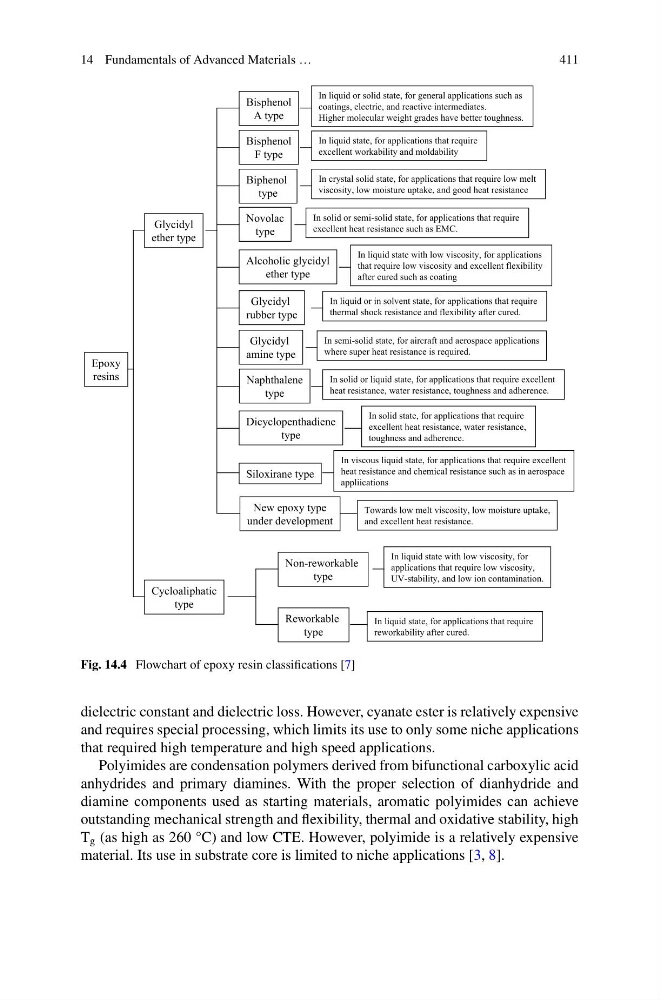
Fig. 14.4 Flowchart of epoxy resin classifications [7]
dielectric constant and dielectric loss. However, cyanate ester is relatively expensive
and requires special processing, which limits its use to only some niche applications
that required high temperature and high speed applications.
Polyimides are condensation polymers derived from bifunctional carboxylic acid
anhydrides and primary diamines. With the proper selection of dianhydride and
diamine components used as starting materials, aromatic polyimides can achieve
outstanding mechanical strength and flexibility, thermal and oxidative stability, high
T g (as high as 260 °C) and low CTE. However, polyimide is a relatively expensive
material. Its use in substrate core is limited to niche applications [3, 8].
411
Epoxy
resins
Glycidyl
ether type
Cycloaliphatic
type
Bisphenol
A type
Bisphenol
F type
Alcoholic glycidyl
ether type
Glycidyl
rubber type
Glycidyl
amine type
Novolac
type
Naphthalene
type
Dicyclopenthadiene
type
Non-reworkable
type
Reworkable
type
In liquid or solid state, for general applications such as
coatings, electric, and reactive intermediates.
Higher molecular weight grades have better toughness.
In liquid state, for applications that require
excellent workability and moldability
In solid or semi-solid state, for applications that require
excellent heat resistance such as EMC.
In liquid state with low viscosity, for applications
that require low viscosity and excellent flexibility
after cured such as coating
In liquid or in solvent state, for applications that require
thermal shock resistance and flexibility after cured.
In semi-solid state, for aircraft and aerospace applications
where super heat resistance is required.
In solid or liquid state, for applications that require excellent
heat resistance, water resistance, toughness and adherence.
In solid state, for applications that require
excellent heat resistance, water resistance,
toughness and adherence.
In liquid state with low viscosity, for
applications that require low viscosity,
UV-stability, and low ion contamination.
In liquid state, for applications that require
reworkability after cured.
Siloxirane type
In viscous liquid state, for applications that require excellent
heat resistance and chemical resistance such as in aerospace
appliications
Biphenol
type
In crystal solid state, for applications that require low melt
viscosity, low moisture uptake, and good heat resistance
New epoxy type
under development
Towards low melt viscosity, low moisture uptake,
and excellent heat resistance.
Fig. 14.4 Flowchart of epoxy resin classifications [7]
dielectric constant and dielectric loss. However, cyanate ester is relatively expensive
and requires special processing, which limits its use to only some niche applications
that required high temperature and high speed applications.
Polyimides are condensation polymers derived from bifunctional carboxylic acid
anhydrides and primary diamines. With the proper selection of dianhydride and
diamine components used as starting materials, aromatic polyimides can achieve
outstanding mechanical strength and flexibility, thermal and oxidative stability, high
T g (as high as 260 °C) and low CTE. However, polyimide is a relatively expensive
material. Its use in substrate core is limited to niche applications [3, 8].