

410
S. Shi et al.
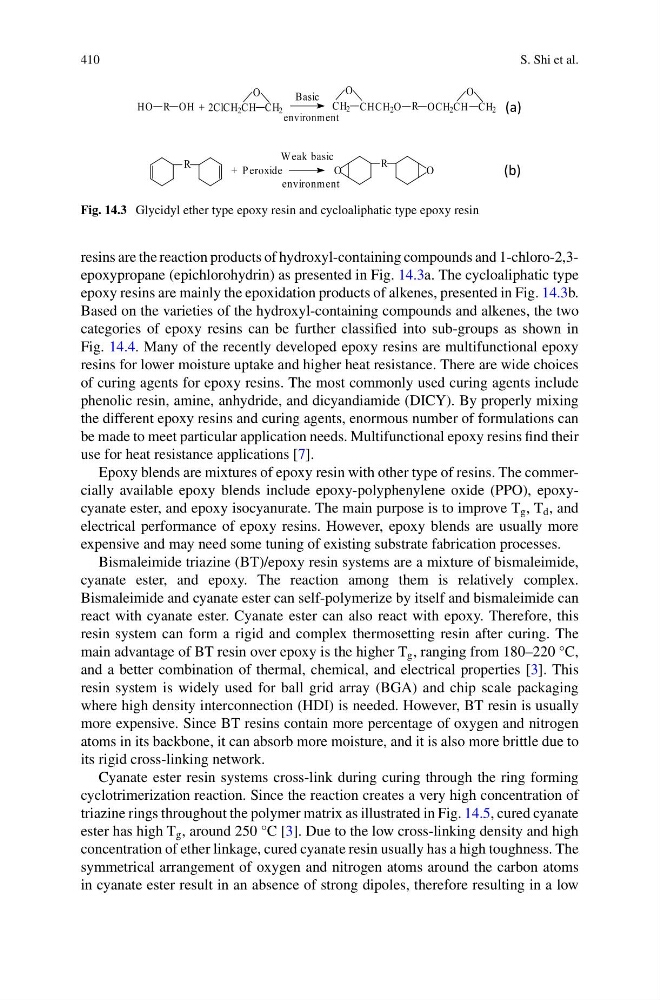
Fig. 14.3 Glycidyl ether type epoxy resin and cycloaliphatic type epoxy resin
resins are the reaction products of hydroxyl-containing compounds and 1-chloro-2,3epoxypropane (epichlorohydrin) as presented in Fig. 14.3a. The cycloaliphatic type
epoxy resins are mainly the epoxidation products of alkenes, presented in Fig. 14.3b.
Based on the varieties of the hydroxyl-containing compounds and alkenes, the two
categories of epoxy resins can be further classified into sub-groups as shown in
Fig. 14.4. Many of the recently developed epoxy resins are multifunctional epoxy
resins for lower moisture uptake and higher heat resistance. There are wide choices
of curing agents for epoxy resins. The most commonly used curing agents include
phenolic resin, amine, anhydride, and dicyandiamide (DICY). By properly mixing
the different epoxy resins and curing agents, enormous number of formulations can
be made to meet particular application needs. Multifunctional epoxy resins find their
use for heat resistance applications [7].
Epoxy blends are mixtures of epoxy resin with other type of resins. The commercially available epoxy blends include epoxy-polyphenylene oxide (PPO), epoxycyanate ester, and epoxy isocyanurate. The main purpose is to improve T g , T d , and
electrical performance of epoxy resins. However, epoxy blends are usually more
expensive and may need some tuning of existing substrate fabrication processes.
Bismaleimide triazine (BT)/epoxy resin systems are a mixture of bismaleimide,
cyanate ester, and epoxy. The reaction among them is relatively complex.
Bismaleimide and cyanate ester can self-polymerize by itself and bismaleimide can
react with cyanate ester. Cyanate ester can also react with epoxy. Therefore, this
resin system can form a rigid and complex thermosetting resin after curing. The
main advantage of BT resin over epoxy is the higher T g , ranging from 180–220 °C,
and a better combination of thermal, chemical, and electrical properties [3]. This
resin system is widely used for ball grid array (BGA) and chip scale packaging
where high density interconnection (HDI) is needed. However, BT resin is usually
more expensive. Since BT resins contain more percentage of oxygen and nitrogen
atoms in its backbone, it can absorb more moisture, and it is also more brittle due to
its rigid cross-linking network.
Cyanate ester resin systems cross-link during curing through the ring forming
cyclotrimerization reaction. Since the reaction creates a very high concentration of
triazine rings throughout the polymer matrix as illustrated in Fig. 14.5, cured cyanate
ester has high T g , around 250 °C [3]. Due to the low cross-linking density and high
concentration of ether linkage, cured cyanate resin usually has a high toughness. The
symmetrical arrangement of oxygen and nitrogen atoms around the carbon atoms
in cyanate ester result in an absence of strong dipoles, therefore resulting in a low
S. Shi et al.
Fig. 14.3 Glycidyl ether type epoxy resin and cycloaliphatic type epoxy resin
resins are the reaction products of hydroxyl-containing compounds and 1-chloro-2,3epoxypropane (epichlorohydrin) as presented in Fig. 14.3a. The cycloaliphatic type
epoxy resins are mainly the epoxidation products of alkenes, presented in Fig. 14.3b.
Based on the varieties of the hydroxyl-containing compounds and alkenes, the two
categories of epoxy resins can be further classified into sub-groups as shown in
Fig. 14.4. Many of the recently developed epoxy resins are multifunctional epoxy
resins for lower moisture uptake and higher heat resistance. There are wide choices
of curing agents for epoxy resins. The most commonly used curing agents include
phenolic resin, amine, anhydride, and dicyandiamide (DICY). By properly mixing
the different epoxy resins and curing agents, enormous number of formulations can
be made to meet particular application needs. Multifunctional epoxy resins find their
use for heat resistance applications [7].
Epoxy blends are mixtures of epoxy resin with other type of resins. The commercially available epoxy blends include epoxy-polyphenylene oxide (PPO), epoxycyanate ester, and epoxy isocyanurate. The main purpose is to improve T g , T d , and
electrical performance of epoxy resins. However, epoxy blends are usually more
expensive and may need some tuning of existing substrate fabrication processes.
Bismaleimide triazine (BT)/epoxy resin systems are a mixture of bismaleimide,
cyanate ester, and epoxy. The reaction among them is relatively complex.
Bismaleimide and cyanate ester can self-polymerize by itself and bismaleimide can
react with cyanate ester. Cyanate ester can also react with epoxy. Therefore, this
resin system can form a rigid and complex thermosetting resin after curing. The
main advantage of BT resin over epoxy is the higher T g , ranging from 180–220 °C,
and a better combination of thermal, chemical, and electrical properties [3]. This
resin system is widely used for ball grid array (BGA) and chip scale packaging
where high density interconnection (HDI) is needed. However, BT resin is usually
more expensive. Since BT resins contain more percentage of oxygen and nitrogen
atoms in its backbone, it can absorb more moisture, and it is also more brittle due to
its rigid cross-linking network.
Cyanate ester resin systems cross-link during curing through the ring forming
cyclotrimerization reaction. Since the reaction creates a very high concentration of
triazine rings throughout the polymer matrix as illustrated in Fig. 14.5, cured cyanate
ester has high T g , around 250 °C [3]. Due to the low cross-linking density and high
concentration of ether linkage, cured cyanate resin usually has a high toughness. The
symmetrical arrangement of oxygen and nitrogen atoms around the carbon atoms
in cyanate ester result in an absence of strong dipoles, therefore resulting in a low