

312
S. Lee
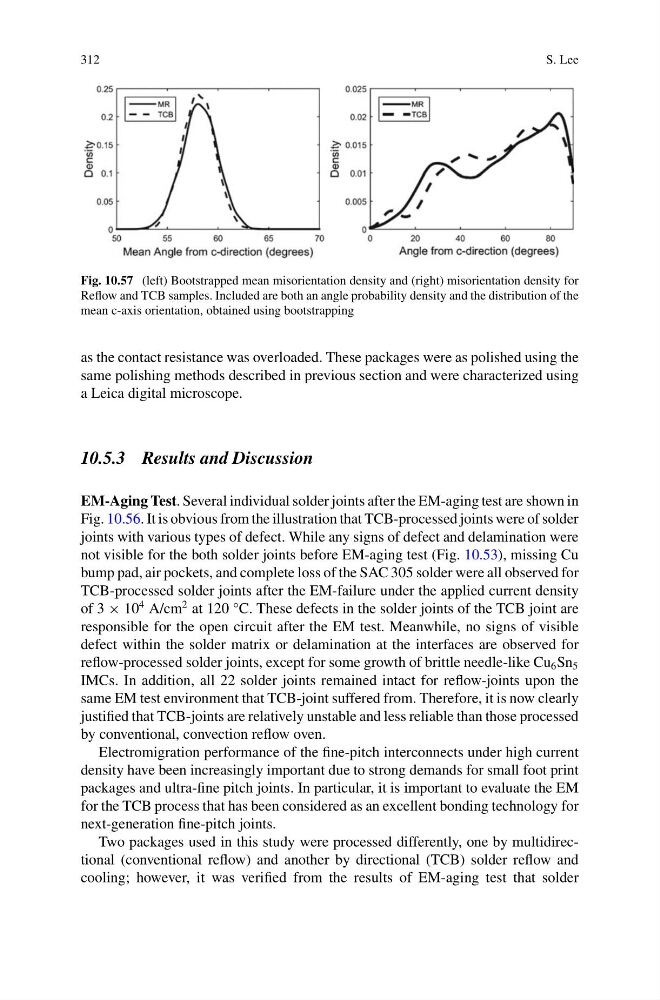
Fig. 10.57 (left) Bootstrapped mean misorientation density and (right) misorientation density for
Reflow and TCB samples. Included are both an angle probability density and the distribution of the
mean c-axis orientation, obtained using bootstrapping
as the contact resistance was overloaded. These packages were as polished using the
same polishing methods described in previous section and were characterized using
a Leica digital microscope.
10.5.3 Results and Discussion
EM-Aging Test. Several individual solder joints after the EM-aging test are shown in
Fig. 10.56. It is obvious from the illustration that TCB-processed joints were of solder
joints with various types of defect. While any signs of defect and delamination were
not visible for the both solder joints before EM-aging test (Fig. 10.53), missing Cu
bump pad, air pockets, and complete loss of the SAC 305 solder were all observed for
TCB-processed solder joints after the EM-failure under the applied current density
of 3 × 10
4 A/cm
2 at 120 °C. These defects in the solder joints of the TCB joint are
responsible for the open circuit after the EM test. Meanwhile, no signs of visible
defect within the solder matrix or delamination at the interfaces are observed for
reflow-processed solder joints, except for some growth of brittle needle-like Cu 6 Sn 5
IMCs. In addition, all 22 solder joints remained intact for reflow-joints upon the
same EM test environment that TCB-joint suffered from. Therefore, it is now clearly
justified that TCB-joints are relatively unstable and less reliable than those processed
by conventional, convection reflow oven.
Electromigration performance of the fine-pitch interconnects under high current
density have been increasingly important due to strong demands for small foot print
packages and ultra-fine pitch joints. In particular, it is important to evaluate the EM
for the TCB process that has been considered as an excellent bonding technology for
next-generation fine-pitch joints.
Two packages used in this study were processed differently, one by multidirectional (conventional reflow) and another by directional (TCB) solder reflow and
cooling; however, it was verified from the results of EM-aging test that solder
S. Lee
Fig. 10.57 (left) Bootstrapped mean misorientation density and (right) misorientation density for
Reflow and TCB samples. Included are both an angle probability density and the distribution of the
mean c-axis orientation, obtained using bootstrapping
as the contact resistance was overloaded. These packages were as polished using the
same polishing methods described in previous section and were characterized using
a Leica digital microscope.
10.5.3 Results and Discussion
EM-Aging Test. Several individual solder joints after the EM-aging test are shown in
Fig. 10.56. It is obvious from the illustration that TCB-processed joints were of solder
joints with various types of defect. While any signs of defect and delamination were
not visible for the both solder joints before EM-aging test (Fig. 10.53), missing Cu
bump pad, air pockets, and complete loss of the SAC 305 solder were all observed for
TCB-processed solder joints after the EM-failure under the applied current density
of 3 × 10
4 A/cm
2 at 120 °C. These defects in the solder joints of the TCB joint are
responsible for the open circuit after the EM test. Meanwhile, no signs of visible
defect within the solder matrix or delamination at the interfaces are observed for
reflow-processed solder joints, except for some growth of brittle needle-like Cu 6 Sn 5
IMCs. In addition, all 22 solder joints remained intact for reflow-joints upon the
same EM test environment that TCB-joint suffered from. Therefore, it is now clearly
justified that TCB-joints are relatively unstable and less reliable than those processed
by conventional, convection reflow oven.
Electromigration performance of the fine-pitch interconnects under high current
density have been increasingly important due to strong demands for small foot print
packages and ultra-fine pitch joints. In particular, it is important to evaluate the EM
for the TCB process that has been considered as an excellent bonding technology for
next-generation fine-pitch joints.
Two packages used in this study were processed differently, one by multidirectional (conventional reflow) and another by directional (TCB) solder reflow and
cooling; however, it was verified from the results of EM-aging test that solder