

10 Fundamentals of Bonding Technology and Process Materials …
299
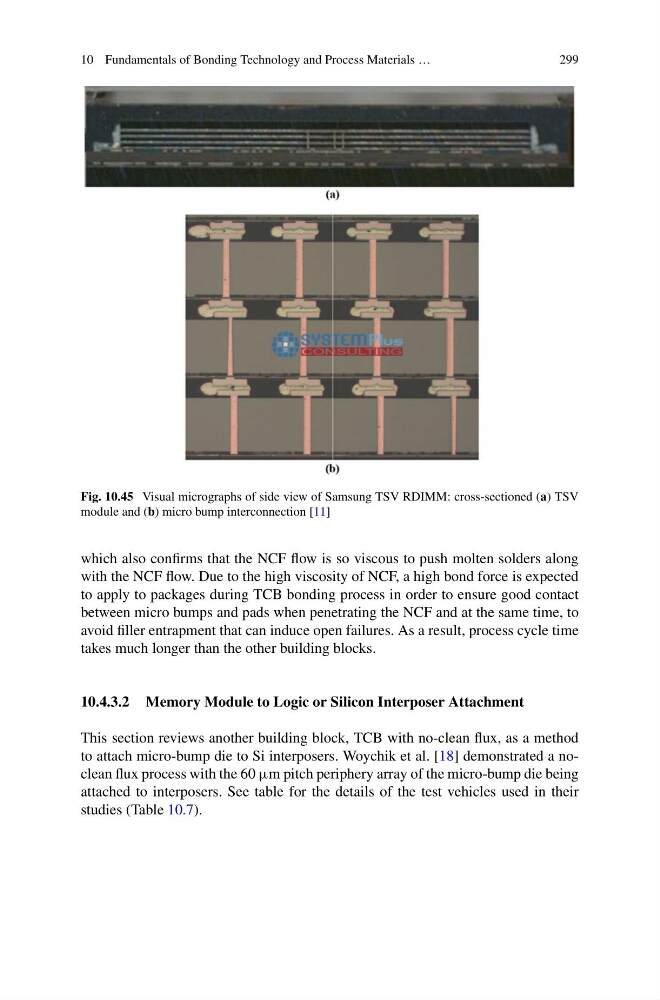
Fig. 10.45 Visual micrographs of side view of Samsung TSV RDIMM: cross-sectioned (a) TSV
module and (b) micro bump interconnection [11]
which also confirms that the NCF flow is so viscous to push molten solders along
with the NCF flow. Due to the high viscosity of NCF, a high bond force is expected
to apply to packages during TCB bonding process in order to ensure good contact
between micro bumps and pads when penetrating the NCF and at the same time, to
avoid filler entrapment that can induce open failures. As a result, process cycle time
takes much longer than the other building blocks.
10.4.3.2 Memory Module to Logic or Silicon Interposer Attachment
This section reviews another building block, TCB with no-clean flux, as a method
to attach micro-bump die to Si interposers. Woychik et al. [18] demonstrated a noclean flux process with the 60 μm pitch periphery array of the micro-bump die being
attached to interposers. See table for the details of the test vehicles used in their
studies (Table 10.7).
299
Fig. 10.45 Visual micrographs of side view of Samsung TSV RDIMM: cross-sectioned (a) TSV
module and (b) micro bump interconnection [11]
which also confirms that the NCF flow is so viscous to push molten solders along
with the NCF flow. Due to the high viscosity of NCF, a high bond force is expected
to apply to packages during TCB bonding process in order to ensure good contact
between micro bumps and pads when penetrating the NCF and at the same time, to
avoid filler entrapment that can induce open failures. As a result, process cycle time
takes much longer than the other building blocks.
10.4.3.2 Memory Module to Logic or Silicon Interposer Attachment
This section reviews another building block, TCB with no-clean flux, as a method
to attach micro-bump die to Si interposers. Woychik et al. [18] demonstrated a noclean flux process with the 60 μm pitch periphery array of the micro-bump die being
attached to interposers. See table for the details of the test vehicles used in their
studies (Table 10.7).