

292
S. Lee
Table 10.4 Major encapsulation building blocks and pitch limit
Process step
Pre applied
Post chip attach
Material
Non-conductive film
(NCF)/B-stage Epoxy
Epoxy Flux
Capillary Underfill (CUF)
Application method
Lamination/Spin
coating on Wafer
Dispensing on
substrate
Dispensing on substrate
Assembly process
TCB
TCB
Reflow or TCB
Pitch Limit
>10 μm
>10 μm
>100 μm
This session explores major assembly building blocks compatible with TCB technology, and reviews assembly process and materials used for commercial 3D TSV
products. With technical insight on the bonding technology with an emphasis on
process materials, this section will provide process development procedures to share
how to design assembly building blocks for a given package configuration and to
optimize process parameters for the selected process materials.
10.4.2 TCB Assembly Building Block
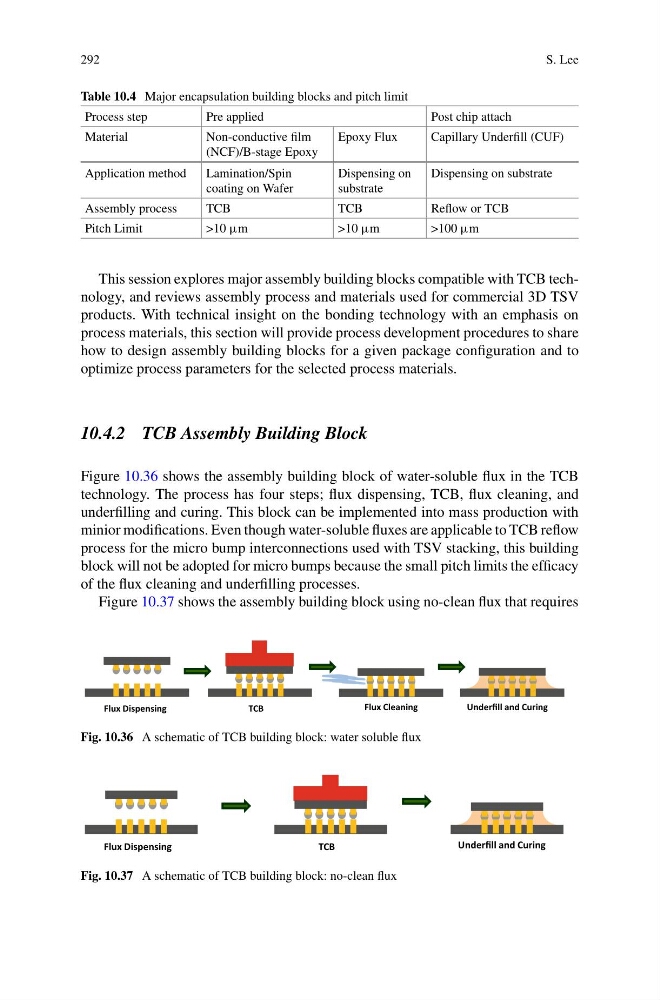
Figure 10.36 shows the assembly building block of water-soluble flux in the TCB
technology. The process has four steps; flux dispensing, TCB, flux cleaning, and
underfilling and curing. This block can be implemented into mass production with
minior modifications. Even though water-soluble fluxes are applicable to TCB reflow
process for the micro bump interconnections used with TSV stacking, this building
block will not be adopted for micro bumps because the small pitch limits the efficacy
of the flux cleaning and underfilling processes.
Figure 10.37 shows the assembly building block using no-clean flux that requires
Flux Dispensing
TCB
Flux Cleaning
Underfill and Curing
Fig. 10.36 A schematic of TCB building block: water soluble flux
Flux Dispensing
TCB
Underfill and Curing
Fig. 10.37 A schematic of TCB building block: no-clean flux
S. Lee
Table 10.4 Major encapsulation building blocks and pitch limit
Process step
Pre applied
Post chip attach
Material
Non-conductive film
(NCF)/B-stage Epoxy
Epoxy Flux
Capillary Underfill (CUF)
Application method
Lamination/Spin
coating on Wafer
Dispensing on
substrate
Dispensing on substrate
Assembly process
TCB
TCB
Reflow or TCB
Pitch Limit
>10 μm
>10 μm
>100 μm
This session explores major assembly building blocks compatible with TCB technology, and reviews assembly process and materials used for commercial 3D TSV
products. With technical insight on the bonding technology with an emphasis on
process materials, this section will provide process development procedures to share
how to design assembly building blocks for a given package configuration and to
optimize process parameters for the selected process materials.
10.4.2 TCB Assembly Building Block
Figure 10.36 shows the assembly building block of water-soluble flux in the TCB
technology. The process has four steps; flux dispensing, TCB, flux cleaning, and
underfilling and curing. This block can be implemented into mass production with
minior modifications. Even though water-soluble fluxes are applicable to TCB reflow
process for the micro bump interconnections used with TSV stacking, this building
block will not be adopted for micro bumps because the small pitch limits the efficacy
of the flux cleaning and underfilling processes.
Figure 10.37 shows the assembly building block using no-clean flux that requires
Flux Dispensing
TCB
Flux Cleaning
Underfill and Curing
Fig. 10.36 A schematic of TCB building block: water soluble flux
Flux Dispensing
TCB
Underfill and Curing
Fig. 10.37 A schematic of TCB building block: no-clean flux