

220
T. Suga et al.
0
0.5
1
1.5
2
2.5
3
Bonding strength in terms of
surface energy (J/m 2
)
Cu-Cu
SiO 2 -SiO 2
SiO 2 -SiN x
Si bulk fracture energy
200 nm
Si
Ti
Cu
Cu
Ti
Si
50 nm
Void
CuO x
Low-O interface
(a)
(b)
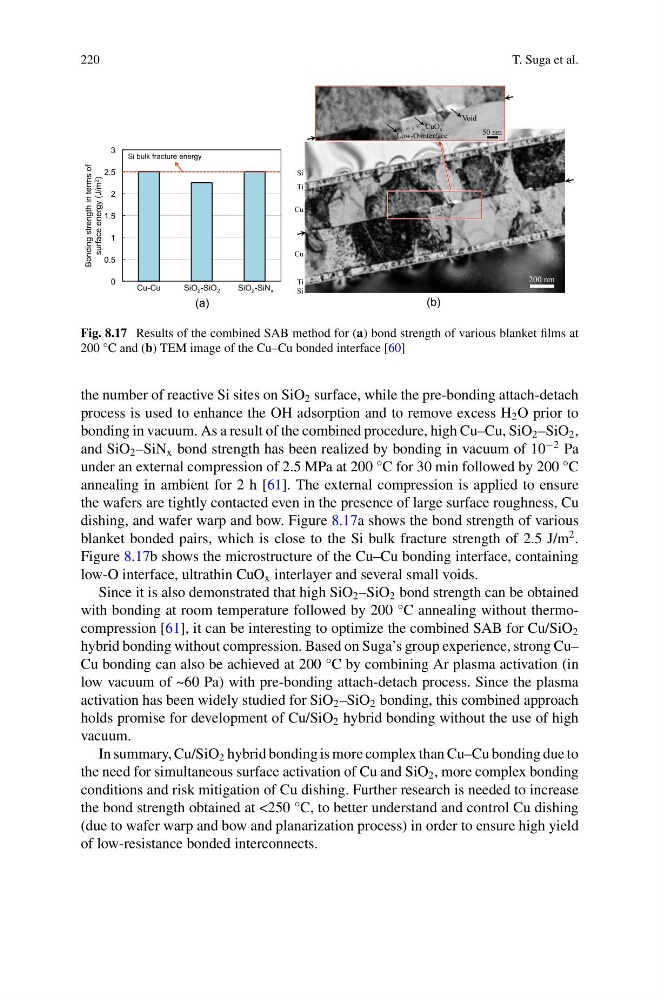
Fig. 8.17 Results of the combined SAB method for (a) bond strength of various blanket films at
200 °C and (b) TEM image of the Cu–Cu bonded interface [60]
the number of reactive Si sites on SiO 2 surface, while the pre-bonding attach-detach
process is used to enhance the OH adsorption and to remove excess H 2 O prior to
bonding in vacuum. As a result of the combined procedure, high Cu–Cu, SiO 2 –SiO 2 ,
and SiO 2 –SiN x bond strength has been realized by bonding in vacuum of 10
−2 Pa
under an external compression of 2.5 MPa at 200 °C for 30 min followed by 200 °C
annealing in ambient for 2 h [61]. The external compression is applied to ensure
the wafers are tightly contacted even in the presence of large surface roughness, Cu
dishing, and wafer warp and bow. Figure 8.17a shows the bond strength of various
blanket bonded pairs, which is close to the Si bulk fracture strength of 2.5 J/m
2 .
Figure 8.17b shows the microstructure of the Cu–Cu bonding interface, containing
low-O interface, ultrathin CuO x interlayer and several small voids.
Since it is also demonstrated that high SiO 2 –SiO 2 bond strength can be obtained
with bonding at room temperature followed by 200 °C annealing without thermocompression [61], it can be interesting to optimize the combined SAB for Cu/SiO 2
hybrid bonding without compression. Based on Suga’s group experience, strong Cu–
Cu bonding can also be achieved at 200 °C by combining Ar plasma activation (in
low vacuum of ~60 Pa) with pre-bonding attach-detach process. Since the plasma
activation has been widely studied for SiO 2 –SiO 2 bonding, this combined approach
holds promise for development of Cu/SiO 2 hybrid bonding without the use of high
vacuum.
In summary, Cu/SiO 2 hybrid bonding is more complex than Cu–Cu bonding due to
the need for simultaneous surface activation of Cu and SiO 2 , more complex bonding
conditions and risk mitigation of Cu dishing. Further research is needed to increase
the bond strength obtained at <250 °C, to better understand and control Cu dishing
(due to wafer warp and bow and planarization process) in order to ensure high yield
of low-resistance bonded interconnects.
T. Suga et al.
0
0.5
1
1.5
2
2.5
3
Bonding strength in terms of
surface energy (J/m 2
)
Cu-Cu
SiO 2 -SiO 2
SiO 2 -SiN x
Si bulk fracture energy
200 nm
Si
Ti
Cu
Cu
Ti
Si
50 nm
Void
CuO x
Low-O interface
(a)
(b)
Fig. 8.17 Results of the combined SAB method for (a) bond strength of various blanket films at
200 °C and (b) TEM image of the Cu–Cu bonded interface [60]
the number of reactive Si sites on SiO 2 surface, while the pre-bonding attach-detach
process is used to enhance the OH adsorption and to remove excess H 2 O prior to
bonding in vacuum. As a result of the combined procedure, high Cu–Cu, SiO 2 –SiO 2 ,
and SiO 2 –SiN x bond strength has been realized by bonding in vacuum of 10
−2 Pa
under an external compression of 2.5 MPa at 200 °C for 30 min followed by 200 °C
annealing in ambient for 2 h [61]. The external compression is applied to ensure
the wafers are tightly contacted even in the presence of large surface roughness, Cu
dishing, and wafer warp and bow. Figure 8.17a shows the bond strength of various
blanket bonded pairs, which is close to the Si bulk fracture strength of 2.5 J/m
2 .
Figure 8.17b shows the microstructure of the Cu–Cu bonding interface, containing
low-O interface, ultrathin CuO x interlayer and several small voids.
Since it is also demonstrated that high SiO 2 –SiO 2 bond strength can be obtained
with bonding at room temperature followed by 200 °C annealing without thermocompression [61], it can be interesting to optimize the combined SAB for Cu/SiO 2
hybrid bonding without compression. Based on Suga’s group experience, strong Cu–
Cu bonding can also be achieved at 200 °C by combining Ar plasma activation (in
low vacuum of ~60 Pa) with pre-bonding attach-detach process. Since the plasma
activation has been widely studied for SiO 2 –SiO 2 bonding, this combined approach
holds promise for development of Cu/SiO 2 hybrid bonding without the use of high
vacuum.
In summary, Cu/SiO 2 hybrid bonding is more complex than Cu–Cu bonding due to
the need for simultaneous surface activation of Cu and SiO 2 , more complex bonding
conditions and risk mitigation of Cu dishing. Further research is needed to increase
the bond strength obtained at <250 °C, to better understand and control Cu dishing
(due to wafer warp and bow and planarization process) in order to ensure high yield
of low-resistance bonded interconnects.