

8 Direct Cu to Cu Bonding and Alternative Bonding Techniques …
217
conducted with TCB, in which the external compression is applied on both the Cu–
Cu and SiO 2 –SiO 2 interfaces during bonding (Fig. 8.14b–i), before post-bonding
annealing to further enhance bonding (Fig. 8.14b–ii).
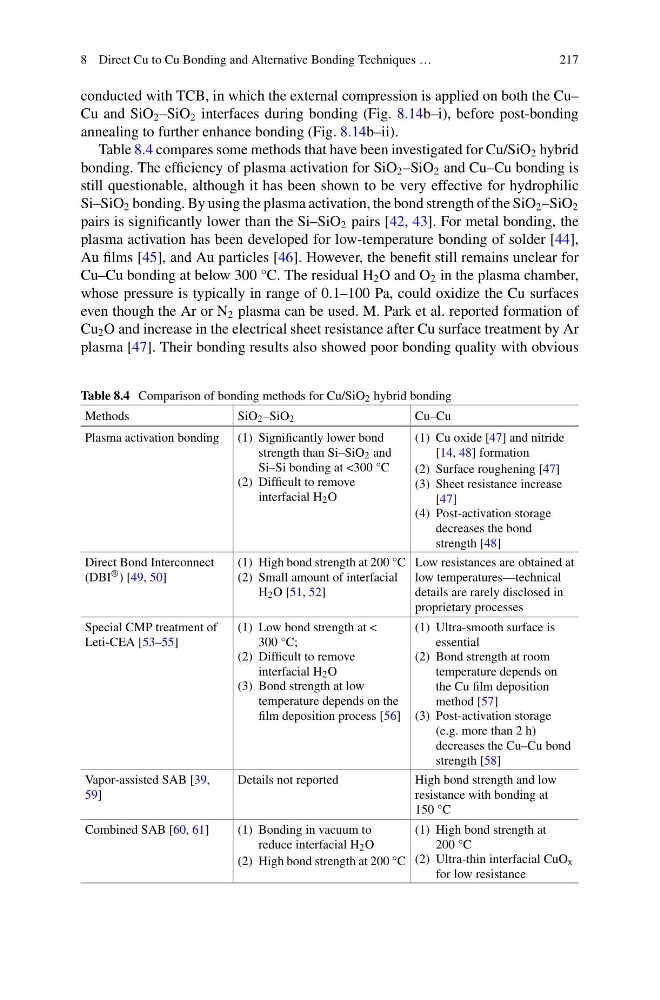
Table 8.4 compares some methods that have been investigated for Cu/SiO 2 hybrid
bonding. The efficiency of plasma activation for SiO 2 –SiO 2 and Cu–Cu bonding is
still questionable, although it has been shown to be very effective for hydrophilic
Si–SiO 2 bonding. By using the plasma activation, the bond strength of the SiO 2 –SiO 2
pairs is significantly lower than the Si–SiO 2 pairs [42, 43]. For metal bonding, the
plasma activation has been developed for low-temperature bonding of solder [44],
Au films [45], and Au particles [46]. However, the benefit still remains unclear for
Cu–Cu bonding at below 300 °C. The residual H 2 O and O 2 in the plasma chamber,
whose pressure is typically in range of 0.1–100 Pa, could oxidize the Cu surfaces
even though the Ar or N 2 plasma can be used. M. Park et al. reported formation of
Cu 2 O and increase in the electrical sheet resistance after Cu surface treatment by Ar
plasma [47]. Their bonding results also showed poor bonding quality with obvious
Table 8.4 Comparison of bonding methods for Cu/SiO 2 hybrid bonding
Methods
SiO 2 –SiO 2
Cu–Cu
Plasma activation bonding (1) Significantly lower bond
strength than Si–SiO 2 and
Si–Si bonding at <300 °C
(2) Difficult to remove
interfacial H 2 O
(1) Cu oxide [47] and nitride
[14, 48] formation
(2) Surface roughening [47]
(3) Sheet resistance increase
[47]
(4) Post-activation storage
decreases the bond
strength [48]
Direct Bond Interconnect
(DBI ® ) [49, 50]
(1) High bond strength at 200 °C
(2) Small amount of interfacial
H 2 O [51, 52]
Low resistances are obtained at
low temperatures—technical
details are rarely disclosed in
proprietary processes
Special CMP treatment of
Leti-CEA [53–55]
(1) Low bond strength at <
300 °C;
(2) Difficult to remove
interfacial H 2 O
(3) Bond strength at low
temperature depends on the
film deposition process [56]
(1) Ultra-smooth surface is
essential
(2) Bond strength at room
temperature depends on
the Cu film deposition
method [57]
(3) Post-activation storage
(e.g. more than 2 h)
decreases the Cu–Cu bond
strength [58]
Vapor-assisted SAB [39,
59]
Details not reported
High bond strength and low
resistance with bonding at
150 °C
Combined SAB [60, 61]
(1) Bonding in vacuum to
reduce interfacial H 2 O
(2) High bond strength at 200 °C
(1) High bond strength at
200 °C
(2) Ultra-thin interfacial CuO x
for low resistance
217
conducted with TCB, in which the external compression is applied on both the Cu–
Cu and SiO 2 –SiO 2 interfaces during bonding (Fig. 8.14b–i), before post-bonding
annealing to further enhance bonding (Fig. 8.14b–ii).
Table 8.4 compares some methods that have been investigated for Cu/SiO 2 hybrid
bonding. The efficiency of plasma activation for SiO 2 –SiO 2 and Cu–Cu bonding is
still questionable, although it has been shown to be very effective for hydrophilic
Si–SiO 2 bonding. By using the plasma activation, the bond strength of the SiO 2 –SiO 2
pairs is significantly lower than the Si–SiO 2 pairs [42, 43]. For metal bonding, the
plasma activation has been developed for low-temperature bonding of solder [44],
Au films [45], and Au particles [46]. However, the benefit still remains unclear for
Cu–Cu bonding at below 300 °C. The residual H 2 O and O 2 in the plasma chamber,
whose pressure is typically in range of 0.1–100 Pa, could oxidize the Cu surfaces
even though the Ar or N 2 plasma can be used. M. Park et al. reported formation of
Cu 2 O and increase in the electrical sheet resistance after Cu surface treatment by Ar
plasma [47]. Their bonding results also showed poor bonding quality with obvious
Table 8.4 Comparison of bonding methods for Cu/SiO 2 hybrid bonding
Methods
SiO 2 –SiO 2
Cu–Cu
Plasma activation bonding (1) Significantly lower bond
strength than Si–SiO 2 and
Si–Si bonding at <300 °C
(2) Difficult to remove
interfacial H 2 O
(1) Cu oxide [47] and nitride
[14, 48] formation
(2) Surface roughening [47]
(3) Sheet resistance increase
[47]
(4) Post-activation storage
decreases the bond
strength [48]
Direct Bond Interconnect
(DBI ® ) [49, 50]
(1) High bond strength at 200 °C
(2) Small amount of interfacial
H 2 O [51, 52]
Low resistances are obtained at
low temperatures—technical
details are rarely disclosed in
proprietary processes
Special CMP treatment of
Leti-CEA [53–55]
(1) Low bond strength at <
300 °C;
(2) Difficult to remove
interfacial H 2 O
(3) Bond strength at low
temperature depends on the
film deposition process [56]
(1) Ultra-smooth surface is
essential
(2) Bond strength at room
temperature depends on
the Cu film deposition
method [57]
(3) Post-activation storage
(e.g. more than 2 h)
decreases the Cu–Cu bond
strength [58]
Vapor-assisted SAB [39,
59]
Details not reported
High bond strength and low
resistance with bonding at
150 °C
Combined SAB [60, 61]
(1) Bonding in vacuum to
reduce interfacial H 2 O
(2) High bond strength at 200 °C
(1) High bond strength at
200 °C
(2) Ultra-thin interfacial CuO x
for low resistance