

210
T. Suga et al.
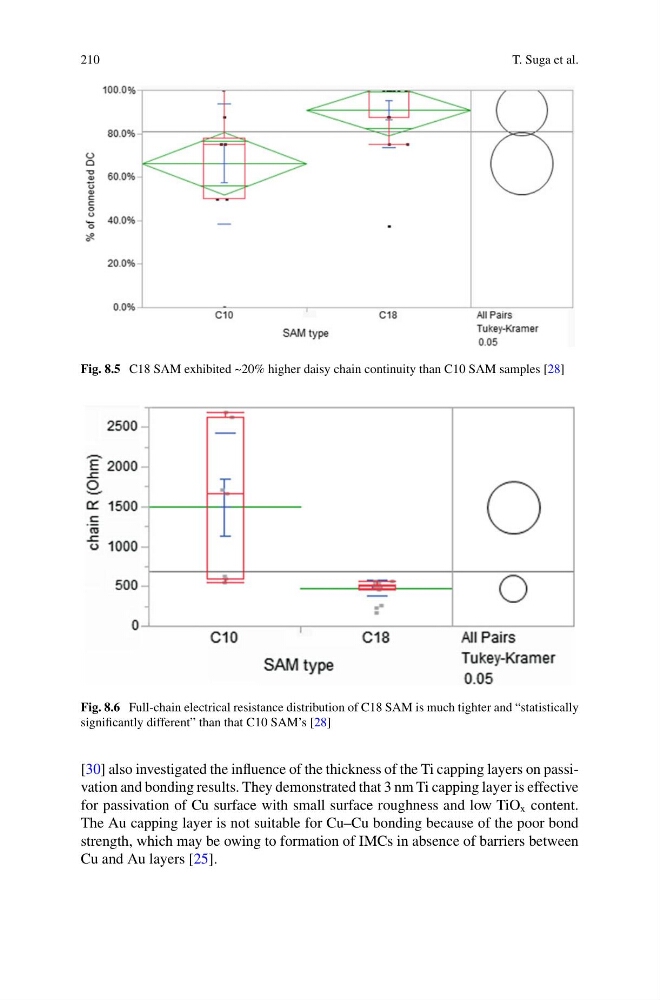
Fig. 8.5 C18 SAM exhibited ~20% higher daisy chain continuity than C10 SAM samples [28]
Fig. 8.6 Full-chain electrical resistance distribution of C18 SAM is much tighter and “statistically
significantly different” than that C10 SAM’s [28]
[30] also investigated the influence of the thickness of the Ti capping layers on passivation and bonding results. They demonstrated that 3 nm Ti capping layer is effective
for passivation of Cu surface with small surface roughness and low TiO x content.
The Au capping layer is not suitable for Cu–Cu bonding because of the poor bond
strength, which may be owing to formation of IMCs in absence of barriers between
Cu and Au layers [25].
T. Suga et al.
Fig. 8.5 C18 SAM exhibited ~20% higher daisy chain continuity than C10 SAM samples [28]
Fig. 8.6 Full-chain electrical resistance distribution of C18 SAM is much tighter and “statistically
significantly different” than that C10 SAM’s [28]
[30] also investigated the influence of the thickness of the Ti capping layers on passivation and bonding results. They demonstrated that 3 nm Ti capping layer is effective
for passivation of Cu surface with small surface roughness and low TiO x content.
The Au capping layer is not suitable for Cu–Cu bonding because of the poor bond
strength, which may be owing to formation of IMCs in absence of barriers between
Cu and Au layers [25].