

140
J. Liu et al.
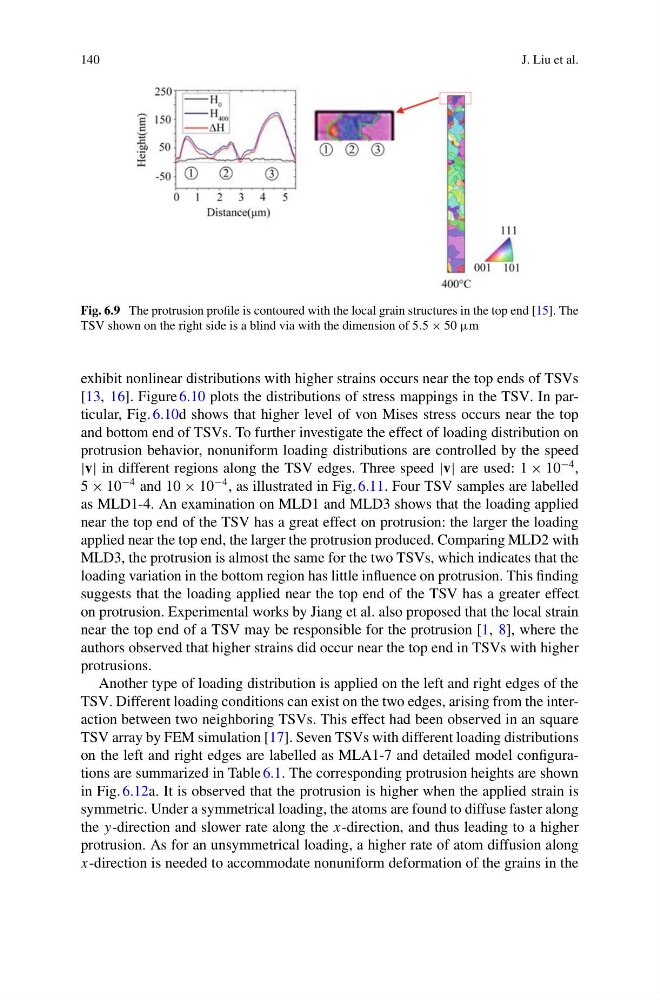
Fig. 6.9 The protrusion profile is contoured with the local grain structures in the top end [15]. The
TSV shown on the right side is a blind via with the dimension of 5.5 × 50 µm
exhibit nonlinear distributions with higher strains occurs near the top ends of TSVs
[13, 16]. Figure 6.10 plots the distributions of stress mappings in the TSV. In particular, Fig. 6.10d shows that higher level of von Mises stress occurs near the top
and bottom end of TSVs. To further investigate the effect of loading distribution on
protrusion behavior, nonuniform loading distributions are controlled by the speed
|v| in different regions along the TSV edges. Three speed |v| are used: 1 × 10
−4 ,
5 × 10
−4 and 10 × 10
−4 , as illustrated in Fig. 6.11. Four TSV samples are labelled
as MLD1-4. An examination on MLD1 and MLD3 shows that the loading applied
near the top end of the TSV has a great effect on protrusion: the larger the loading
applied near the top end, the larger the protrusion produced. Comparing MLD2 with
MLD3, the protrusion is almost the same for the two TSVs, which indicates that the
loading variation in the bottom region has little influence on protrusion. This finding
suggests that the loading applied near the top end of the TSV has a greater effect
on protrusion. Experimental works by Jiang et al. also proposed that the local strain
near the top end of a TSV may be responsible for the protrusion [1, 8], where the
authors observed that higher strains did occur near the top end in TSVs with higher
protrusions.
Another type of loading distribution is applied on the left and right edges of the
TSV. Different loading conditions can exist on the two edges, arising from the interaction between two neighboring TSVs. This effect had been observed in an square
TSV array by FEM simulation [17]. Seven TSVs with different loading distributions
on the left and right edges are labelled as MLA1-7 and detailed model configurations are summarized in Table 6.1. The corresponding protrusion heights are shown
in Fig. 6.12a. It is observed that the protrusion is higher when the applied strain is
symmetric. Under a symmetrical loading, the atoms are found to diffuse faster along
the y-direction and slower rate along the x-direction, and thus leading to a higher
protrusion. As for an unsymmetrical loading, a higher rate of atom diffusion along
x-direction is needed to accommodate nonuniform deformation of the grains in the
J. Liu et al.
Fig. 6.9 The protrusion profile is contoured with the local grain structures in the top end [15]. The
TSV shown on the right side is a blind via with the dimension of 5.5 × 50 µm
exhibit nonlinear distributions with higher strains occurs near the top ends of TSVs
[13, 16]. Figure 6.10 plots the distributions of stress mappings in the TSV. In particular, Fig. 6.10d shows that higher level of von Mises stress occurs near the top
and bottom end of TSVs. To further investigate the effect of loading distribution on
protrusion behavior, nonuniform loading distributions are controlled by the speed
|v| in different regions along the TSV edges. Three speed |v| are used: 1 × 10
−4 ,
5 × 10
−4 and 10 × 10
−4 , as illustrated in Fig. 6.11. Four TSV samples are labelled
as MLD1-4. An examination on MLD1 and MLD3 shows that the loading applied
near the top end of the TSV has a great effect on protrusion: the larger the loading
applied near the top end, the larger the protrusion produced. Comparing MLD2 with
MLD3, the protrusion is almost the same for the two TSVs, which indicates that the
loading variation in the bottom region has little influence on protrusion. This finding
suggests that the loading applied near the top end of the TSV has a greater effect
on protrusion. Experimental works by Jiang et al. also proposed that the local strain
near the top end of a TSV may be responsible for the protrusion [1, 8], where the
authors observed that higher strains did occur near the top end in TSVs with higher
protrusions.
Another type of loading distribution is applied on the left and right edges of the
TSV. Different loading conditions can exist on the two edges, arising from the interaction between two neighboring TSVs. This effect had been observed in an square
TSV array by FEM simulation [17]. Seven TSVs with different loading distributions
on the left and right edges are labelled as MLA1-7 and detailed model configurations are summarized in Table 6.1. The corresponding protrusion heights are shown
in Fig. 6.12a. It is observed that the protrusion is higher when the applied strain is
symmetric. Under a symmetrical loading, the atoms are found to diffuse faster along
the y-direction and slower rate along the x-direction, and thus leading to a higher
protrusion. As for an unsymmetrical loading, a higher rate of atom diffusion along
x-direction is needed to accommodate nonuniform deformation of the grains in the