

92
P. Kumar et al.
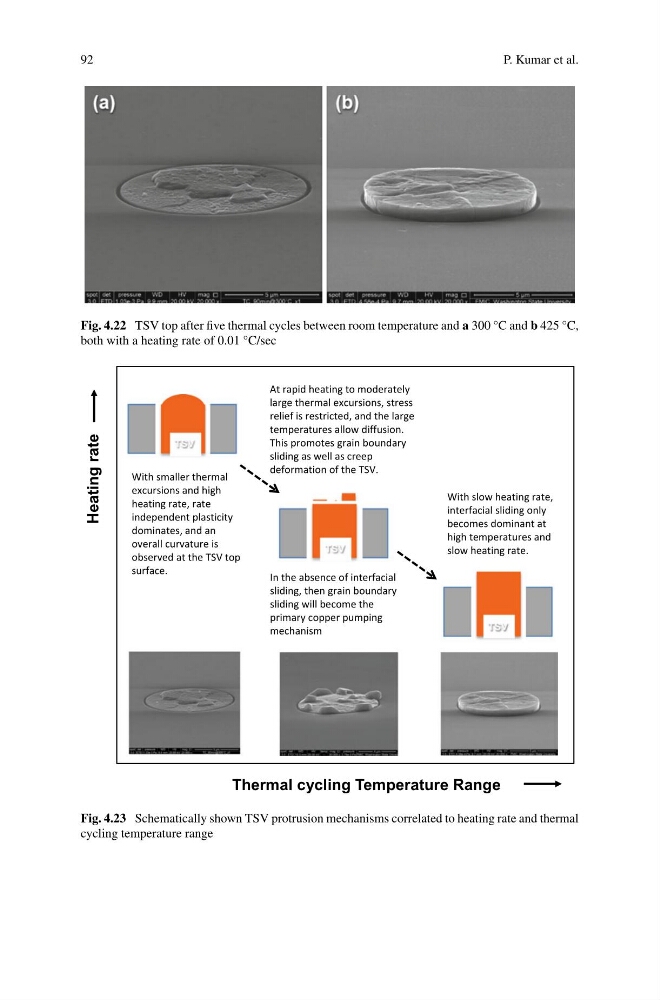
Fig. 4.22 TSV top after five thermal cycles between room temperature and a 300 °C and b 425 °C,
both with a heating rate of 0.01 °C/sec
Heating rate
Thermal cycling Temperature Range
With slow heating rate,
interfacial sliding only
becomes dominant at
high temperatures and
slow heating rate.
In the absence of interfacial
sliding, then grain boundary
sliding will become the
primary copper pumping
mechanism
At rapid heating to moderately
large thermal excursions, stress
relief is restricted, and the large
temperatures allow diffusion.
This promotes grain boundary
sliding as well as creep
deformation of the TSV.
With smaller thermal
excursions and high
heating rate, rate
independent plasticity
dominates, and an
overall curvature is
observed at the TSV top
surface.
Fig. 4.23 Schematically shown TSV protrusion mechanisms correlated to heating rate and thermal
cycling temperature range
P. Kumar et al.
Fig. 4.22 TSV top after five thermal cycles between room temperature and a 300 °C and b 425 °C,
both with a heating rate of 0.01 °C/sec
Heating rate
Thermal cycling Temperature Range
With slow heating rate,
interfacial sliding only
becomes dominant at
high temperatures and
slow heating rate.
In the absence of interfacial
sliding, then grain boundary
sliding will become the
primary copper pumping
mechanism
At rapid heating to moderately
large thermal excursions, stress
relief is restricted, and the large
temperatures allow diffusion.
This promotes grain boundary
sliding as well as creep
deformation of the TSV.
With smaller thermal
excursions and high
heating rate, rate
independent plasticity
dominates, and an
overall curvature is
observed at the TSV top
surface.
Fig. 4.23 Schematically shown TSV protrusion mechanisms correlated to heating rate and thermal
cycling temperature range