

126
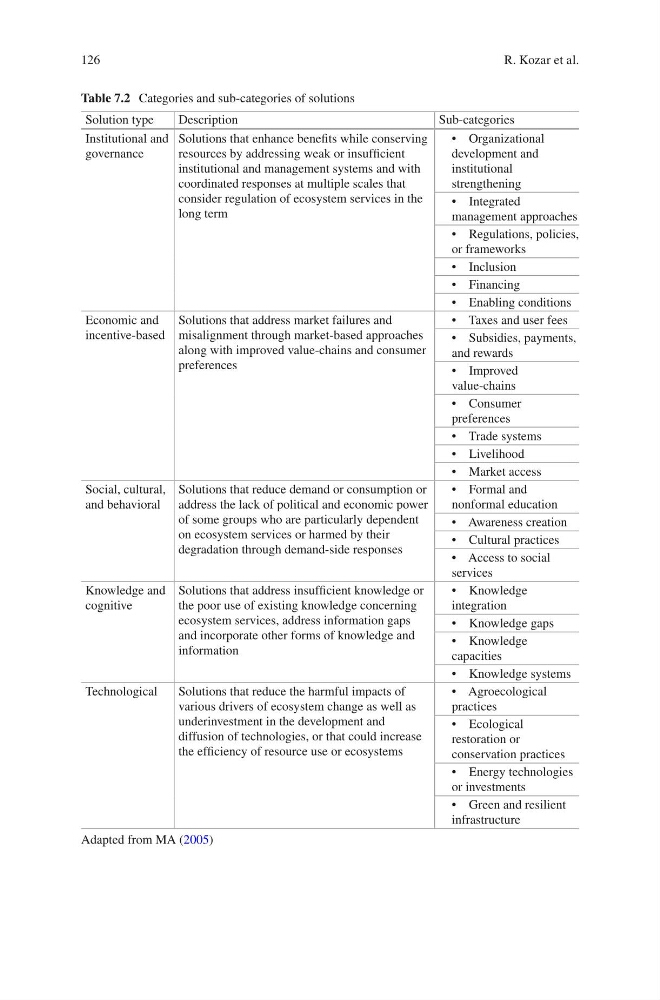
Table 7.2 Categories and sub-categories of solutions
Solution type
Description
Sub-categories
Institutional and
governance
Solutions that enhance benefits while conserving
resources by addressing weak or insufficient
institutional and management systems and with
coordinated responses at multiple scales that
consider regulation of ecosystem services in the
long term
• Organizational
development and
institutional
strengthening
• Integrated
management approaches
• Regulations, policies,
or frameworks
• Inclusion
• Financing
• Enabling conditions
Economic and
incentive-based
Solutions that address market failures and
misalignment through market-based approaches
along with improved value-chains and consumer
preferences
• Taxes and user fees
• Subsidies, payments,
and rewards
• Improved
value-chains
• Consumer
preferences
• Trade systems
• Livelihood
• Market access
Social, cultural,
and behavioral
Solutions that reduce demand or consumption or
address the lack of political and economic power
of some groups who are particularly dependent
on ecosystem services or harmed by their
degradation through demand-side responses
• Formal and
nonformal education
• Awareness creation
• Cultural practices
• Access to social
services
Knowledge and
cognitive
Solutions that address insufficient knowledge or
the poor use of existing knowledge concerning
ecosystem services, address information gaps
and incorporate other forms of knowledge and
information
• Knowledge
integration
• Knowledge gaps
• Knowledge
capacities
• Knowledge systems
Technological
Solutions that reduce the harmful impacts of
various drivers of ecosystem change as well as
underinvestment in the development and
diffusion of technologies, or that could increase
the efficiency of resource use or ecosystems
• Agroecological
practices
• Ecological
restoration or
conservation practices
• Energy technologies
or investments
• Green and resilient
infrastructure
Adapted from MA (2005)
R. Kozar et al.
Table 7.2 Categories and sub-categories of solutions
Solution type
Description
Sub-categories
Institutional and
governance
Solutions that enhance benefits while conserving
resources by addressing weak or insufficient
institutional and management systems and with
coordinated responses at multiple scales that
consider regulation of ecosystem services in the
long term
• Organizational
development and
institutional
strengthening
• Integrated
management approaches
• Regulations, policies,
or frameworks
• Inclusion
• Financing
• Enabling conditions
Economic and
incentive-based
Solutions that address market failures and
misalignment through market-based approaches
along with improved value-chains and consumer
preferences
• Taxes and user fees
• Subsidies, payments,
and rewards
• Improved
value-chains
• Consumer
preferences
• Trade systems
• Livelihood
• Market access
Social, cultural,
and behavioral
Solutions that reduce demand or consumption or
address the lack of political and economic power
of some groups who are particularly dependent
on ecosystem services or harmed by their
degradation through demand-side responses
• Formal and
nonformal education
• Awareness creation
• Cultural practices
• Access to social
services
Knowledge and
cognitive
Solutions that address insufficient knowledge or
the poor use of existing knowledge concerning
ecosystem services, address information gaps
and incorporate other forms of knowledge and
information
• Knowledge
integration
• Knowledge gaps
• Knowledge
capacities
• Knowledge systems
Technological
Solutions that reduce the harmful impacts of
various drivers of ecosystem change as well as
underinvestment in the development and
diffusion of technologies, or that could increase
the efficiency of resource use or ecosystems
• Agroecological
practices
• Ecological
restoration or
conservation practices
• Energy technologies
or investments
• Green and resilient
infrastructure
Adapted from MA (2005)
R. Kozar et al.