

How is presently the atmospheric deposition of trace elements at high altitude in
the Pyrenees? Measurements done in the Lake Redon sampling station during the
decade 2004–2013 show that the concentration in atmospheric precipitation (volume weighted average) of the most commonly monitored trace elements are in the
range of nanogram per liter (ng L
−1 ) but vary by three orders of magnitude, from
several thousand for the most abundant to a few tens for the scarcest:
Zn (6500 ng L
−1 ) > Pb (960 ng L
−1 ) * Cu (950 ng L
−1 ) >
> Ni (180 ng L
−1 ) > As (38 ng L
−1 ) > Cd (20 ng L
−1 )
These values fall within the range of measurements in relatively remote sites in
Europe, suggesting that they can be considered as background levels of pollution in
atmospheric precipitation, at least in the European context.
The deposition of trace elements varies with time: it fluctuates seasonally,
interannually and, in some cases, they show statistically significant decadal trends.
Both interannual and seasonal variations are related with the origin of the air masses
causing precipitation: air masses coming from the Iberian Peninsula and Northern
Africa carry dust, and associated to it there is polluting lead, nickel and cadmium
which are transported mainly bound to particles (Bacardit and Camarero 2009).
Southern precipitation is more frequent during spring and summer, whereas during
winter precipitation comes more often from north. This explains the seasonal fluctuation (higher values in summer) in deposition of those trace elements associated to
dust. Similarly, the proportion of both types of precipitation changes from year to
year, producing interannual differences in trace elements deposition. In years with a
higher frequency of precipitation with a southern origin, lead, nickel and cadmium
deposition is higher. In contrast, in years with higher frequency of precipitation with
a northern provenance zinc and copper deposition is higher. Beyond this interannual
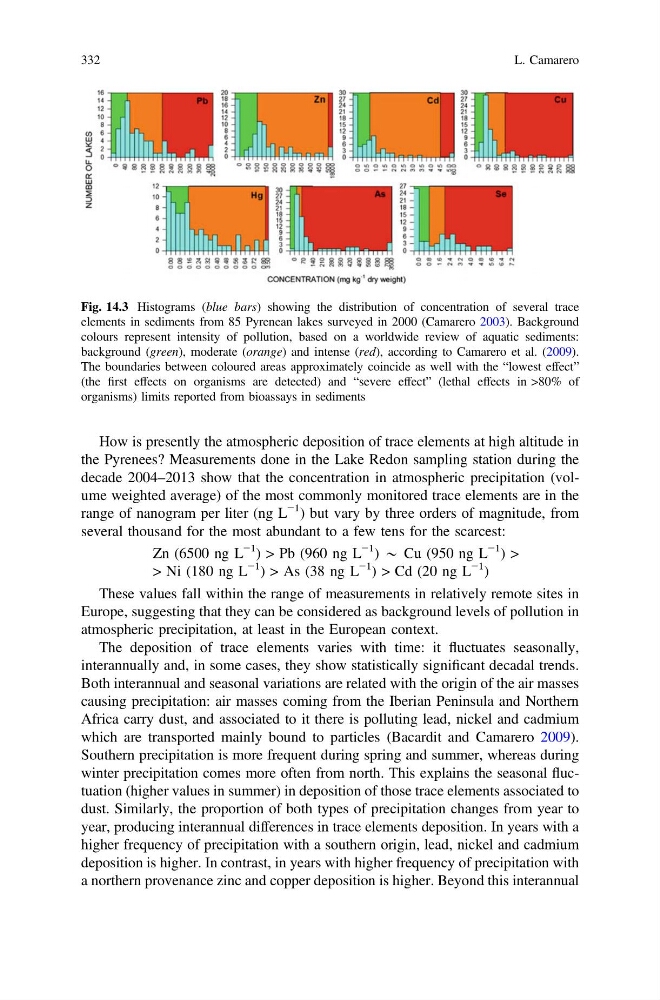
Fig. 14.3 Histograms (blue bars) showing the distribution of concentration of several trace
elements in sediments from 85 Pyrenean lakes surveyed in 2000 (Camarero 2003). Background
colours represent intensity of pollution, based on a worldwide review of aquatic sediments:
background (green), moderate (orange) and intense (red), according to Camarero et al. (2009).
The boundaries between coloured areas approximately coincide as well with the “lowest effect”
(the first effects on organisms are detected) and “severe effect” (lethal effects in >80% of
organisms) limits reported from bioassays in sediments
332
L. Camarero
the Pyrenees? Measurements done in the Lake Redon sampling station during the
decade 2004–2013 show that the concentration in atmospheric precipitation (volume weighted average) of the most commonly monitored trace elements are in the
range of nanogram per liter (ng L
−1 ) but vary by three orders of magnitude, from
several thousand for the most abundant to a few tens for the scarcest:
Zn (6500 ng L
−1 ) > Pb (960 ng L
−1 ) * Cu (950 ng L
−1 ) >
> Ni (180 ng L
−1 ) > As (38 ng L
−1 ) > Cd (20 ng L
−1 )
These values fall within the range of measurements in relatively remote sites in
Europe, suggesting that they can be considered as background levels of pollution in
atmospheric precipitation, at least in the European context.
The deposition of trace elements varies with time: it fluctuates seasonally,
interannually and, in some cases, they show statistically significant decadal trends.
Both interannual and seasonal variations are related with the origin of the air masses
causing precipitation: air masses coming from the Iberian Peninsula and Northern
Africa carry dust, and associated to it there is polluting lead, nickel and cadmium
which are transported mainly bound to particles (Bacardit and Camarero 2009).
Southern precipitation is more frequent during spring and summer, whereas during
winter precipitation comes more often from north. This explains the seasonal fluctuation (higher values in summer) in deposition of those trace elements associated to
dust. Similarly, the proportion of both types of precipitation changes from year to
year, producing interannual differences in trace elements deposition. In years with a
higher frequency of precipitation with a southern origin, lead, nickel and cadmium
deposition is higher. In contrast, in years with higher frequency of precipitation with
a northern provenance zinc and copper deposition is higher. Beyond this interannual
Fig. 14.3 Histograms (blue bars) showing the distribution of concentration of several trace
elements in sediments from 85 Pyrenean lakes surveyed in 2000 (Camarero 2003). Background
colours represent intensity of pollution, based on a worldwide review of aquatic sediments:
background (green), moderate (orange) and intense (red), according to Camarero et al. (2009).
The boundaries between coloured areas approximately coincide as well with the “lowest effect”
(the first effects on organisms are detected) and “severe effect” (lethal effects in >80% of
organisms) limits reported from bioassays in sediments
332
L. Camarero