

156
R. Mattana et al.
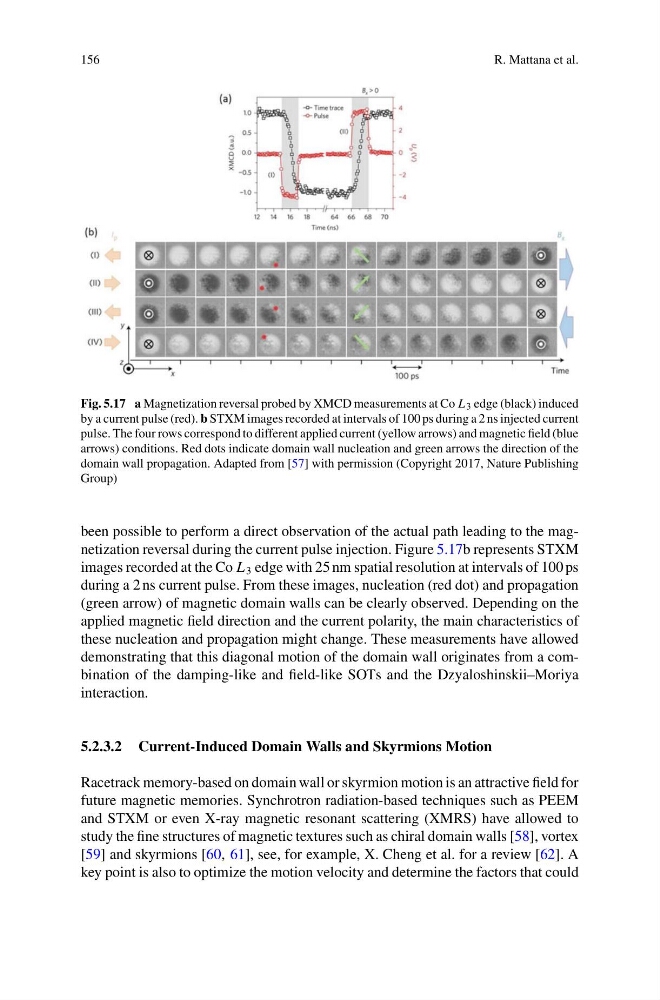
Fig. 5.17 a Magnetization reversal probed by XMCD measurements at Co L 3 edge (black) induced
by a current pulse (red). b STXM images recorded at intervals of 100 ps during a 2 ns injected current
pulse. The four rows correspond to different applied current (yellow arrows) and magnetic field (blue
arrows) conditions. Red dots indicate domain wall nucleation and green arrows the direction of the
domain wall propagation. Adapted from [57] with permission (Copyright 2017, Nature Publishing
Group)
been possible to perform a direct observation of the actual path leading to the magnetization reversal during the current pulse injection. Figure 5.17b represents STXM
images recorded at the Co L 3 edge with 25 nm spatial resolution at intervals of 100 ps
during a 2 ns current pulse. From these images, nucleation (red dot) and propagation
(green arrow) of magnetic domain walls can be clearly observed. Depending on the
applied magnetic field direction and the current polarity, the main characteristics of
these nucleation and propagation might change. These measurements have allowed
demonstrating that this diagonal motion of the domain wall originates from a combination of the damping-like and field-like SOTs and the Dzyaloshinskii–Moriya
interaction.
5.2.3.2 Current-Induced Domain Walls and Skyrmions Motion
Racetrack memory-based on domain wall or skyrmion motion is an attractive field for
future magnetic memories. Synchrotron radiation-based techniques such as PEEM
and STXM or even X-ray magnetic resonant scattering (XMRS) have allowed to
study the fine structures of magnetic textures such as chiral domain walls [58], vortex
[59] and skyrmions [60, 61], see, for example, X. Cheng et al. for a review [62]. A
key point is also to optimize the motion velocity and determine the factors that could
R. Mattana et al.
Fig. 5.17 a Magnetization reversal probed by XMCD measurements at Co L 3 edge (black) induced
by a current pulse (red). b STXM images recorded at intervals of 100 ps during a 2 ns injected current
pulse. The four rows correspond to different applied current (yellow arrows) and magnetic field (blue
arrows) conditions. Red dots indicate domain wall nucleation and green arrows the direction of the
domain wall propagation. Adapted from [57] with permission (Copyright 2017, Nature Publishing
Group)
been possible to perform a direct observation of the actual path leading to the magnetization reversal during the current pulse injection. Figure 5.17b represents STXM
images recorded at the Co L 3 edge with 25 nm spatial resolution at intervals of 100 ps
during a 2 ns current pulse. From these images, nucleation (red dot) and propagation
(green arrow) of magnetic domain walls can be clearly observed. Depending on the
applied magnetic field direction and the current polarity, the main characteristics of
these nucleation and propagation might change. These measurements have allowed
demonstrating that this diagonal motion of the domain wall originates from a combination of the damping-like and field-like SOTs and the Dzyaloshinskii–Moriya
interaction.
5.2.3.2 Current-Induced Domain Walls and Skyrmions Motion
Racetrack memory-based on domain wall or skyrmion motion is an attractive field for
future magnetic memories. Synchrotron radiation-based techniques such as PEEM
and STXM or even X-ray magnetic resonant scattering (XMRS) have allowed to
study the fine structures of magnetic textures such as chiral domain walls [58], vortex
[59] and skyrmions [60, 61], see, for example, X. Cheng et al. for a review [62]. A
key point is also to optimize the motion velocity and determine the factors that could