

530
J. Kim and J.-M. Kim
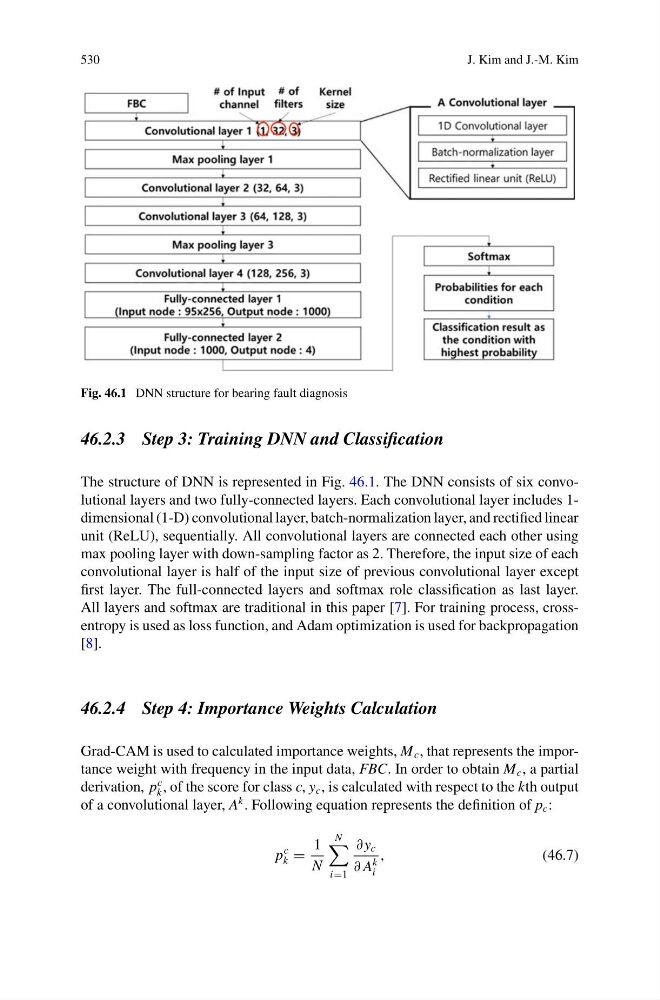
Fig. 46.1 DNN structure for bearing fault diagnosis
46.2.3 Step 3: Training DNN and Classification
The structure of DNN is represented in Fig. 46.1. The DNN consists of six convolutional layers and two fully-connected layers. Each convolutional layer includes 1dimensional (1-D) convolutional layer, batch-normalization layer, and rectified linear
unit (ReLU), sequentially. All convolutional layers are connected each other using
max pooling layer with down-sampling factor as 2. Therefore, the input size of each
convolutional layer is half of the input size of previous convolutional layer except
first layer. The full-connected layers and softmax role classification as last layer.
All layers and softmax are traditional in this paper [7]. For training process, crossentropy is used as loss function, and Adam optimization is used for backpropagation
[8].
46.2.4 Step 4: Importance Weights Calculation
Grad-CAM is used to calculated importance weights, M c , that represents the importance weight with frequency in the input data, FBC. In order to obtain M c , a partial
derivation, p
c
k , of the score for class c, y c , is calculated with respect to the kth output
of a convolutional layer, A
k . Following equation represents the definition of p c :
p
c
k =
1
N
N
i=1
∂ y c
∂ A
k
i
,
(46.7)
J. Kim and J.-M. Kim
Fig. 46.1 DNN structure for bearing fault diagnosis
46.2.3 Step 3: Training DNN and Classification
The structure of DNN is represented in Fig. 46.1. The DNN consists of six convolutional layers and two fully-connected layers. Each convolutional layer includes 1dimensional (1-D) convolutional layer, batch-normalization layer, and rectified linear
unit (ReLU), sequentially. All convolutional layers are connected each other using
max pooling layer with down-sampling factor as 2. Therefore, the input size of each
convolutional layer is half of the input size of previous convolutional layer except
first layer. The full-connected layers and softmax role classification as last layer.
All layers and softmax are traditional in this paper [7]. For training process, crossentropy is used as loss function, and Adam optimization is used for backpropagation
[8].
46.2.4 Step 4: Importance Weights Calculation
Grad-CAM is used to calculated importance weights, M c , that represents the importance weight with frequency in the input data, FBC. In order to obtain M c , a partial
derivation, p
c
k , of the score for class c, y c , is calculated with respect to the kth output
of a convolutional layer, A
k . Following equation represents the definition of p c :
p
c
k =
1
N
N
i=1
∂ y c
∂ A
k
i
,
(46.7)