

396
Y. Liu et al.
through analyzing the experimental data. In the entire fatigue cycle, through calculating the sum of hits and the mean value of other acoustic emission parameters
from the statistical analytical method, we can obtain the characteristic parameters of
the acoustic emission signal of the hoop-wrapped composite cylinders. During the
fatigue experiment of the hoop-wrapped composite cylinders, the acoustic emission
signals are also changed greatly with the increasing of the fatigue cycle.
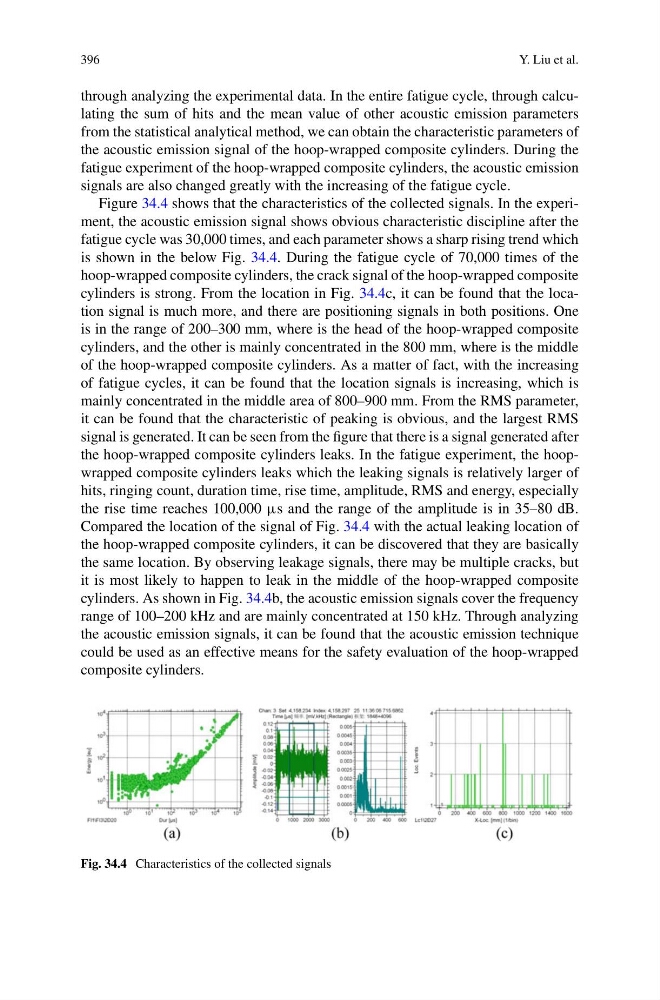
Figure 34.4 shows that the characteristics of the collected signals. In the experiment, the acoustic emission signal shows obvious characteristic discipline after the
fatigue cycle was 30,000 times, and each parameter shows a sharp rising trend which
is shown in the below Fig. 34.4. During the fatigue cycle of 70,000 times of the
hoop-wrapped composite cylinders, the crack signal of the hoop-wrapped composite
cylinders is strong. From the location in Fig. 34.4c, it can be found that the location signal is much more, and there are positioning signals in both positions. One
is in the range of 200–300 mm, where is the head of the hoop-wrapped composite
cylinders, and the other is mainly concentrated in the 800 mm, where is the middle
of the hoop-wrapped composite cylinders. As a matter of fact, with the increasing
of fatigue cycles, it can be found that the location signals is increasing, which is
mainly concentrated in the middle area of 800–900 mm. From the RMS parameter,
it can be found that the characteristic of peaking is obvious, and the largest RMS
signal is generated. It can be seen from the figure that there is a signal generated after
the hoop-wrapped composite cylinders leaks. In the fatigue experiment, the hoopwrapped composite cylinders leaks which the leaking signals is relatively larger of
hits, ringing count, duration time, rise time, amplitude, RMS and energy, especially
the rise time reaches 100,000 µs and the range of the amplitude is in 35–80 dB.
Compared the location of the signal of Fig. 34.4 with the actual leaking location of
the hoop-wrapped composite cylinders, it can be discovered that they are basically
the same location. By observing leakage signals, there may be multiple cracks, but
it is most likely to happen to leak in the middle of the hoop-wrapped composite
cylinders. As shown in Fig. 34.4b, the acoustic emission signals cover the frequency
range of 100–200 kHz and are mainly concentrated at 150 kHz. Through analyzing
the acoustic emission signals, it can be found that the acoustic emission technique
could be used as an effective means for the safety evaluation of the hoop-wrapped
composite cylinders.
Fig. 34.4 Characteristics of the collected signals
Y. Liu et al.
through analyzing the experimental data. In the entire fatigue cycle, through calculating the sum of hits and the mean value of other acoustic emission parameters
from the statistical analytical method, we can obtain the characteristic parameters of
the acoustic emission signal of the hoop-wrapped composite cylinders. During the
fatigue experiment of the hoop-wrapped composite cylinders, the acoustic emission
signals are also changed greatly with the increasing of the fatigue cycle.
Figure 34.4 shows that the characteristics of the collected signals. In the experiment, the acoustic emission signal shows obvious characteristic discipline after the
fatigue cycle was 30,000 times, and each parameter shows a sharp rising trend which
is shown in the below Fig. 34.4. During the fatigue cycle of 70,000 times of the
hoop-wrapped composite cylinders, the crack signal of the hoop-wrapped composite
cylinders is strong. From the location in Fig. 34.4c, it can be found that the location signal is much more, and there are positioning signals in both positions. One
is in the range of 200–300 mm, where is the head of the hoop-wrapped composite
cylinders, and the other is mainly concentrated in the 800 mm, where is the middle
of the hoop-wrapped composite cylinders. As a matter of fact, with the increasing
of fatigue cycles, it can be found that the location signals is increasing, which is
mainly concentrated in the middle area of 800–900 mm. From the RMS parameter,
it can be found that the characteristic of peaking is obvious, and the largest RMS
signal is generated. It can be seen from the figure that there is a signal generated after
the hoop-wrapped composite cylinders leaks. In the fatigue experiment, the hoopwrapped composite cylinders leaks which the leaking signals is relatively larger of
hits, ringing count, duration time, rise time, amplitude, RMS and energy, especially
the rise time reaches 100,000 µs and the range of the amplitude is in 35–80 dB.
Compared the location of the signal of Fig. 34.4 with the actual leaking location of
the hoop-wrapped composite cylinders, it can be discovered that they are basically
the same location. By observing leakage signals, there may be multiple cracks, but
it is most likely to happen to leak in the middle of the hoop-wrapped composite
cylinders. As shown in Fig. 34.4b, the acoustic emission signals cover the frequency
range of 100–200 kHz and are mainly concentrated at 150 kHz. Through analyzing
the acoustic emission signals, it can be found that the acoustic emission technique
could be used as an effective means for the safety evaluation of the hoop-wrapped
composite cylinders.
Fig. 34.4 Characteristics of the collected signals