

306
Y. Wang et al.
reloading stage is relatively less than that in the initial loading stage no matter for the
healed beams or the control beams. For those healed beams, with the increase of load,
the number of AE signals increases gradually from beginning, which is against the
Kaiser Effect of AE. This is because that although there are already loads of cracks
and damage occurred after the initial loading stage, the healing agent is injected
afterwards and outflow rapidly from the tubes to those macrocracks and microcracks
due to capillary force. Thus, most of the cracks in the specimen have been restored
as well as the regained strength to make the concrete specimen as original as ever. In
that case, during the reloading stage to evaluate the healing effectiveness, the healed
concrete follows a similar damage process to the specimen before healing. It also
can be illustrated from the AE monitoring results. More specifically, at the beginning
of initial loading, the number of AE hits increase slightly due to the own properties
of concrete. As a kind of porous material, there are still many micro-cavities and
holes in concrete even though the concrete has cracked and damaged already. Under
the action of external load, the micro-cavities and holes around the main cracks are
squeezed compacted which result in the mortar particles rub and collide with each
other and will generate a small amount of AE signals.
Subsequently, the amount of AE hits goes up significantly as the load increases,
indicating that the interior structure of the specimen starts to change and produce
new microcracks and damages. When the peak load is reached, the AE characteristic
parameters increased dramatically because of the brittleness of concrete. Thus, the
cracks will expand unstably when the load reaches the maximum value and the
specimen will be failed due to the brittle fracture.
25.3.2.3 The Absolute Energy of Fracture
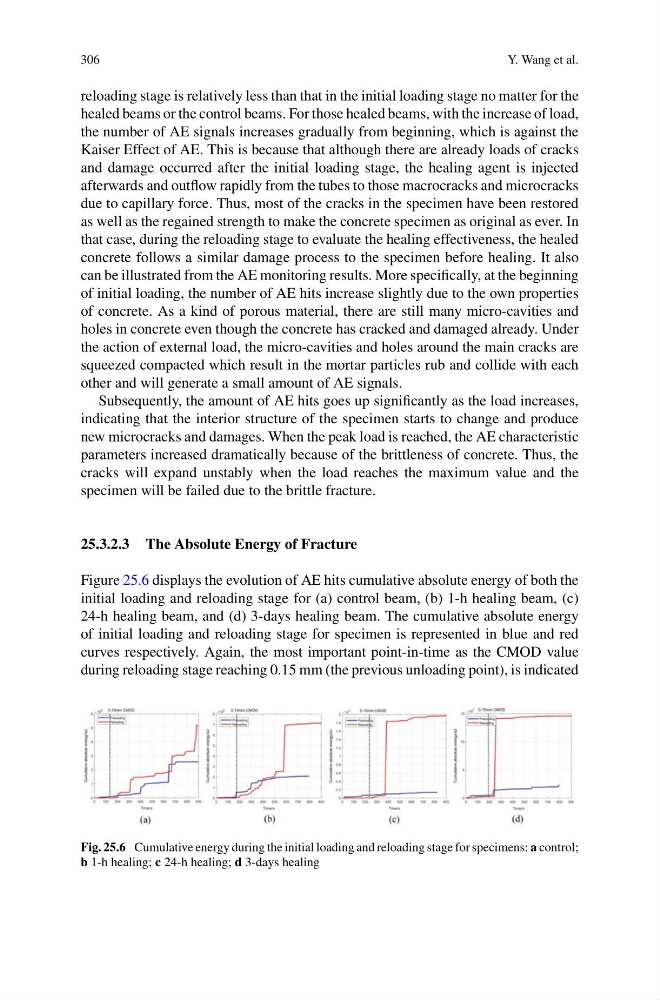
Figure 25.6 displays the evolution of AE hits cumulative absolute energy of both the
initial loading and reloading stage for (a) control beam, (b) 1-h healing beam, (c)
24-h healing beam, and (d) 3-days healing beam. The cumulative absolute energy
of initial loading and reloading stage for specimen is represented in blue and red
curves respectively. Again, the most important point-in-time as the CMOD value
during reloading stage reaching 0.15 mm (the previous unloading point), is indicated
Fig. 25.6 Cumulative energy during the initial loading and reloading stage for specimens: a control;
b 1-h healing; c 24-h healing; d 3-days healing
Y. Wang et al.
reloading stage is relatively less than that in the initial loading stage no matter for the
healed beams or the control beams. For those healed beams, with the increase of load,
the number of AE signals increases gradually from beginning, which is against the
Kaiser Effect of AE. This is because that although there are already loads of cracks
and damage occurred after the initial loading stage, the healing agent is injected
afterwards and outflow rapidly from the tubes to those macrocracks and microcracks
due to capillary force. Thus, most of the cracks in the specimen have been restored
as well as the regained strength to make the concrete specimen as original as ever. In
that case, during the reloading stage to evaluate the healing effectiveness, the healed
concrete follows a similar damage process to the specimen before healing. It also
can be illustrated from the AE monitoring results. More specifically, at the beginning
of initial loading, the number of AE hits increase slightly due to the own properties
of concrete. As a kind of porous material, there are still many micro-cavities and
holes in concrete even though the concrete has cracked and damaged already. Under
the action of external load, the micro-cavities and holes around the main cracks are
squeezed compacted which result in the mortar particles rub and collide with each
other and will generate a small amount of AE signals.
Subsequently, the amount of AE hits goes up significantly as the load increases,
indicating that the interior structure of the specimen starts to change and produce
new microcracks and damages. When the peak load is reached, the AE characteristic
parameters increased dramatically because of the brittleness of concrete. Thus, the
cracks will expand unstably when the load reaches the maximum value and the
specimen will be failed due to the brittle fracture.
25.3.2.3 The Absolute Energy of Fracture
Figure 25.6 displays the evolution of AE hits cumulative absolute energy of both the
initial loading and reloading stage for (a) control beam, (b) 1-h healing beam, (c)
24-h healing beam, and (d) 3-days healing beam. The cumulative absolute energy
of initial loading and reloading stage for specimen is represented in blue and red
curves respectively. Again, the most important point-in-time as the CMOD value
during reloading stage reaching 0.15 mm (the previous unloading point), is indicated
Fig. 25.6 Cumulative energy during the initial loading and reloading stage for specimens: a control;
b 1-h healing; c 24-h healing; d 3-days healing