

518
V. S. Simi et al.
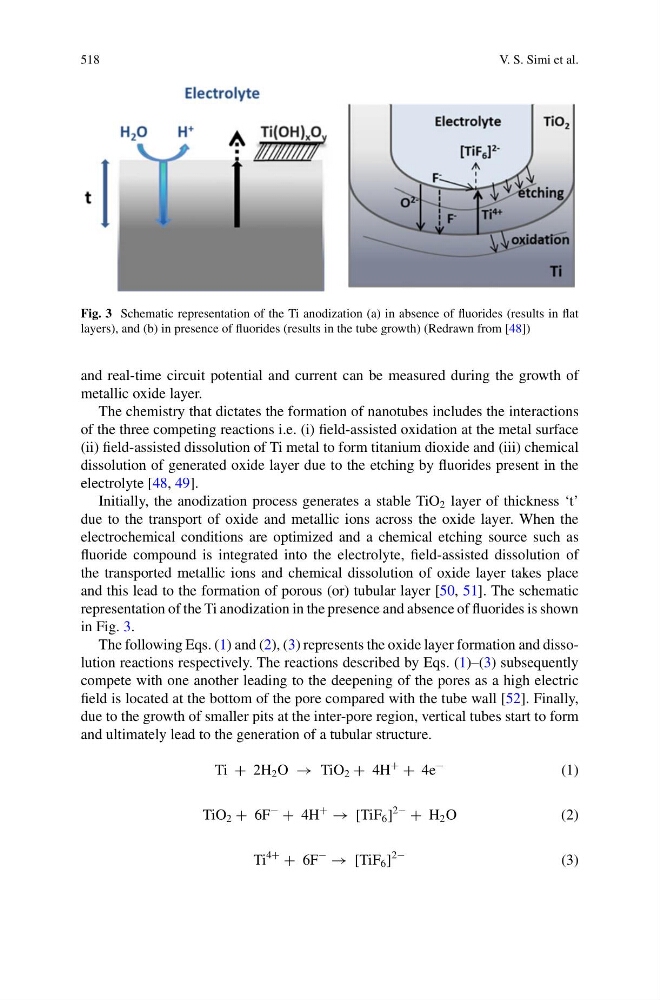
Fig. 3 Schematic representation of the Ti anodization (a) in absence of fluorides (results in flat
layers), and (b) in presence of fluorides (results in the tube growth) (Redrawn from [48])
and real-time circuit potential and current can be measured during the growth of
metallic oxide layer.
The chemistry that dictates the formation of nanotubes includes the interactions
of the three competing reactions i.e. (i) field-assisted oxidation at the metal surface
(ii) field-assisted dissolution of Ti metal to form titanium dioxide and (iii) chemical
dissolution of generated oxide layer due to the etching by fluorides present in the
electrolyte [48, 49].
Initially, the anodization process generates a stable TiO 2 layer of thickness ‘t’
due to the transport of oxide and metallic ions across the oxide layer. When the
electrochemical conditions are optimized and a chemical etching source such as
fluoride compound is integrated into the electrolyte, field-assisted dissolution of
the transported metallic ions and chemical dissolution of oxide layer takes place
and this lead to the formation of porous (or) tubular layer [50, 51]. The schematic
representation of the Ti anodization in the presence and absence of fluorides is shown
in Fig. 3.
The following Eqs. (1) and (2), (3) represents the oxide layer formation and dissolution reactions respectively. The reactions described by Eqs. (1)–(3) subsequently
compete with one another leading to the deepening of the pores as a high electric
field is located at the bottom of the pore compared with the tube wall [52]. Finally,
due to the growth of smaller pits at the inter-pore region, vertical tubes start to form
and ultimately lead to the generation of a tubular structure.
Ti + 2H 2 O → TiO 2 + 4H
+
+ 4e
−
(1)
TiO 2 + 6F
−
+ 4H
+
→ [TiF 6 ]
2−
+ H 2 O
( 2 )
Ti
4+
+ 6F
−
→ [TiF 6 ]
2−
(3)
V. S. Simi et al.
Fig. 3 Schematic representation of the Ti anodization (a) in absence of fluorides (results in flat
layers), and (b) in presence of fluorides (results in the tube growth) (Redrawn from [48])
and real-time circuit potential and current can be measured during the growth of
metallic oxide layer.
The chemistry that dictates the formation of nanotubes includes the interactions
of the three competing reactions i.e. (i) field-assisted oxidation at the metal surface
(ii) field-assisted dissolution of Ti metal to form titanium dioxide and (iii) chemical
dissolution of generated oxide layer due to the etching by fluorides present in the
electrolyte [48, 49].
Initially, the anodization process generates a stable TiO 2 layer of thickness ‘t’
due to the transport of oxide and metallic ions across the oxide layer. When the
electrochemical conditions are optimized and a chemical etching source such as
fluoride compound is integrated into the electrolyte, field-assisted dissolution of
the transported metallic ions and chemical dissolution of oxide layer takes place
and this lead to the formation of porous (or) tubular layer [50, 51]. The schematic
representation of the Ti anodization in the presence and absence of fluorides is shown
in Fig. 3.
The following Eqs. (1) and (2), (3) represents the oxide layer formation and dissolution reactions respectively. The reactions described by Eqs. (1)–(3) subsequently
compete with one another leading to the deepening of the pores as a high electric
field is located at the bottom of the pore compared with the tube wall [52]. Finally,
due to the growth of smaller pits at the inter-pore region, vertical tubes start to form
and ultimately lead to the generation of a tubular structure.
Ti + 2H 2 O → TiO 2 + 4H
+
+ 4e
−
(1)
TiO 2 + 6F
−
+ 4H
+
→ [TiF 6 ]
2−
+ H 2 O
( 2 )
Ti
4+
+ 6F
−
→ [TiF 6 ]
2−
(3)