

Tailoring the Surface Functionalities of Titania …
517
the structural modification at the nanoscale would mimic the nanostructure of the
natural bone and hence favor a positive cellular interaction with cells [39].
Synthesis of titania nanostructures can be achieved by various routes including
template–assisted methods [40, 41], hydro/solvothermal approaches [42, 43], Sol-gel
method [44, 45] and by electrochemical method [46, 47]. Among all these methods,
anodization, a relatively inexpensive and scalable electrochemical process is widely
used for the growth of most spectacular, self-organized 1D nanotube structures.
These nanotubular structures integrate highly controllable geometry at the nanoscale
fascinating chemical and biological properties [48].
6 Formation Mechanism of TiO 2 Nanotubes
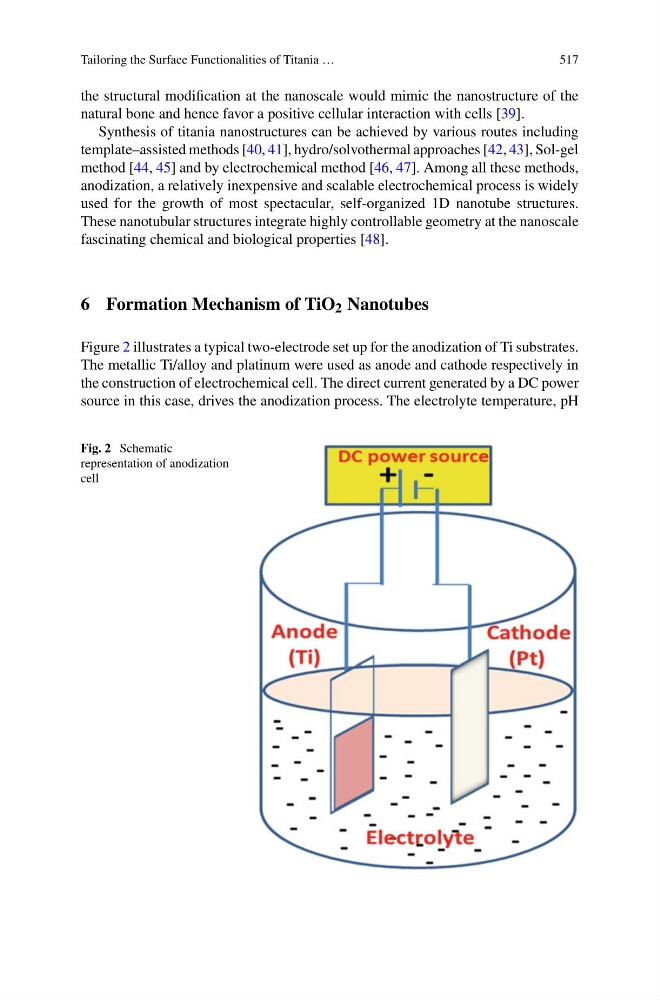
Figure 2 illustrates a typical two-electrode set up for the anodization of Ti substrates.
The metallic Ti/alloy and platinum were used as anode and cathode respectively in
the construction of electrochemical cell. The direct current generated by a DC power
source in this case, drives the anodization process. The electrolyte temperature, pH
Fig. 2 Schematic
representation of anodization
cell
517
the structural modification at the nanoscale would mimic the nanostructure of the
natural bone and hence favor a positive cellular interaction with cells [39].
Synthesis of titania nanostructures can be achieved by various routes including
template–assisted methods [40, 41], hydro/solvothermal approaches [42, 43], Sol-gel
method [44, 45] and by electrochemical method [46, 47]. Among all these methods,
anodization, a relatively inexpensive and scalable electrochemical process is widely
used for the growth of most spectacular, self-organized 1D nanotube structures.
These nanotubular structures integrate highly controllable geometry at the nanoscale
fascinating chemical and biological properties [48].
6 Formation Mechanism of TiO 2 Nanotubes
Figure 2 illustrates a typical two-electrode set up for the anodization of Ti substrates.
The metallic Ti/alloy and platinum were used as anode and cathode respectively in
the construction of electrochemical cell. The direct current generated by a DC power
source in this case, drives the anodization process. The electrolyte temperature, pH
Fig. 2 Schematic
representation of anodization
cell