

474
T. Balusamy et al.
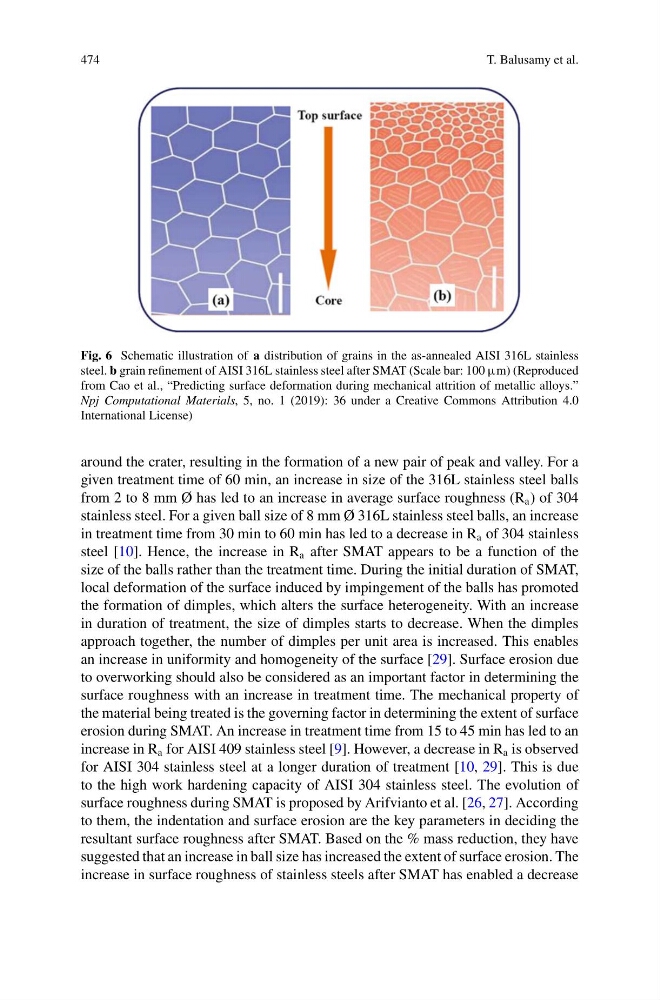
Fig. 6 Schematic illustration of a distribution of grains in the as-annealed AISI 316L stainless
steel. b grain refinement of AISI 316L stainless steel after SMAT (Scale bar: 100 μm) (Reproduced
from Cao et al., “Predicting surface deformation during mechanical attrition of metallic alloys.”
Npj Computational Materials, 5, no. 1 (2019): 36 under a Creative Commons Attribution 4.0
International License)
around the crater, resulting in the formation of a new pair of peak and valley. For a
given treatment time of 60 min, an increase in size of the 316L stainless steel balls
from 2 to 8 mm Ø has led to an increase in average surface roughness (R a ) of 304
stainless steel. For a given ball size of 8 mm Ø 316L stainless steel balls, an increase
in treatment time from 30 min to 60 min has led to a decrease in R a of 304 stainless
steel [10]. Hence, the increase in R a after SMAT appears to be a function of the
size of the balls rather than the treatment time. During the initial duration of SMAT,
local deformation of the surface induced by impingement of the balls has promoted
the formation of dimples, which alters the surface heterogeneity. With an increase
in duration of treatment, the size of dimples starts to decrease. When the dimples
approach together, the number of dimples per unit area is increased. This enables
an increase in uniformity and homogeneity of the surface [29]. Surface erosion due
to overworking should also be considered as an important factor in determining the
surface roughness with an increase in treatment time. The mechanical property of
the material being treated is the governing factor in determining the extent of surface
erosion during SMAT. An increase in treatment time from 15 to 45 min has led to an
increase in R a for AISI 409 stainless steel [9]. However, a decrease in R a is observed
for AISI 304 stainless steel at a longer duration of treatment [10, 29]. This is due
to the high work hardening capacity of AISI 304 stainless steel. The evolution of
surface roughness during SMAT is proposed by Arifvianto et al. [26, 27]. According
to them, the indentation and surface erosion are the key parameters in deciding the
resultant surface roughness after SMAT. Based on the % mass reduction, they have
suggested that an increase in ball size has increased the extent of surface erosion. The
increase in surface roughness of stainless steels after SMAT has enabled a decrease
T. Balusamy et al.
Fig. 6 Schematic illustration of a distribution of grains in the as-annealed AISI 316L stainless
steel. b grain refinement of AISI 316L stainless steel after SMAT (Scale bar: 100 μm) (Reproduced
from Cao et al., “Predicting surface deformation during mechanical attrition of metallic alloys.”
Npj Computational Materials, 5, no. 1 (2019): 36 under a Creative Commons Attribution 4.0
International License)
around the crater, resulting in the formation of a new pair of peak and valley. For a
given treatment time of 60 min, an increase in size of the 316L stainless steel balls
from 2 to 8 mm Ø has led to an increase in average surface roughness (R a ) of 304
stainless steel. For a given ball size of 8 mm Ø 316L stainless steel balls, an increase
in treatment time from 30 min to 60 min has led to a decrease in R a of 304 stainless
steel [10]. Hence, the increase in R a after SMAT appears to be a function of the
size of the balls rather than the treatment time. During the initial duration of SMAT,
local deformation of the surface induced by impingement of the balls has promoted
the formation of dimples, which alters the surface heterogeneity. With an increase
in duration of treatment, the size of dimples starts to decrease. When the dimples
approach together, the number of dimples per unit area is increased. This enables
an increase in uniformity and homogeneity of the surface [29]. Surface erosion due
to overworking should also be considered as an important factor in determining the
surface roughness with an increase in treatment time. The mechanical property of
the material being treated is the governing factor in determining the extent of surface
erosion during SMAT. An increase in treatment time from 15 to 45 min has led to an
increase in R a for AISI 409 stainless steel [9]. However, a decrease in R a is observed
for AISI 304 stainless steel at a longer duration of treatment [10, 29]. This is due
to the high work hardening capacity of AISI 304 stainless steel. The evolution of
surface roughness during SMAT is proposed by Arifvianto et al. [26, 27]. According
to them, the indentation and surface erosion are the key parameters in deciding the
resultant surface roughness after SMAT. Based on the % mass reduction, they have
suggested that an increase in ball size has increased the extent of surface erosion. The
increase in surface roughness of stainless steels after SMAT has enabled a decrease