

Nanomaterials: Surface Functionalization …
413
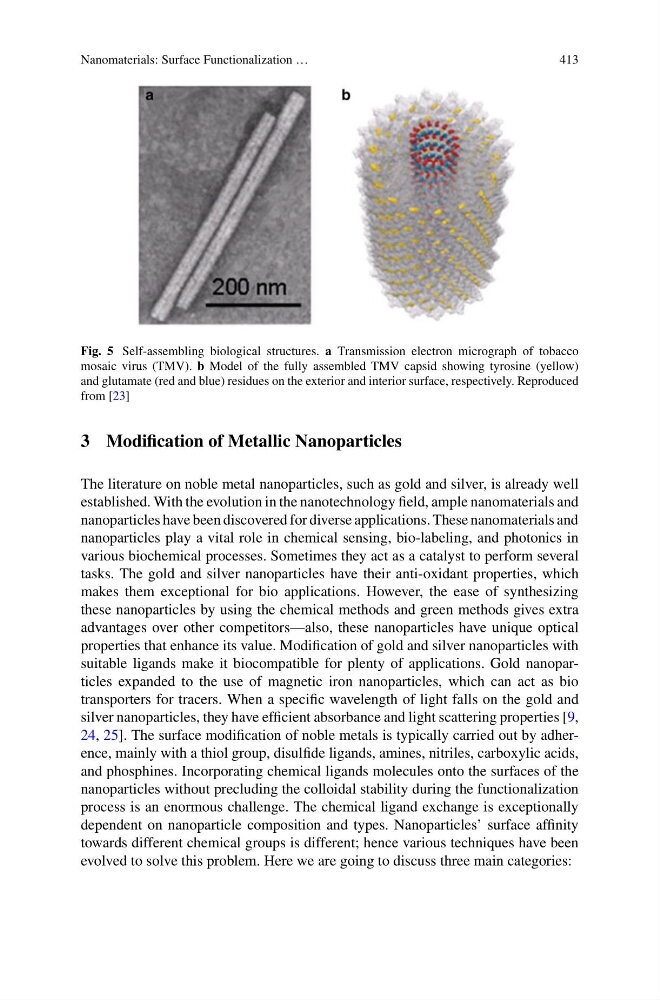
Fig. 5 Self-assembling biological structures. a Transmission electron micrograph of tobacco
mosaic virus (TMV). b Model of the fully assembled TMV capsid showing tyrosine (yellow)
and glutamate (red and blue) residues on the exterior and interior surface, respectively. Reproduced
from [23]
3 Modification of Metallic Nanoparticles
The literature on noble metal nanoparticles, such as gold and silver, is already well
established. With the evolution in the nanotechnology field, ample nanomaterials and
nanoparticles have been discovered for diverse applications. These nanomaterials and
nanoparticles play a vital role in chemical sensing, bio-labeling, and photonics in
various biochemical processes. Sometimes they act as a catalyst to perform several
tasks. The gold and silver nanoparticles have their anti-oxidant properties, which
makes them exceptional for bio applications. However, the ease of synthesizing
these nanoparticles by using the chemical methods and green methods gives extra
advantages over other competitors—also, these nanoparticles have unique optical
properties that enhance its value. Modification of gold and silver nanoparticles with
suitable ligands make it biocompatible for plenty of applications. Gold nanoparticles expanded to the use of magnetic iron nanoparticles, which can act as bio
transporters for tracers. When a specific wavelength of light falls on the gold and
silver nanoparticles, they have efficient absorbance and light scattering properties [9,
24, 25]. The surface modification of noble metals is typically carried out by adherence, mainly with a thiol group, disulfide ligands, amines, nitriles, carboxylic acids,
and phosphines. Incorporating chemical ligands molecules onto the surfaces of the
nanoparticles without precluding the colloidal stability during the functionalization
process is an enormous challenge. The chemical ligand exchange is exceptionally
dependent on nanoparticle composition and types. Nanoparticles’ surface affinity
towards different chemical groups is different; hence various techniques have been
evolved to solve this problem. Here we are going to discuss three main categories:
413
Fig. 5 Self-assembling biological structures. a Transmission electron micrograph of tobacco
mosaic virus (TMV). b Model of the fully assembled TMV capsid showing tyrosine (yellow)
and glutamate (red and blue) residues on the exterior and interior surface, respectively. Reproduced
from [23]
3 Modification of Metallic Nanoparticles
The literature on noble metal nanoparticles, such as gold and silver, is already well
established. With the evolution in the nanotechnology field, ample nanomaterials and
nanoparticles have been discovered for diverse applications. These nanomaterials and
nanoparticles play a vital role in chemical sensing, bio-labeling, and photonics in
various biochemical processes. Sometimes they act as a catalyst to perform several
tasks. The gold and silver nanoparticles have their anti-oxidant properties, which
makes them exceptional for bio applications. However, the ease of synthesizing
these nanoparticles by using the chemical methods and green methods gives extra
advantages over other competitors—also, these nanoparticles have unique optical
properties that enhance its value. Modification of gold and silver nanoparticles with
suitable ligands make it biocompatible for plenty of applications. Gold nanoparticles expanded to the use of magnetic iron nanoparticles, which can act as bio
transporters for tracers. When a specific wavelength of light falls on the gold and
silver nanoparticles, they have efficient absorbance and light scattering properties [9,
24, 25]. The surface modification of noble metals is typically carried out by adherence, mainly with a thiol group, disulfide ligands, amines, nitriles, carboxylic acids,
and phosphines. Incorporating chemical ligands molecules onto the surfaces of the
nanoparticles without precluding the colloidal stability during the functionalization
process is an enormous challenge. The chemical ligand exchange is exceptionally
dependent on nanoparticle composition and types. Nanoparticles’ surface affinity
towards different chemical groups is different; hence various techniques have been
evolved to solve this problem. Here we are going to discuss three main categories: