

Fabrication of Nanostructured Scaffolds …
319
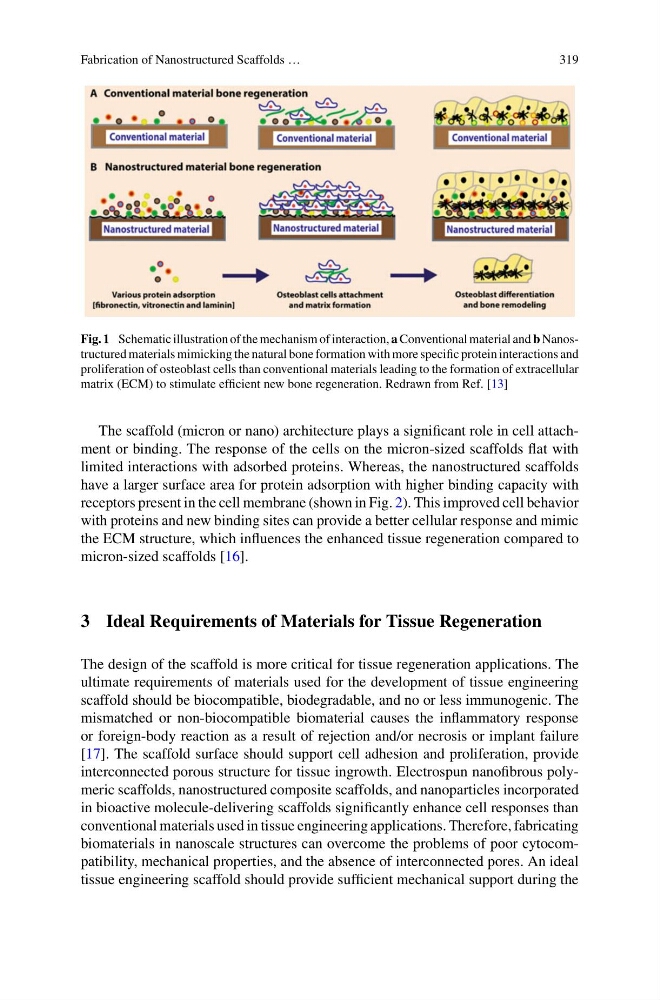
Fig. 1 Schematic illustration of the mechanism of interaction, a Conventional material and b Nanostructured materials mimicking the natural bone formation with more specific protein interactions and
proliferation of osteoblast cells than conventional materials leading to the formation of extracellular
matrix (ECM) to stimulate efficient new bone regeneration. Redrawn from Ref. [13]
The scaffold (micron or nano) architecture plays a significant role in cell attachment or binding. The response of the cells on the micron-sized scaffolds flat with
limited interactions with adsorbed proteins. Whereas, the nanostructured scaffolds
have a larger surface area for protein adsorption with higher binding capacity with
receptors present in the cell membrane (shown in Fig. 2). This improved cell behavior
with proteins and new binding sites can provide a better cellular response and mimic
the ECM structure, which influences the enhanced tissue regeneration compared to
micron-sized scaffolds [16].
3 Ideal Requirements of Materials for Tissue Regeneration
The design of the scaffold is more critical for tissue regeneration applications. The
ultimate requirements of materials used for the development of tissue engineering
scaffold should be biocompatible, biodegradable, and no or less immunogenic. The
mismatched or non-biocompatible biomaterial causes the inflammatory response
or foreign-body reaction as a result of rejection and/or necrosis or implant failure
[17]. The scaffold surface should support cell adhesion and proliferation, provide
interconnected porous structure for tissue ingrowth. Electrospun nanofibrous polymeric scaffolds, nanostructured composite scaffolds, and nanoparticles incorporated
in bioactive molecule-delivering scaffolds significantly enhance cell responses than
conventional materials used in tissue engineering applications. Therefore, fabricating
biomaterials in nanoscale structures can overcome the problems of poor cytocompatibility, mechanical properties, and the absence of interconnected pores. An ideal
tissue engineering scaffold should provide sufficient mechanical support during the
319
Fig. 1 Schematic illustration of the mechanism of interaction, a Conventional material and b Nanostructured materials mimicking the natural bone formation with more specific protein interactions and
proliferation of osteoblast cells than conventional materials leading to the formation of extracellular
matrix (ECM) to stimulate efficient new bone regeneration. Redrawn from Ref. [13]
The scaffold (micron or nano) architecture plays a significant role in cell attachment or binding. The response of the cells on the micron-sized scaffolds flat with
limited interactions with adsorbed proteins. Whereas, the nanostructured scaffolds
have a larger surface area for protein adsorption with higher binding capacity with
receptors present in the cell membrane (shown in Fig. 2). This improved cell behavior
with proteins and new binding sites can provide a better cellular response and mimic
the ECM structure, which influences the enhanced tissue regeneration compared to
micron-sized scaffolds [16].
3 Ideal Requirements of Materials for Tissue Regeneration
The design of the scaffold is more critical for tissue regeneration applications. The
ultimate requirements of materials used for the development of tissue engineering
scaffold should be biocompatible, biodegradable, and no or less immunogenic. The
mismatched or non-biocompatible biomaterial causes the inflammatory response
or foreign-body reaction as a result of rejection and/or necrosis or implant failure
[17]. The scaffold surface should support cell adhesion and proliferation, provide
interconnected porous structure for tissue ingrowth. Electrospun nanofibrous polymeric scaffolds, nanostructured composite scaffolds, and nanoparticles incorporated
in bioactive molecule-delivering scaffolds significantly enhance cell responses than
conventional materials used in tissue engineering applications. Therefore, fabricating
biomaterials in nanoscale structures can overcome the problems of poor cytocompatibility, mechanical properties, and the absence of interconnected pores. An ideal
tissue engineering scaffold should provide sufficient mechanical support during the