

Nanomaterials: Versatile Drug Carriers for Nanomedicine
273
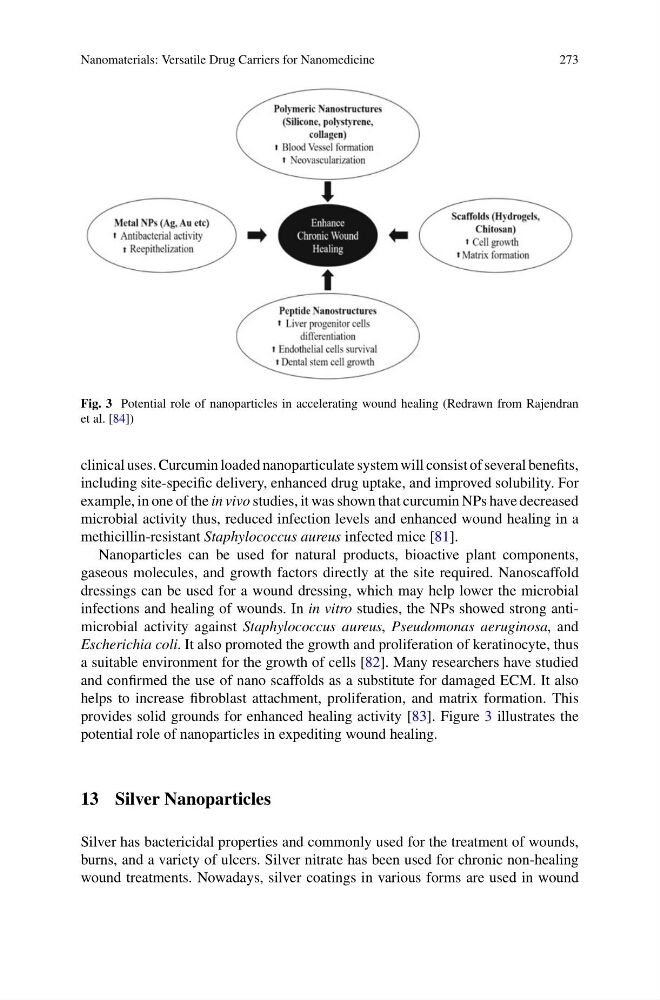
Fig. 3 Potential role of nanoparticles in accelerating wound healing (Redrawn from Rajendran
et al. [84])
clinical uses. Curcumin loaded nanoparticulate system will consist of several benefits,
including site-specific delivery, enhanced drug uptake, and improved solubility. For
example, in one of the in vivo studies, it was shown that curcumin NPs have decreased
microbial activity thus, reduced infection levels and enhanced wound healing in a
methicillin-resistant Staphylococcus aureus infected mice [81].
Nanoparticles can be used for natural products, bioactive plant components,
gaseous molecules, and growth factors directly at the site required. Nanoscaffold
dressings can be used for a wound dressing, which may help lower the microbial
infections and healing of wounds. In in vitro studies, the NPs showed strong antimicrobial activity against Staphylococcus aureus, Pseudomonas aeruginosa, and
Escherichia coli. It also promoted the growth and proliferation of keratinocyte, thus
a suitable environment for the growth of cells [82]. Many researchers have studied
and confirmed the use of nano scaffolds as a substitute for damaged ECM. It also
helps to increase fibroblast attachment, proliferation, and matrix formation. This
provides solid grounds for enhanced healing activity [83]. Figure 3 illustrates the
potential role of nanoparticles in expediting wound healing.
13 Silver Nanoparticles
Silver has bactericidal properties and commonly used for the treatment of wounds,
burns, and a variety of ulcers. Silver nitrate has been used for chronic non-healing
wound treatments. Nowadays, silver coatings in various forms are used in wound
273
Fig. 3 Potential role of nanoparticles in accelerating wound healing (Redrawn from Rajendran
et al. [84])
clinical uses. Curcumin loaded nanoparticulate system will consist of several benefits,
including site-specific delivery, enhanced drug uptake, and improved solubility. For
example, in one of the in vivo studies, it was shown that curcumin NPs have decreased
microbial activity thus, reduced infection levels and enhanced wound healing in a
methicillin-resistant Staphylococcus aureus infected mice [81].
Nanoparticles can be used for natural products, bioactive plant components,
gaseous molecules, and growth factors directly at the site required. Nanoscaffold
dressings can be used for a wound dressing, which may help lower the microbial
infections and healing of wounds. In in vitro studies, the NPs showed strong antimicrobial activity against Staphylococcus aureus, Pseudomonas aeruginosa, and
Escherichia coli. It also promoted the growth and proliferation of keratinocyte, thus
a suitable environment for the growth of cells [82]. Many researchers have studied
and confirmed the use of nano scaffolds as a substitute for damaged ECM. It also
helps to increase fibroblast attachment, proliferation, and matrix formation. This
provides solid grounds for enhanced healing activity [83]. Figure 3 illustrates the
potential role of nanoparticles in expediting wound healing.
13 Silver Nanoparticles
Silver has bactericidal properties and commonly used for the treatment of wounds,
burns, and a variety of ulcers. Silver nitrate has been used for chronic non-healing
wound treatments. Nowadays, silver coatings in various forms are used in wound