

Nanomaterials: Versatile Drug Carriers for Nanomedicine
255
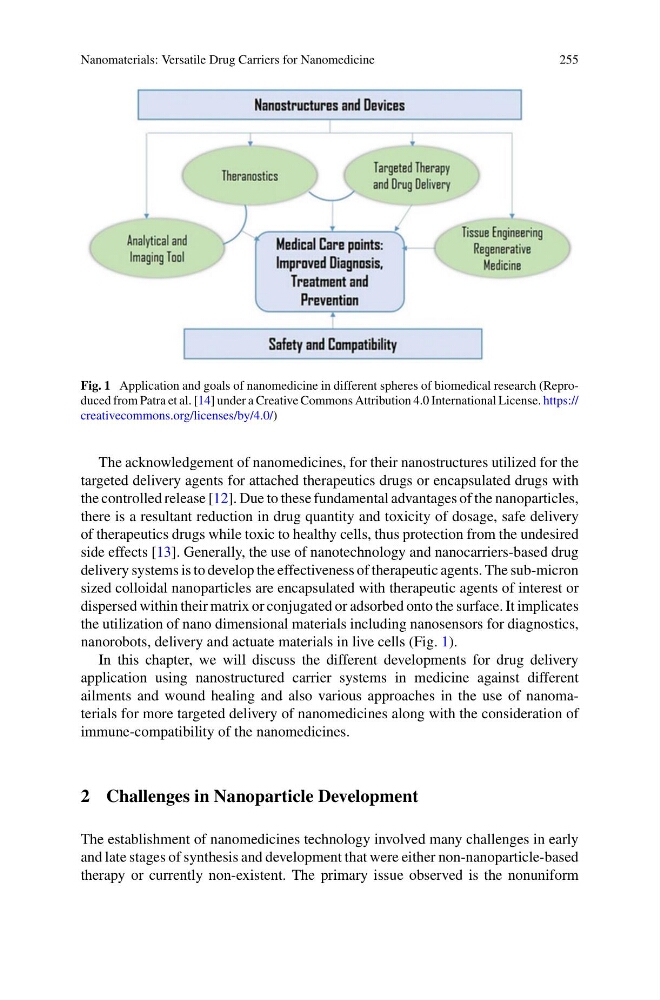
Fig. 1 Application and goals of nanomedicine in different spheres of biomedical research (Reproduced from Patra et al. [14] under a Creative Commons Attribution 4.0 International License. https://
creativecommons.org/licenses/by/4.0/)
The acknowledgement of nanomedicines, for their nanostructures utilized for the
targeted delivery agents for attached therapeutics drugs or encapsulated drugs with
the controlled release [12]. Due to these fundamental advantages of the nanoparticles,
there is a resultant reduction in drug quantity and toxicity of dosage, safe delivery
of therapeutics drugs while toxic to healthy cells, thus protection from the undesired
side effects [13]. Generally, the use of nanotechnology and nanocarriers-based drug
delivery systems is to develop the effectiveness of therapeutic agents. The sub-micron
sized colloidal nanoparticles are encapsulated with therapeutic agents of interest or
dispersed within their matrix or conjugated or adsorbed onto the surface. It implicates
the utilization of nano dimensional materials including nanosensors for diagnostics,
nanorobots, delivery and actuate materials in live cells (Fig. 1).
In this chapter, we will discuss the different developments for drug delivery
application using nanostructured carrier systems in medicine against different
ailments and wound healing and also various approaches in the use of nanomaterials for more targeted delivery of nanomedicines along with the consideration of
immune-compatibility of the nanomedicines.
2 Challenges in Nanoparticle Development
The establishment of nanomedicines technology involved many challenges in early
and late stages of synthesis and development that were either non-nanoparticle-based
therapy or currently non-existent. The primary issue observed is the nonuniform
255
Fig. 1 Application and goals of nanomedicine in different spheres of biomedical research (Reproduced from Patra et al. [14] under a Creative Commons Attribution 4.0 International License. https://
creativecommons.org/licenses/by/4.0/)
The acknowledgement of nanomedicines, for their nanostructures utilized for the
targeted delivery agents for attached therapeutics drugs or encapsulated drugs with
the controlled release [12]. Due to these fundamental advantages of the nanoparticles,
there is a resultant reduction in drug quantity and toxicity of dosage, safe delivery
of therapeutics drugs while toxic to healthy cells, thus protection from the undesired
side effects [13]. Generally, the use of nanotechnology and nanocarriers-based drug
delivery systems is to develop the effectiveness of therapeutic agents. The sub-micron
sized colloidal nanoparticles are encapsulated with therapeutic agents of interest or
dispersed within their matrix or conjugated or adsorbed onto the surface. It implicates
the utilization of nano dimensional materials including nanosensors for diagnostics,
nanorobots, delivery and actuate materials in live cells (Fig. 1).
In this chapter, we will discuss the different developments for drug delivery
application using nanostructured carrier systems in medicine against different
ailments and wound healing and also various approaches in the use of nanomaterials for more targeted delivery of nanomedicines along with the consideration of
immune-compatibility of the nanomedicines.
2 Challenges in Nanoparticle Development
The establishment of nanomedicines technology involved many challenges in early
and late stages of synthesis and development that were either non-nanoparticle-based
therapy or currently non-existent. The primary issue observed is the nonuniform