

Fluorescence Spectrometry
447
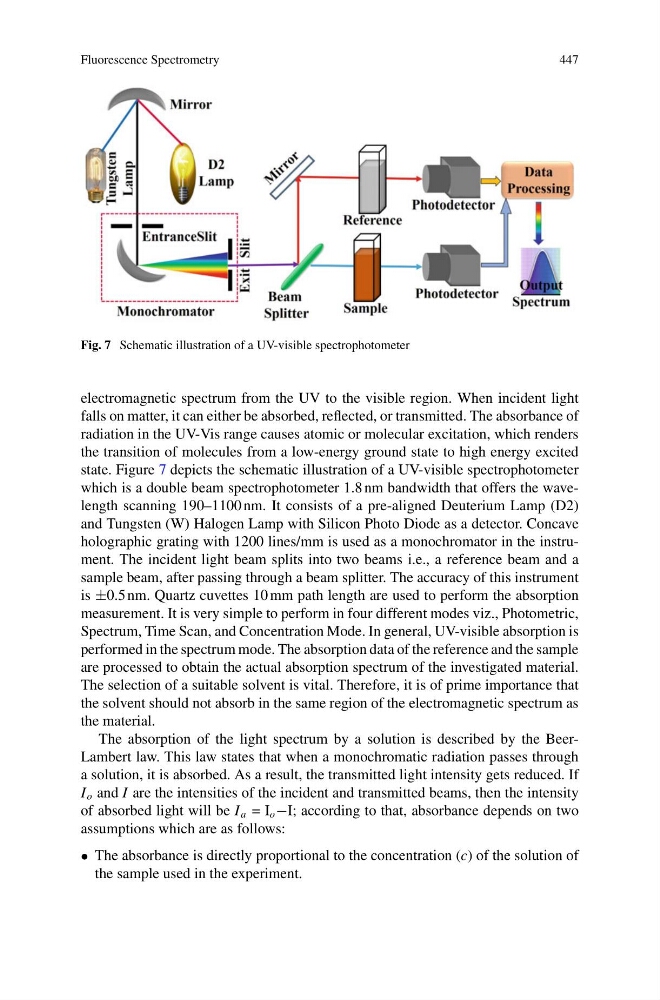
Fig. 7 Schematic illustration of a UV-visible spectrophotometer
electromagnetic spectrum from the UV to the visible region. When incident light
falls on matter, it can either be absorbed, reflected, or transmitted. The absorbance of
radiation in the UV-Vis range causes atomic or molecular excitation, which renders
the transition of molecules from a low-energy ground state to high energy excited
state. Figure 7 depicts the schematic illustration of a UV-visible spectrophotometer
which is a double beam spectrophotometer 1.8 nm bandwidth that offers the wavelength scanning 190–1100 nm. It consists of a pre-aligned Deuterium Lamp (D2)
and Tungsten (W) Halogen Lamp with Silicon Photo Diode as a detector. Concave
holographic grating with 1200 lines/mm is used as a monochromator in the instrument. The incident light beam splits into two beams i.e., a reference beam and a
sample beam, after passing through a beam splitter. The accuracy of this instrument
is ±0.5 nm. Quartz cuvettes 10 mm path length are used to perform the absorption
measurement. It is very simple to perform in four different modes viz., Photometric,
Spectrum, Time Scan, and Concentration Mode. In general, UV-visible absorption is
performed in the spectrum mode. The absorption data of the reference and the sample
are processed to obtain the actual absorption spectrum of the investigated material.
The selection of a suitable solvent is vital. Therefore, it is of prime importance that
the solvent should not absorb in the same region of the electromagnetic spectrum as
the material.
The absorption of the light spectrum by a solution is described by the BeerLambert law. This law states that when a monochromatic radiation passes through
a solution, it is absorbed. As a result, the transmitted light intensity gets reduced. If
I o and I are the intensities of the incident and transmitted beams, then the intensity
of absorbed light will be I a = I o −I; according to that, absorbance depends on two
assumptions which are as follows:
• The absorbance is directly proportional to the concentration (c) of the solution of
the sample used in the experiment.
447
Fig. 7 Schematic illustration of a UV-visible spectrophotometer
electromagnetic spectrum from the UV to the visible region. When incident light
falls on matter, it can either be absorbed, reflected, or transmitted. The absorbance of
radiation in the UV-Vis range causes atomic or molecular excitation, which renders
the transition of molecules from a low-energy ground state to high energy excited
state. Figure 7 depicts the schematic illustration of a UV-visible spectrophotometer
which is a double beam spectrophotometer 1.8 nm bandwidth that offers the wavelength scanning 190–1100 nm. It consists of a pre-aligned Deuterium Lamp (D2)
and Tungsten (W) Halogen Lamp with Silicon Photo Diode as a detector. Concave
holographic grating with 1200 lines/mm is used as a monochromator in the instrument. The incident light beam splits into two beams i.e., a reference beam and a
sample beam, after passing through a beam splitter. The accuracy of this instrument
is ±0.5 nm. Quartz cuvettes 10 mm path length are used to perform the absorption
measurement. It is very simple to perform in four different modes viz., Photometric,
Spectrum, Time Scan, and Concentration Mode. In general, UV-visible absorption is
performed in the spectrum mode. The absorption data of the reference and the sample
are processed to obtain the actual absorption spectrum of the investigated material.
The selection of a suitable solvent is vital. Therefore, it is of prime importance that
the solvent should not absorb in the same region of the electromagnetic spectrum as
the material.
The absorption of the light spectrum by a solution is described by the BeerLambert law. This law states that when a monochromatic radiation passes through
a solution, it is absorbed. As a result, the transmitted light intensity gets reduced. If
I o and I are the intensities of the incident and transmitted beams, then the intensity
of absorbed light will be I a = I o −I; according to that, absorbance depends on two
assumptions which are as follows:
• The absorbance is directly proportional to the concentration (c) of the solution of
the sample used in the experiment.