

3.6 Kaburaki Masaki and Stellar Astronomy
3.6.1 Life and Works
Kaburaki worked on stellar astronomy and popularization of astronomy (Kaburaki
1963; Takase 1988).
Kaburaki Masaki (鏑木政岐, 1902–1987) was born in the city of Kanazawa,
Ishikawa Prefecture, the son of a Shinto priest. He studied spherical astronomy under
Hirayama Kiyotsugu and stellar astronomy under Hirayama Shin in the Department
of Astronomy, Tokyo Imperial University. After graduation in 1926, he began to
work as a technician at the Meridian Circle Laboratory at the TAO.
His main duties were meridian observations and time keeping. In 1935, he moved
to the Department of Astronomy, Tokyo Imperial University, as an assistant professor and promoted to professor in 1946 (Fig. 3.11).
In 1961, Kaburaki of Tokyo University and Shimizu Tsutomu (清水彊), a
professor at Kyoto University, organized the first interuniversity meeting on stellar
astronomy. This annual meeting was called the Stellar Astronomy Meeting (SAM).
In its 10-years span, SAM contributed greatly to the collaborative study of galactic
astronomy in Japan and was also involved in the initial planning stage of a project
that became the large Schmidt telescope with an aperture of 105/150 cm, which was
realized after long discussions in the SAM (Chap. 6).
After retirement in 1963, Kaburaki was invited to serve as a professor at Tokai
University in Tokyo. Along with his research activities, he also diligently continued
his work on education and the popularization of astronomy. He wrote about 20 popular books in his later years. In addition, he served as Director of the Goto Planetarium in Tokyo until 1986 and died a year later at age 85.
Kaburaki’s stellar astronomy was taken up by his graduate students Takase
Bunshiro (高瀬文志郎) and Ishida Keiichi (石田薫一) at the TAO.
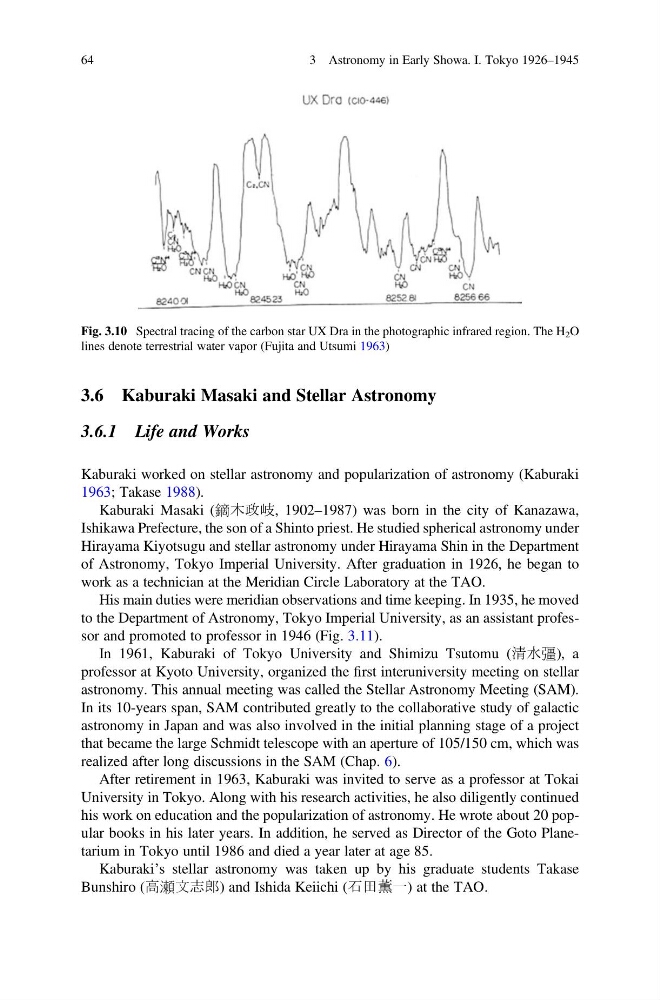
Fig. 3.10 Spectral tracing of the carbon star UX Dra in the photographic infrared region. The H 2 O
lines denote terrestrial water vapor (Fujita and Utsumi 1963)
64
3 Astronomy in Early Showa. I. Tokyo 1926–1945
3.6.1 Life and Works
Kaburaki worked on stellar astronomy and popularization of astronomy (Kaburaki
1963; Takase 1988).
Kaburaki Masaki (鏑木政岐, 1902–1987) was born in the city of Kanazawa,
Ishikawa Prefecture, the son of a Shinto priest. He studied spherical astronomy under
Hirayama Kiyotsugu and stellar astronomy under Hirayama Shin in the Department
of Astronomy, Tokyo Imperial University. After graduation in 1926, he began to
work as a technician at the Meridian Circle Laboratory at the TAO.
His main duties were meridian observations and time keeping. In 1935, he moved
to the Department of Astronomy, Tokyo Imperial University, as an assistant professor and promoted to professor in 1946 (Fig. 3.11).
In 1961, Kaburaki of Tokyo University and Shimizu Tsutomu (清水彊), a
professor at Kyoto University, organized the first interuniversity meeting on stellar
astronomy. This annual meeting was called the Stellar Astronomy Meeting (SAM).
In its 10-years span, SAM contributed greatly to the collaborative study of galactic
astronomy in Japan and was also involved in the initial planning stage of a project
that became the large Schmidt telescope with an aperture of 105/150 cm, which was
realized after long discussions in the SAM (Chap. 6).
After retirement in 1963, Kaburaki was invited to serve as a professor at Tokai
University in Tokyo. Along with his research activities, he also diligently continued
his work on education and the popularization of astronomy. He wrote about 20 popular books in his later years. In addition, he served as Director of the Goto Planetarium in Tokyo until 1986 and died a year later at age 85.
Kaburaki’s stellar astronomy was taken up by his graduate students Takase
Bunshiro (高瀬文志郎) and Ishida Keiichi (石田薫一) at the TAO.
Fig. 3.10 Spectral tracing of the carbon star UX Dra in the photographic infrared region. The H 2 O
lines denote terrestrial water vapor (Fujita and Utsumi 1963)
64
3 Astronomy in Early Showa. I. Tokyo 1926–1945