

126
One problem is that many renewable energy technologies are reliant on critical
minerals, for example, neodymium in wind turbines and indium in thin fi lm solar
cells. Scenarios based on widespread implementation of wind, solar and other alternative means of generating electricity shift the problem of decarbonising the energy
sector to one of material criticality. Material criticality is not to be confused with
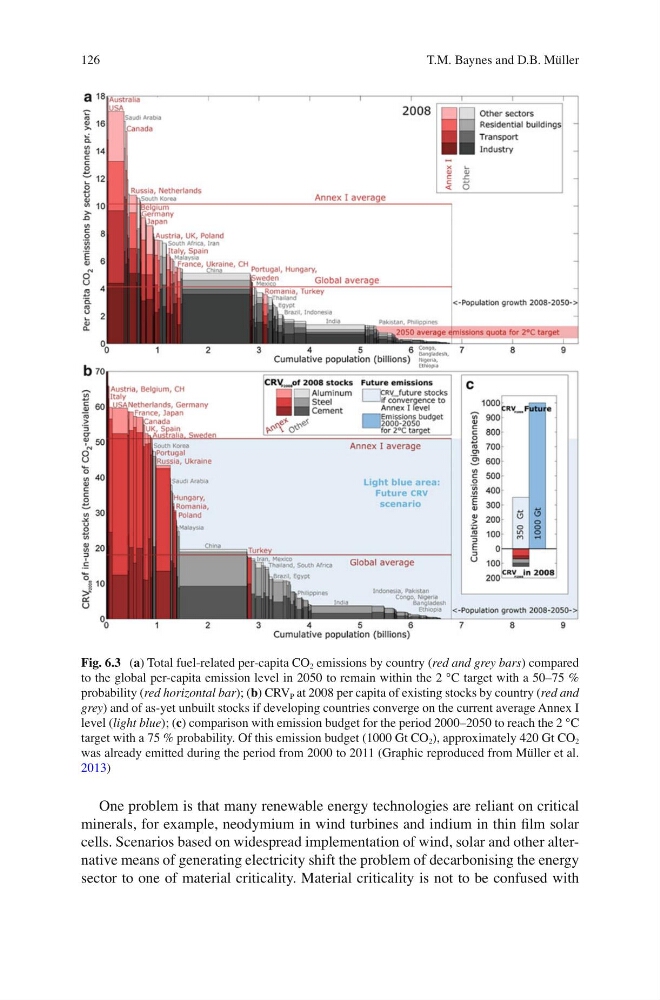
Fig. 6.3 ( a ) Total fuel-related per-capita CO 2 emissions by country ( red and grey bars ) compared
to the global per-capita emission level in 2050 to remain within the 2 °C target with a 50–75 %
probability ( red horizontal bar ); ( b ) CRV P at 2008 per capita of existing stocks by country ( red and
grey ) and of as-yet unbuilt stocks if developing countries converge on the current average Annex I
level ( light blue ); ( c ) comparison with emission budget for the period 2000–2050 to reach the 2 °C
target with a 75 % probability. Of this emission budget (1000 Gt CO 2 ), approximately 420 Gt CO 2
was already emitted during the period from 2000 to 2011 (Graphic reproduced from Müller et al.
2013 )
T.M. Baynes and D.B. Müller
One problem is that many renewable energy technologies are reliant on critical
minerals, for example, neodymium in wind turbines and indium in thin fi lm solar
cells. Scenarios based on widespread implementation of wind, solar and other alternative means of generating electricity shift the problem of decarbonising the energy
sector to one of material criticality. Material criticality is not to be confused with
Fig. 6.3 ( a ) Total fuel-related per-capita CO 2 emissions by country ( red and grey bars ) compared
to the global per-capita emission level in 2050 to remain within the 2 °C target with a 50–75 %
probability ( red horizontal bar ); ( b ) CRV P at 2008 per capita of existing stocks by country ( red and
grey ) and of as-yet unbuilt stocks if developing countries converge on the current average Annex I
level ( light blue ); ( c ) comparison with emission budget for the period 2000–2050 to reach the 2 °C
target with a 75 % probability. Of this emission budget (1000 Gt CO 2 ), approximately 420 Gt CO 2
was already emitted during the period from 2000 to 2011 (Graphic reproduced from Müller et al.
2013 )
T.M. Baynes and D.B. Müller