

2.1 Searches for Monopoles
17
a
b
B
V+
Frequency (Hz)
VI+
1.8
1.15K
1.75K
1.6
1.4
1.2
0.8
x'
0.6
0.4
0.2
10 1
10 2
10 3
10 4
10 1
10 2
10 3
10 4
1
0
c
Frequency (Hz)
1.15K
1.75K
0.4
0.5
0.6
0.7
0.8
x''
0.3
0.2
0.1
0
Ii
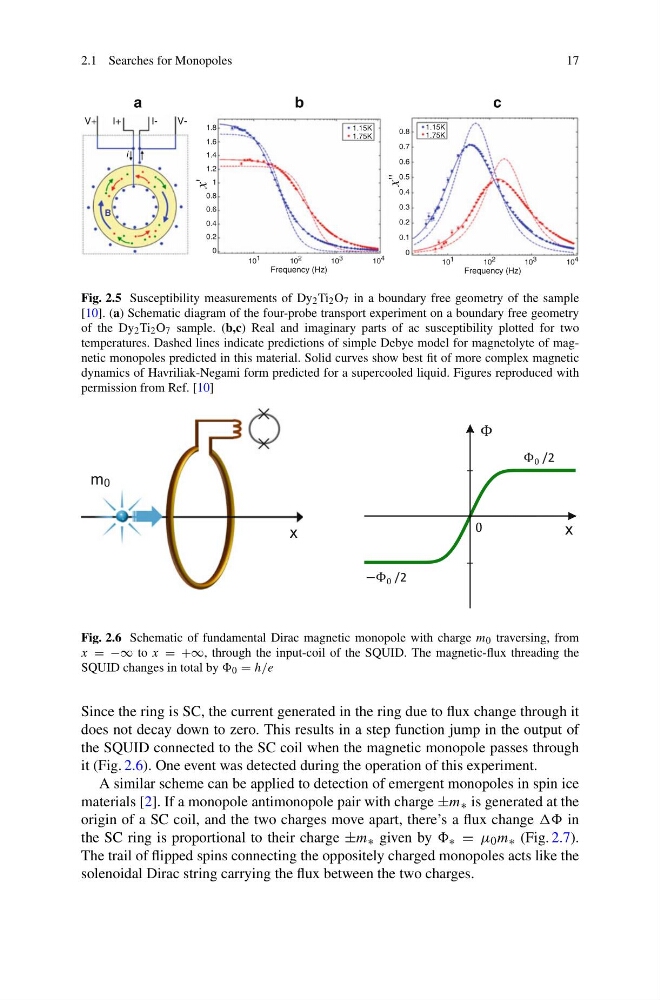
Fig. 2.5 Susceptibility measurements of Dy 2 Ti 2 O 7 in a boundary free geometry of the sample
[10]. (a) Schematic diagram of the four-probe transport experiment on a boundary free geometry
of the Dy 2 Ti 2 O 7 sample. (b,c) Real and imaginary parts of ac susceptibility plotted for two
temperatures. Dashed lines indicate predictions of simple Debye model for magnetolyte of magnetic monopoles predicted in this material. Solid curves show best fit of more complex magnetic
dynamics of Havriliak-Negami form predicted for a supercooled liquid. Figures reproduced with
permission from Ref. [10]
m 0
0
/2
0
/2
0
x
Φ
−Φ 0 /2
Φ 0 /2
0
x
x
Fig. 2.6 Schematic of fundamental Dirac magnetic monopole with charge m 0 traversing, from
x = −∞ to x = +∞, through the input-coil of the SQUID. The magnetic-flux threading the
SQUID changes in total by 0 = h/e
Since the ring is SC, the current generated in the ring due to flux change through it
does not decay down to zero. This results in a step function jump in the output of
the SQUID connected to the SC coil when the magnetic monopole passes through
it (Fig. 2.6). One event was detected during the operation of this experiment.
A similar scheme can be applied to detection of emergent monopoles in spin ice
materials [2]. If a monopole antimonopole pair with charge ±m ∗ is generated at the
origin of a SC coil, and the two charges move apart, there’s a flux change in
the SC ring is proportional to their charge ±m ∗ given by ∗ = μ 0 m ∗ (Fig. 2.7).
The trail of flipped spins connecting the oppositely charged monopoles acts like the
solenoidal Dirac string carrying the flux between the two charges.
17
a
b
B
V+
Frequency (Hz)
VI+
1.8
1.15K
1.75K
1.6
1.4
1.2
0.8
x'
0.6
0.4
0.2
10 1
10 2
10 3
10 4
10 1
10 2
10 3
10 4
1
0
c
Frequency (Hz)
1.15K
1.75K
0.4
0.5
0.6
0.7
0.8
x''
0.3
0.2
0.1
0
Ii
Fig. 2.5 Susceptibility measurements of Dy 2 Ti 2 O 7 in a boundary free geometry of the sample
[10]. (a) Schematic diagram of the four-probe transport experiment on a boundary free geometry
of the Dy 2 Ti 2 O 7 sample. (b,c) Real and imaginary parts of ac susceptibility plotted for two
temperatures. Dashed lines indicate predictions of simple Debye model for magnetolyte of magnetic monopoles predicted in this material. Solid curves show best fit of more complex magnetic
dynamics of Havriliak-Negami form predicted for a supercooled liquid. Figures reproduced with
permission from Ref. [10]
m 0
0
/2
0
/2
0
x
Φ
−Φ 0 /2
Φ 0 /2
0
x
x
Fig. 2.6 Schematic of fundamental Dirac magnetic monopole with charge m 0 traversing, from
x = −∞ to x = +∞, through the input-coil of the SQUID. The magnetic-flux threading the
SQUID changes in total by 0 = h/e
Since the ring is SC, the current generated in the ring due to flux change through it
does not decay down to zero. This results in a step function jump in the output of
the SQUID connected to the SC coil when the magnetic monopole passes through
it (Fig. 2.6). One event was detected during the operation of this experiment.
A similar scheme can be applied to detection of emergent monopoles in spin ice
materials [2]. If a monopole antimonopole pair with charge ±m ∗ is generated at the
origin of a SC coil, and the two charges move apart, there’s a flux change in
the SC ring is proportional to their charge ±m ∗ given by ∗ = μ 0 m ∗ (Fig. 2.7).
The trail of flipped spins connecting the oppositely charged monopoles acts like the
solenoidal Dirac string carrying the flux between the two charges.