

18
2 Magnetic Monopoles in Spin Ices
+m *
-m *
x
*
0
Φ
Φ ∗
0
x
x
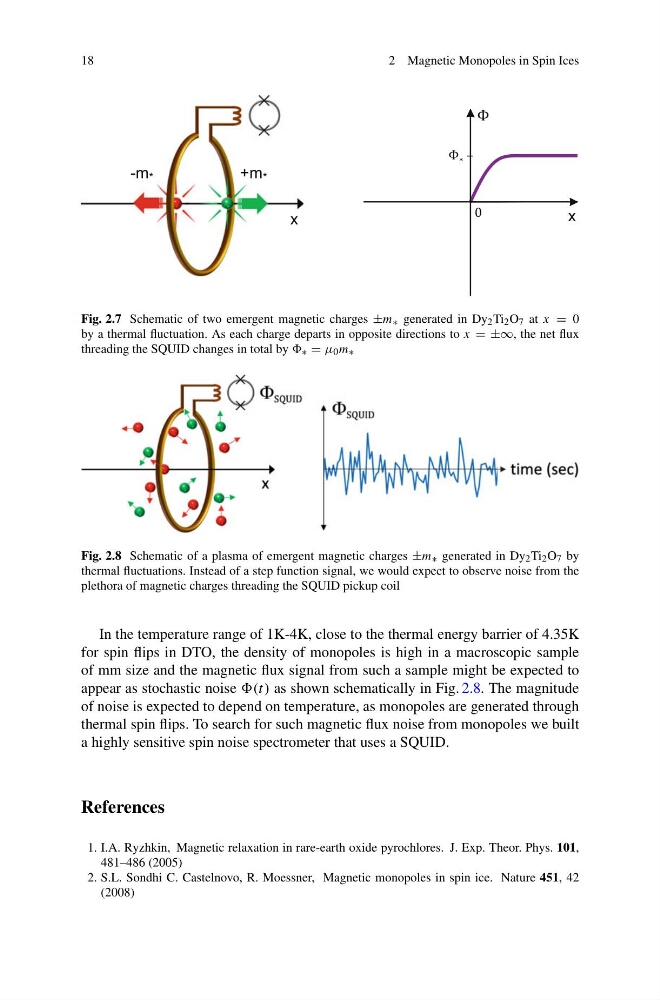
Fig. 2.7 Schematic of two emergent magnetic charges ±m ∗ generated in Dy 2 Ti 2 O 7 at x = 0
by a thermal fluctuation. As each charge departs in opposite directions to x = ±∞, the net flux
threading the SQUID changes in total by ∗ = μ 0 m ∗
Fig. 2.8 Schematic of a plasma of emergent magnetic charges ±m ∗ generated in Dy 2 Ti 2 O 7 by
thermal fluctuations. Instead of a step function signal, we would expect to observe noise from the
plethora of magnetic charges threading the SQUID pickup coil
In the temperature range of 1K-4K, close to the thermal energy barrier of 4.35K
for spin flips in DTO, the density of monopoles is high in a macroscopic sample
of mm size and the magnetic flux signal from such a sample might be expected to
appear as stochastic noise as shown schematically in Fig. 2.8. The magnitude
of noise is expected to depend on temperature, as monopoles are generated through
thermal spin flips. To search for such magnetic flux noise from monopoles we built
a highly sensitive spin noise spectrometer that uses a SQUID.
References
1. I.A. Ryzhkin, Magnetic relaxation in rare-earth oxide pyrochlores. J. Exp. Theor. Phys. 101,
481–486 (2005)
2. S.L. Sondhi C. Castelnovo, R. Moessner, Magnetic monopoles in spin ice. Nature 451, 42
(2008)
2 Magnetic Monopoles in Spin Ices
+m *
-m *
x
*
0
Φ
Φ ∗
0
x
x
Fig. 2.7 Schematic of two emergent magnetic charges ±m ∗ generated in Dy 2 Ti 2 O 7 at x = 0
by a thermal fluctuation. As each charge departs in opposite directions to x = ±∞, the net flux
threading the SQUID changes in total by ∗ = μ 0 m ∗
Fig. 2.8 Schematic of a plasma of emergent magnetic charges ±m ∗ generated in Dy 2 Ti 2 O 7 by
thermal fluctuations. Instead of a step function signal, we would expect to observe noise from the
plethora of magnetic charges threading the SQUID pickup coil
In the temperature range of 1K-4K, close to the thermal energy barrier of 4.35K
for spin flips in DTO, the density of monopoles is high in a macroscopic sample
of mm size and the magnetic flux signal from such a sample might be expected to
appear as stochastic noise as shown schematically in Fig. 2.8. The magnitude
of noise is expected to depend on temperature, as monopoles are generated through
thermal spin flips. To search for such magnetic flux noise from monopoles we built
a highly sensitive spin noise spectrometer that uses a SQUID.
References
1. I.A. Ryzhkin, Magnetic relaxation in rare-earth oxide pyrochlores. J. Exp. Theor. Phys. 101,
481–486 (2005)
2. S.L. Sondhi C. Castelnovo, R. Moessner, Magnetic monopoles in spin ice. Nature 451, 42
(2008)