

16
2 Magnetic Monopoles in Spin Ices
a
1
0
5
4
3
2
1
0
1
2
3
4
5 0
1
2
3
4
5
L (r.l.u.)
K ( r .l .u .)
H ( r . l . u . )
0.5
1
0
5
4
3
2
1
0
1
2
3
4
5 0
1
2
3
4
5
L (r.l.u.)
K ( r .l .u .)
H ( r . l . u . )
0.5
1
0
5
4
3
2
1
0
1
2
3
4
5 5
4
3
2
1
L (r.l.u.)
K ( r .l .u .)
0.5
b
1
0
4
3
2
1
0
1
2
3
4
4
3
2
1
L (r.l.u.)
K ( r .l .u .)
H ( r . l. u . )
0.5
c
1
0
4 3 2 1 0
0
1 2
3
4
5
1 2 3 4 5
-4
-3 -2
-1
L (r.l.u.)
K ( r .l .u .)
H ( r . l. u . )
0.5
1
0
5
4 3 2 1 0
0
1 2
3
4
5
1 2 3 4 5
4
5
3 2
1
L (r.l.u.)
K ( r .l .u .)
H ( r . l. u . )
0.5
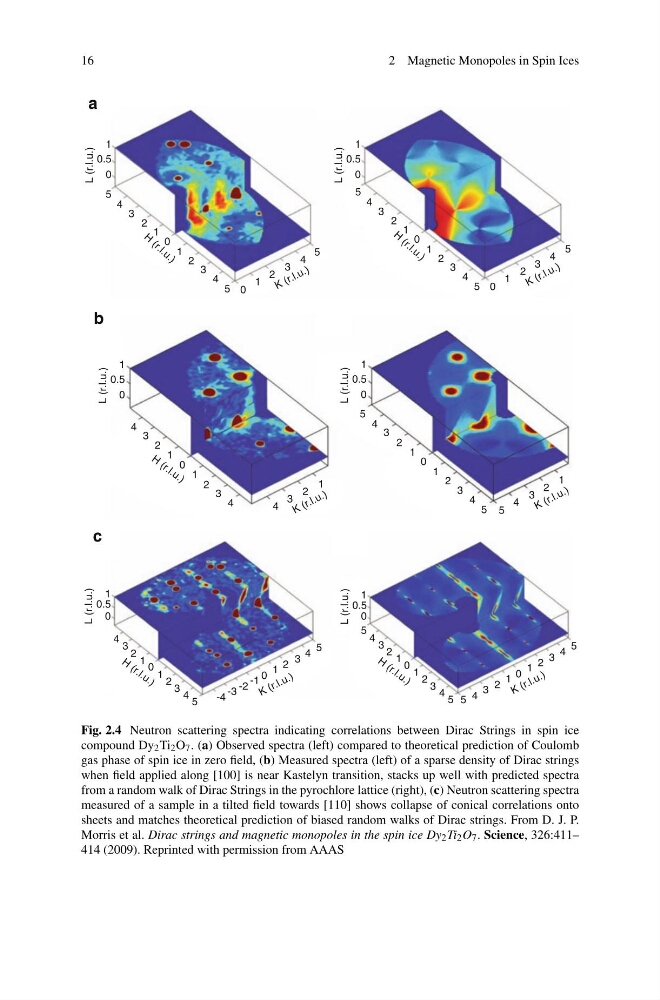
Fig. 2.4 Neutron scattering spectra indicating correlations between Dirac Strings in spin ice
compound Dy 2 Ti 2 O 7 . (a) Observed spectra (left) compared to theoretical prediction of Coulomb
gas phase of spin ice in zero field, (b) Measured spectra (left) of a sparse density of Dirac strings
when field applied along [100] is near Kastelyn transition, stacks up well with predicted spectra
from a random walk of Dirac Strings in the pyrochlore lattice (right), (c) Neutron scattering spectra
measured of a sample in a tilted field towards [110] shows collapse of conical correlations onto
sheets and matches theoretical prediction of biased random walks of Dirac strings. From D. J. P.
Morris et al. Dirac strings and magnetic monopoles in the spin ice Dy 2 Ti 2 O 7 . Science, 326:411–
414 (2009). Reprinted with permission from AAAS
2 Magnetic Monopoles in Spin Ices
a
1
0
5
4
3
2
1
0
1
2
3
4
5 0
1
2
3
4
5
L (r.l.u.)
K ( r .l .u .)
H ( r . l . u . )
0.5
1
0
5
4
3
2
1
0
1
2
3
4
5 0
1
2
3
4
5
L (r.l.u.)
K ( r .l .u .)
H ( r . l . u . )
0.5
1
0
5
4
3
2
1
0
1
2
3
4
5 5
4
3
2
1
L (r.l.u.)
K ( r .l .u .)
0.5
b
1
0
4
3
2
1
0
1
2
3
4
4
3
2
1
L (r.l.u.)
K ( r .l .u .)
H ( r . l. u . )
0.5
c
1
0
4 3 2 1 0
0
1 2
3
4
5
1 2 3 4 5
-4
-3 -2
-1
L (r.l.u.)
K ( r .l .u .)
H ( r . l. u . )
0.5
1
0
5
4 3 2 1 0
0
1 2
3
4
5
1 2 3 4 5
4
5
3 2
1
L (r.l.u.)
K ( r .l .u .)
H ( r . l. u . )
0.5
Fig. 2.4 Neutron scattering spectra indicating correlations between Dirac Strings in spin ice
compound Dy 2 Ti 2 O 7 . (a) Observed spectra (left) compared to theoretical prediction of Coulomb
gas phase of spin ice in zero field, (b) Measured spectra (left) of a sparse density of Dirac strings
when field applied along [100] is near Kastelyn transition, stacks up well with predicted spectra
from a random walk of Dirac Strings in the pyrochlore lattice (right), (c) Neutron scattering spectra
measured of a sample in a tilted field towards [110] shows collapse of conical correlations onto
sheets and matches theoretical prediction of biased random walks of Dirac strings. From D. J. P.
Morris et al. Dirac strings and magnetic monopoles in the spin ice Dy 2 Ti 2 O 7 . Science, 326:411–
414 (2009). Reprinted with permission from AAAS