

66
4 Measuring Principles and Techniques …
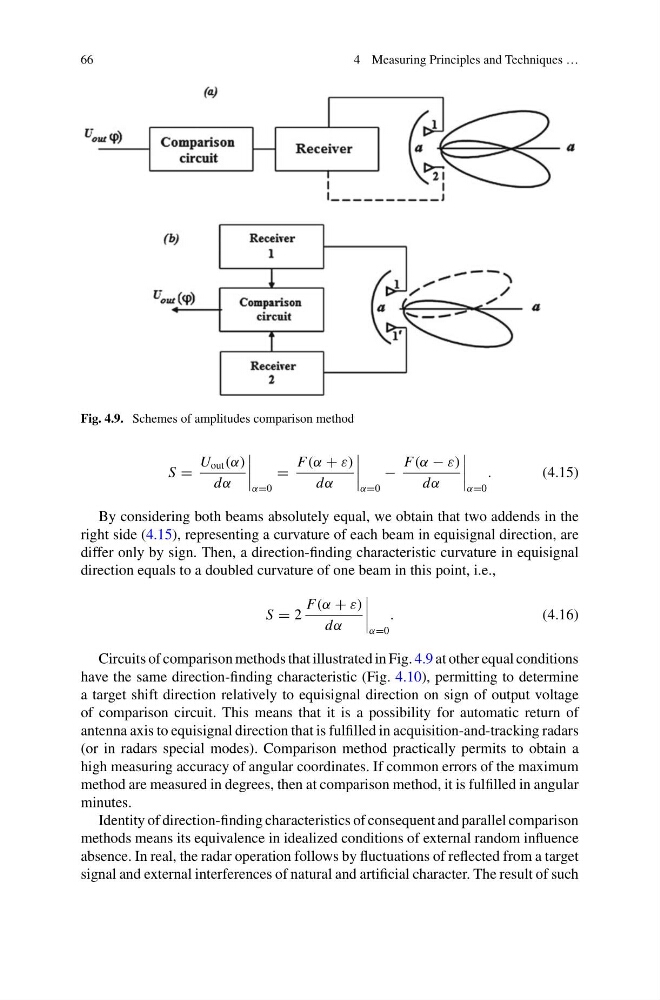
Fig. 4.9. Schemes of amplitudes comparison method
S =
U out (α)
dα
α=0
=
F(α + ε)
dα
α=0
−
F(α − ε)
dα
α=0
.
(4.15)
By considering both beams absolutely equal, we obtain that two addends in the
right side (4.15), representing a curvature of each beam in equisignal direction, are
differ only by sign. Then, a direction-finding characteristic curvature in equisignal
direction equals to a doubled curvature of one beam in this point, i.e.,
S = 2
F(α + ε)
dα
α=0
.
(4.16)
Circuits of comparison methods that illustrated in Fig. 4.9 at other equal conditions
have the same direction-finding characteristic (Fig. 4.10), permitting to determine
a target shift direction relatively to equisignal direction on sign of output voltage
of comparison circuit. This means that it is a possibility for automatic return of
antenna axis to equisignal direction that is fulfilled in acquisition-and-tracking radars
(or in radars special modes). Comparison method practically permits to obtain a
high measuring accuracy of angular coordinates. If common errors of the maximum
method are measured in degrees, then at comparison method, it is fulfilled in angular
minutes.
Identity of direction-finding characteristics of consequent and parallel comparison
methods means its equivalence in idealized conditions of external random influence
absence. In real, the radar operation follows by fluctuations of reflected from a target
signal and external interferences of natural and artificial character. The result of such
4 Measuring Principles and Techniques …
Fig. 4.9. Schemes of amplitudes comparison method
S =
U out (α)
dα
α=0
=
F(α + ε)
dα
α=0
−
F(α − ε)
dα
α=0
.
(4.15)
By considering both beams absolutely equal, we obtain that two addends in the
right side (4.15), representing a curvature of each beam in equisignal direction, are
differ only by sign. Then, a direction-finding characteristic curvature in equisignal
direction equals to a doubled curvature of one beam in this point, i.e.,
S = 2
F(α + ε)
dα
α=0
.
(4.16)
Circuits of comparison methods that illustrated in Fig. 4.9 at other equal conditions
have the same direction-finding characteristic (Fig. 4.10), permitting to determine
a target shift direction relatively to equisignal direction on sign of output voltage
of comparison circuit. This means that it is a possibility for automatic return of
antenna axis to equisignal direction that is fulfilled in acquisition-and-tracking radars
(or in radars special modes). Comparison method practically permits to obtain a
high measuring accuracy of angular coordinates. If common errors of the maximum
method are measured in degrees, then at comparison method, it is fulfilled in angular
minutes.
Identity of direction-finding characteristics of consequent and parallel comparison
methods means its equivalence in idealized conditions of external random influence
absence. In real, the radar operation follows by fluctuations of reflected from a target
signal and external interferences of natural and artificial character. The result of such