

300
15 Goniometric Radio Navigation Systems
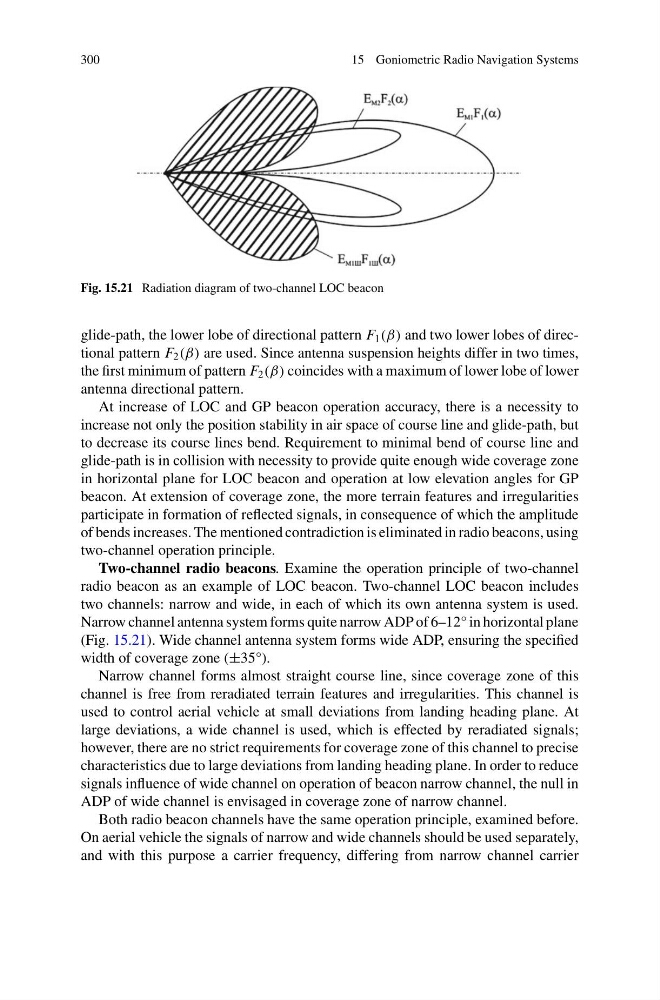
Fig. 15.21 Radiation diagram of two-channel LOC beacon
glide-path, the lower lobe of directional pattern F 1 (β) and two lower lobes of directional pattern F 2 (β) are used. Since antenna suspension heights differ in two times,
the first minimum of pattern F 2 (β) coincides with a maximum of lower lobe of lower
antenna directional pattern.
At increase of LOC and GP beacon operation accuracy, there is a necessity to
increase not only the position stability in air space of course line and glide-path, but
to decrease its course lines bend. Requirement to minimal bend of course line and
glide-path is in collision with necessity to provide quite enough wide coverage zone
in horizontal plane for LOC beacon and operation at low elevation angles for GP
beacon. At extension of coverage zone, the more terrain features and irregularities
participate in formation of reflected signals, in consequence of which the amplitude
of bends increases. The mentioned contradiction is eliminated in radio beacons, using
two-channel operation principle.
Two-channel radio beacons. Examine the operation principle of two-channel
radio beacon as an example of LOC beacon. Two-channel LOC beacon includes
two channels: narrow and wide, in each of which its own antenna system is used.
Narrow channel antenna system forms quite narrow ADP of 6–12° in horizontal plane
(Fig. 15.21). Wide channel antenna system forms wide ADP, ensuring the specified
width of coverage zone (±35°).
Narrow channel forms almost straight course line, since coverage zone of this
channel is free from reradiated terrain features and irregularities. This channel is
used to control aerial vehicle at small deviations from landing heading plane. At
large deviations, a wide channel is used, which is effected by reradiated signals;
however, there are no strict requirements for coverage zone of this channel to precise
characteristics due to large deviations from landing heading plane. In order to reduce
signals influence of wide channel on operation of beacon narrow channel, the null in
ADP of wide channel is envisaged in coverage zone of narrow channel.
Both radio beacon channels have the same operation principle, examined before.
On aerial vehicle the signals of narrow and wide channels should be used separately,
and with this purpose a carrier frequency, differing from narrow channel carrier
15 Goniometric Radio Navigation Systems
Fig. 15.21 Radiation diagram of two-channel LOC beacon
glide-path, the lower lobe of directional pattern F 1 (β) and two lower lobes of directional pattern F 2 (β) are used. Since antenna suspension heights differ in two times,
the first minimum of pattern F 2 (β) coincides with a maximum of lower lobe of lower
antenna directional pattern.
At increase of LOC and GP beacon operation accuracy, there is a necessity to
increase not only the position stability in air space of course line and glide-path, but
to decrease its course lines bend. Requirement to minimal bend of course line and
glide-path is in collision with necessity to provide quite enough wide coverage zone
in horizontal plane for LOC beacon and operation at low elevation angles for GP
beacon. At extension of coverage zone, the more terrain features and irregularities
participate in formation of reflected signals, in consequence of which the amplitude
of bends increases. The mentioned contradiction is eliminated in radio beacons, using
two-channel operation principle.
Two-channel radio beacons. Examine the operation principle of two-channel
radio beacon as an example of LOC beacon. Two-channel LOC beacon includes
two channels: narrow and wide, in each of which its own antenna system is used.
Narrow channel antenna system forms quite narrow ADP of 6–12° in horizontal plane
(Fig. 15.21). Wide channel antenna system forms wide ADP, ensuring the specified
width of coverage zone (±35°).
Narrow channel forms almost straight course line, since coverage zone of this
channel is free from reradiated terrain features and irregularities. This channel is
used to control aerial vehicle at small deviations from landing heading plane. At
large deviations, a wide channel is used, which is effected by reradiated signals;
however, there are no strict requirements for coverage zone of this channel to precise
characteristics due to large deviations from landing heading plane. In order to reduce
signals influence of wide channel on operation of beacon narrow channel, the null in
ADP of wide channel is envisaged in coverage zone of narrow channel.
Both radio beacon channels have the same operation principle, examined before.
On aerial vehicle the signals of narrow and wide channels should be used separately,
and with this purpose a carrier frequency, differing from narrow channel carrier