

14.3 Satellite Radio Navigation Systems
253
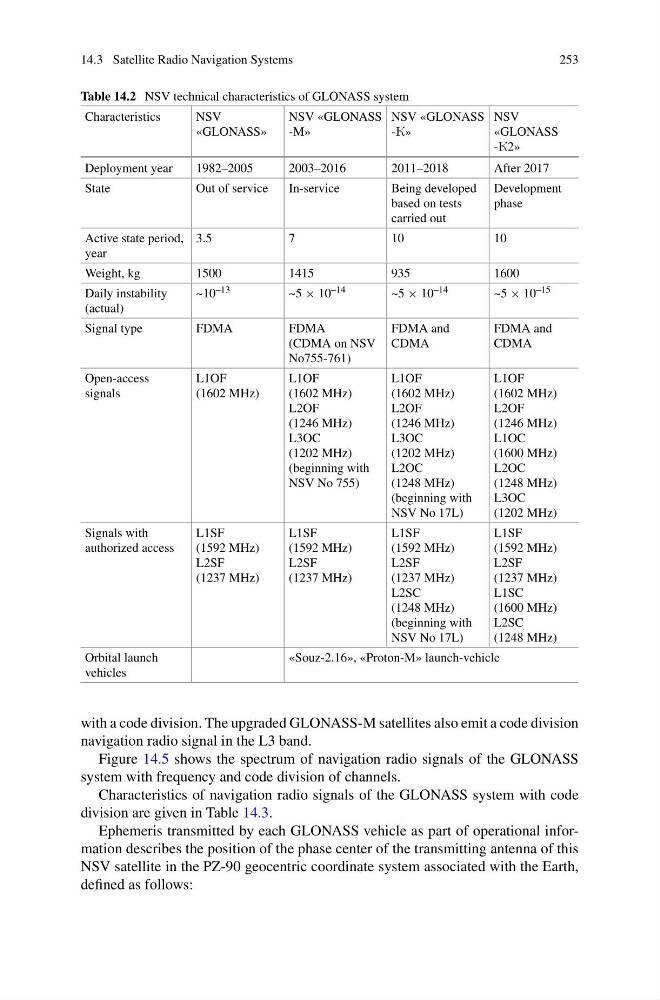
Table 14.2 NSV technical characteristics of GLONASS system
Characteristics
NSV
«GLONASS»
NSV «GLONASS
-M»
NSV «GLONASS
-K»
NSV
«GLONASS
-K2»
Deployment year
1982–2005
2003–2016
2011–2018
After 2017
State
Out of service
In-service
Being developed
based on tests
carried out
Development
phase
Active state period,
year
3.5
7
10
10
Weight, kg
1500
1415
935
1600
Daily instability
(actual)
~10 –13
~5 × 10 –14
~5 × 10 –14
~5 × 10 –15
Signal type
FDMA
FDMA
(CDMA on NSV
No755-761)
FDMA and
CDMA
FDMA and
CDMA
Open-access
signals
L1OF
(1602 MHz)
L1OF
(1602 MHz)
L2OF
(1246 MHz)
L3OC
(1202 MHz)
(beginning with
NSV No 755)
L1OF
(1602 MHz)
L2OF
(1246 MHz)
L3OC
(1202 MHz)
L2OC
(1248 MHz)
(beginning with
NSV No 17L)
L1OF
(1602 MHz)
L2OF
(1246 MHz)
L1OC
(1600 MHz)
L2OC
(1248 MHz)
L3OC
(1202 MHz)
Signals with
authorized access
L1SF
(1592 MHz)
L2SF
(1237 MHz)
L1SF
(1592 MHz)
L2SF
(1237 MHz)
L1SF
(1592 MHz)
L2SF
(1237 MHz)
L2SC
(1248 MHz)
(beginning with
NSV No 17L)
L1SF
(1592 MHz)
L2SF
(1237 MHz)
L1SC
(1600 MHz)
L2SC
(1248 MHz)
Orbital launch
vehicles
«Souz-2.16», «Proton-M» launch-vehicle
with a code division. The upgraded GLONASS-M satellites also emit a code division
navigation radio signal in the L3 band.
Figure 14.5 shows the spectrum of navigation radio signals of the GLONASS
system with frequency and code division of channels.
Characteristics of navigation radio signals of the GLONASS system with code
division are given in Table 14.3.
Ephemeris transmitted by each GLONASS vehicle as part of operational information describes the position of the phase center of the transmitting antenna of this
NSV satellite in the PZ-90 geocentric coordinate system associated with the Earth,
defined as follows:
253
Table 14.2 NSV technical characteristics of GLONASS system
Characteristics
NSV
«GLONASS»
NSV «GLONASS
-M»
NSV «GLONASS
-K»
NSV
«GLONASS
-K2»
Deployment year
1982–2005
2003–2016
2011–2018
After 2017
State
Out of service
In-service
Being developed
based on tests
carried out
Development
phase
Active state period,
year
3.5
7
10
10
Weight, kg
1500
1415
935
1600
Daily instability
(actual)
~10 –13
~5 × 10 –14
~5 × 10 –14
~5 × 10 –15
Signal type
FDMA
FDMA
(CDMA on NSV
No755-761)
FDMA and
CDMA
FDMA and
CDMA
Open-access
signals
L1OF
(1602 MHz)
L1OF
(1602 MHz)
L2OF
(1246 MHz)
L3OC
(1202 MHz)
(beginning with
NSV No 755)
L1OF
(1602 MHz)
L2OF
(1246 MHz)
L3OC
(1202 MHz)
L2OC
(1248 MHz)
(beginning with
NSV No 17L)
L1OF
(1602 MHz)
L2OF
(1246 MHz)
L1OC
(1600 MHz)
L2OC
(1248 MHz)
L3OC
(1202 MHz)
Signals with
authorized access
L1SF
(1592 MHz)
L2SF
(1237 MHz)
L1SF
(1592 MHz)
L2SF
(1237 MHz)
L1SF
(1592 MHz)
L2SF
(1237 MHz)
L2SC
(1248 MHz)
(beginning with
NSV No 17L)
L1SF
(1592 MHz)
L2SF
(1237 MHz)
L1SC
(1600 MHz)
L2SC
(1248 MHz)
Orbital launch
vehicles
«Souz-2.16», «Proton-M» launch-vehicle
with a code division. The upgraded GLONASS-M satellites also emit a code division
navigation radio signal in the L3 band.
Figure 14.5 shows the spectrum of navigation radio signals of the GLONASS
system with frequency and code division of channels.
Characteristics of navigation radio signals of the GLONASS system with code
division are given in Table 14.3.
Ephemeris transmitted by each GLONASS vehicle as part of operational information describes the position of the phase center of the transmitting antenna of this
NSV satellite in the PZ-90 geocentric coordinate system associated with the Earth,
defined as follows: