

Elements of Modern Physics
218
0
1
2
3
4
5
e(eV)
(b)
s /h i i
2
1
1 – T = 0 K
2 – T = 2000 K
0
1
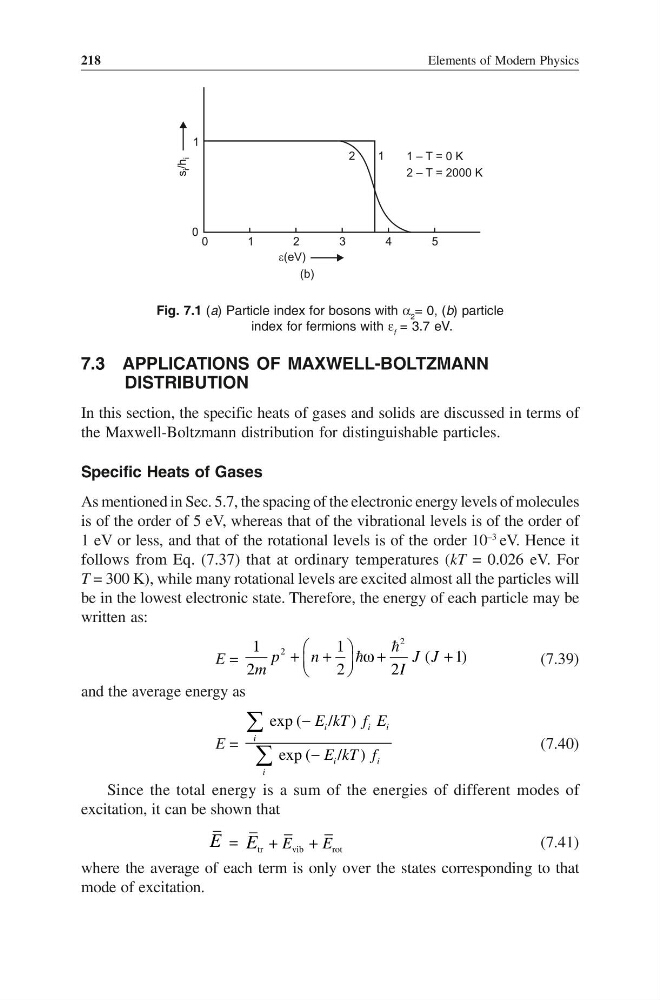
Fig. 7.1 (a) Particle index for bosons with α 2 = 0, (b) particle
index for fermions with ε f = 3.7 eV.
7.3 APPLICATIONS OF MAXWELL-BOLTZMANN
DISTRIBUTION
In this section, the specific heats of gases and solids are discussed in terms of
the Maxwell-Boltzmann distribution for distinguishable particles.
Specific Heats of Gases
As mentioned in Sec. 5.7, the spacing of the electronic energy levels of molecules
is of the order of 5 eV, whereas that of the vibrational levels is of the order of
1 eV or less, and that of the rotational levels is of the order 10
–3
eV. Hence it
follows from Eq. (7.37) that at ordinary temperatures (kT = 0.026 eV. For
T = 300 K), while many rotational levels are excited almost all the particles will
be in the lowest electronic state. Therefore, the energy of each particle may be
written as:
E =
2
2
1
1
(
1)
2
2
2
p
n
J J
m
I
+ +
ω+
+
(7.39)
and the average energy as
E =
exp (
/ )
exp (
/ )
i
i
i
i
i
i
i
E kT f E
E kT f
−
−
∑
∑
(7.40)
Since the total energy is a sum of the energies of different modes of
excitation, it can be shown that
E = tr
vib
rot
E
E
E +
+
(7.41)
where the average of each term is only over the states corresponding to that
mode of excitation.
218
0
1
2
3
4
5
e(eV)
(b)
s /h i i
2
1
1 – T = 0 K
2 – T = 2000 K
0
1
Fig. 7.1 (a) Particle index for bosons with α 2 = 0, (b) particle
index for fermions with ε f = 3.7 eV.
7.3 APPLICATIONS OF MAXWELL-BOLTZMANN
DISTRIBUTION
In this section, the specific heats of gases and solids are discussed in terms of
the Maxwell-Boltzmann distribution for distinguishable particles.
Specific Heats of Gases
As mentioned in Sec. 5.7, the spacing of the electronic energy levels of molecules
is of the order of 5 eV, whereas that of the vibrational levels is of the order of
1 eV or less, and that of the rotational levels is of the order 10
–3
eV. Hence it
follows from Eq. (7.37) that at ordinary temperatures (kT = 0.026 eV. For
T = 300 K), while many rotational levels are excited almost all the particles will
be in the lowest electronic state. Therefore, the energy of each particle may be
written as:
E =
2
2
1
1
(
1)
2
2
2
p
n
J J
m
I
+ +
ω+
+
(7.39)
and the average energy as
E =
exp (
/ )
exp (
/ )
i
i
i
i
i
i
i
E kT f E
E kT f
−
−
∑
∑
(7.40)
Since the total energy is a sum of the energies of different modes of
excitation, it can be shown that
E = tr
vib
rot
E
E
E +
+
(7.41)
where the average of each term is only over the states corresponding to that
mode of excitation.