

352
P. Huang et al.
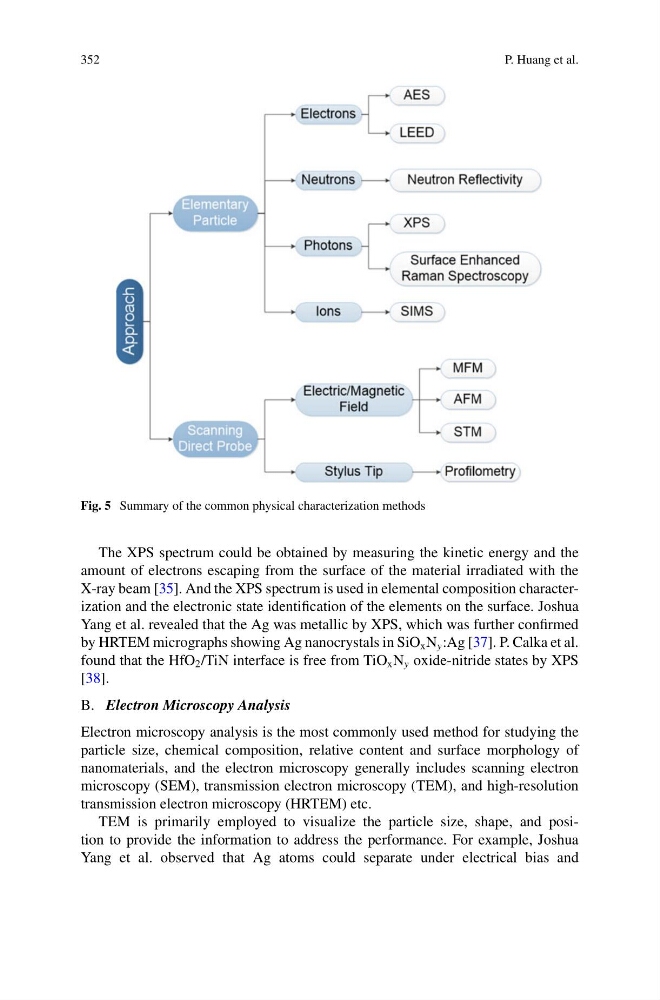
Fig. 5 Summary of the common physical characterization methods
The XPS spectrum could be obtained by measuring the kinetic energy and the
amount of electrons escaping from the surface of the material irradiated with the
X-ray beam [35]. And the XPS spectrum is used in elemental composition characterization and the electronic state identification of the elements on the surface. Joshua
Yang et al. revealed that the Ag was metallic by XPS, which was further confirmed
by HRTEM micrographs showing Ag nanocrystals in SiO x N y :Ag [37]. P. Calka et al.
found that the HfO 2 /TiN interface is free from TiO x N y oxide-nitride states by XPS
[38].
B. Electron Microscopy Analysis
Electron microscopy analysis is the most commonly used method for studying the
particle size, chemical composition, relative content and surface morphology of
nanomaterials, and the electron microscopy generally includes scanning electron
microscopy (SEM), transmission electron microscopy (TEM), and high-resolution
transmission electron microscopy (HRTEM) etc.
TEM is primarily employed to visualize the particle size, shape, and position to provide the information to address the performance. For example, Joshua
Yang et al. observed that Ag atoms could separate under electrical bias and
P. Huang et al.
Fig. 5 Summary of the common physical characterization methods
The XPS spectrum could be obtained by measuring the kinetic energy and the
amount of electrons escaping from the surface of the material irradiated with the
X-ray beam [35]. And the XPS spectrum is used in elemental composition characterization and the electronic state identification of the elements on the surface. Joshua
Yang et al. revealed that the Ag was metallic by XPS, which was further confirmed
by HRTEM micrographs showing Ag nanocrystals in SiO x N y :Ag [37]. P. Calka et al.
found that the HfO 2 /TiN interface is free from TiO x N y oxide-nitride states by XPS
[38].
B. Electron Microscopy Analysis
Electron microscopy analysis is the most commonly used method for studying the
particle size, chemical composition, relative content and surface morphology of
nanomaterials, and the electron microscopy generally includes scanning electron
microscopy (SEM), transmission electron microscopy (TEM), and high-resolution
transmission electron microscopy (HRTEM) etc.
TEM is primarily employed to visualize the particle size, shape, and position to provide the information to address the performance. For example, Joshua
Yang et al. observed that Ag atoms could separate under electrical bias and