

236
S. Goolaup et al.
When the magnetization of the transverse nanowire is aligned along the +y direction, the injected VDW attains an ACW chirality. Conversely, a CW chirality VDW
is injected if the magnetization is aligned along the −y direction. MFM imaging was
carried out on an array of structures to determine the trajectory of field-driven VDW
into the branch. Figure 9b, c shows MFM images of the initial and final magnetization states of the structures. In the initial state, the magnetization orientation of the
transverse nanowire and the branch structure were set along the −y and −x directions, respectively. As the external magnetic field is gradually increased along the +
x direction, a HH VDW with a CW chirality is injected and driven in the longitudinal nanowire. According to the chirality dependent motion, the VDW is expected
to move along the upper branch and switch its magnetization which is reflected by
the change in magnetic contrast from bright to dark. However, MFM image of the
final state of the structures shows that the VDW trajectory into the output branch was
random. In some of the structures the DW propagated along the lower branch (shown
by ‘X’ marks). This observation points to the possibility that the VDW chirality is
not always preserved during VDW motion along the nanowire. We performed 30
MFM scans to estimate the number of successful and failed trials. We observed that
in 70% of the trials the DW followed a deterministic trajectory governed by its initial
chirality.
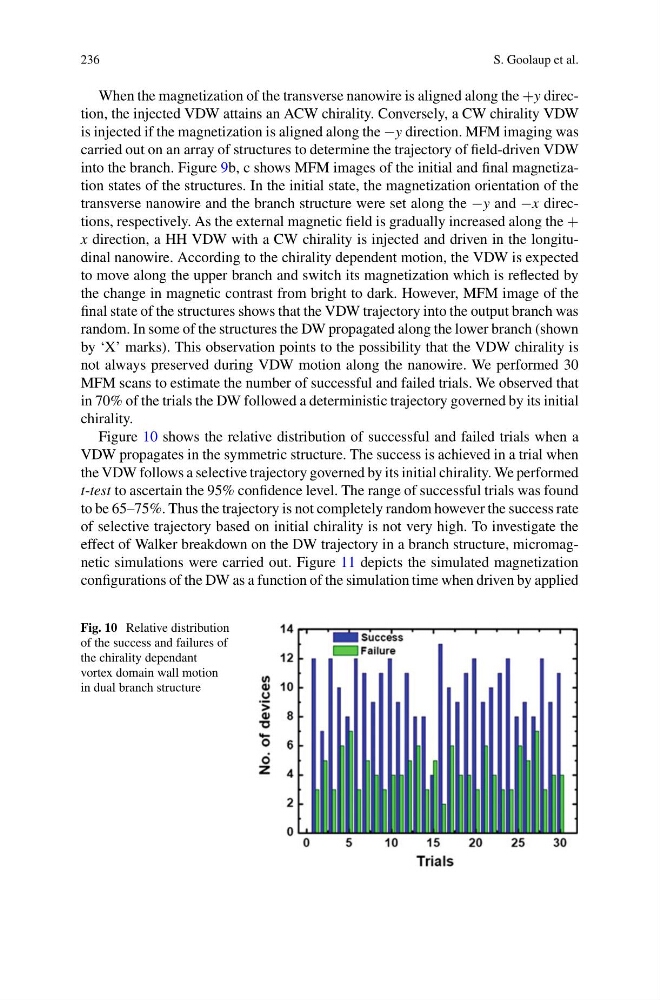
Figure 10 shows the relative distribution of successful and failed trials when a
VDW propagates in the symmetric structure. The success is achieved in a trial when
the VDW follows a selective trajectory governed by its initial chirality. We performed
t-test to ascertain the 95% confidence level. The range of successful trials was found
to be 65–75%. Thus the trajectory is not completely random however the success rate
of selective trajectory based on initial chirality is not very high. To investigate the
effect of Walker breakdown on the DW trajectory in a branch structure, micromagnetic simulations were carried out. Figure 11 depicts the simulated magnetization
configurations of the DW as a function of the simulation time when driven by applied
Fig. 10 Relative distribution
of the success and failures of
the chirality dependant
vortex domain wall motion
in dual branch structure
S. Goolaup et al.
When the magnetization of the transverse nanowire is aligned along the +y direction, the injected VDW attains an ACW chirality. Conversely, a CW chirality VDW
is injected if the magnetization is aligned along the −y direction. MFM imaging was
carried out on an array of structures to determine the trajectory of field-driven VDW
into the branch. Figure 9b, c shows MFM images of the initial and final magnetization states of the structures. In the initial state, the magnetization orientation of the
transverse nanowire and the branch structure were set along the −y and −x directions, respectively. As the external magnetic field is gradually increased along the +
x direction, a HH VDW with a CW chirality is injected and driven in the longitudinal nanowire. According to the chirality dependent motion, the VDW is expected
to move along the upper branch and switch its magnetization which is reflected by
the change in magnetic contrast from bright to dark. However, MFM image of the
final state of the structures shows that the VDW trajectory into the output branch was
random. In some of the structures the DW propagated along the lower branch (shown
by ‘X’ marks). This observation points to the possibility that the VDW chirality is
not always preserved during VDW motion along the nanowire. We performed 30
MFM scans to estimate the number of successful and failed trials. We observed that
in 70% of the trials the DW followed a deterministic trajectory governed by its initial
chirality.
Figure 10 shows the relative distribution of successful and failed trials when a
VDW propagates in the symmetric structure. The success is achieved in a trial when
the VDW follows a selective trajectory governed by its initial chirality. We performed
t-test to ascertain the 95% confidence level. The range of successful trials was found
to be 65–75%. Thus the trajectory is not completely random however the success rate
of selective trajectory based on initial chirality is not very high. To investigate the
effect of Walker breakdown on the DW trajectory in a branch structure, micromagnetic simulations were carried out. Figure 11 depicts the simulated magnetization
configurations of the DW as a function of the simulation time when driven by applied
Fig. 10 Relative distribution
of the success and failures of
the chirality dependant
vortex domain wall motion
in dual branch structure