

122
S. Krishnia and W. S. Lew
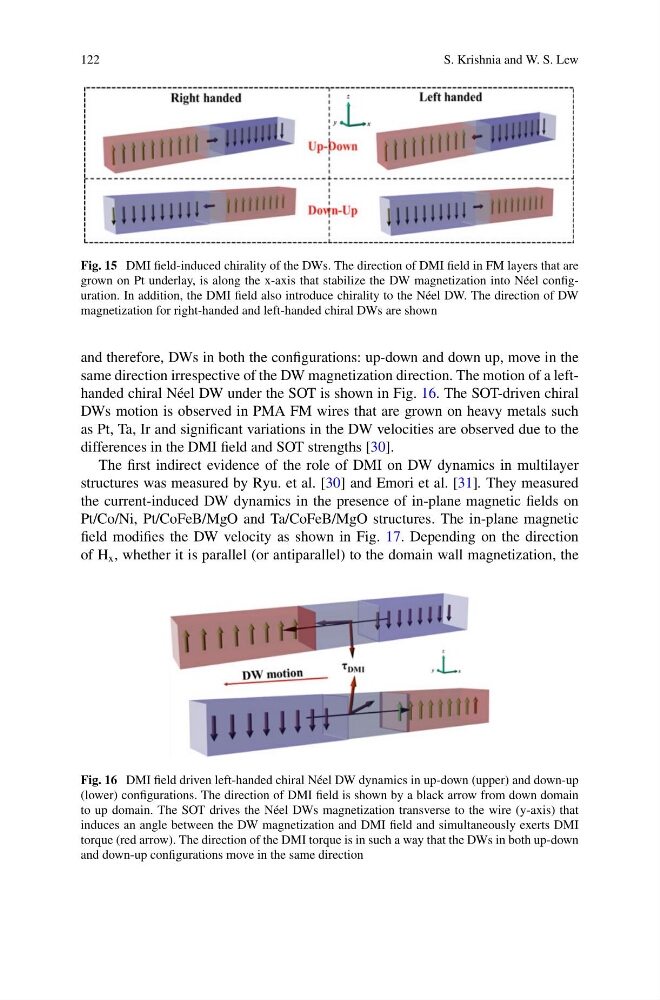
Fig. 15 DMI field-induced chirality of the DWs. The direction of DMI field in FM layers that are
grown on Pt underlay, is along the x-axis that stabilize the DW magnetization into Néel configuration. In addition, the DMI field also introduce chirality to the Néel DW. The direction of DW
magnetization for right-handed and left-handed chiral DWs are shown
and therefore, DWs in both the configurations: up-down and down up, move in the
same direction irrespective of the DW magnetization direction. The motion of a lefthanded chiral Néel DW under the SOT is shown in Fig. 16. The SOT-driven chiral
DWs motion is observed in PMA FM wires that are grown on heavy metals such
as Pt, Ta, Ir and significant variations in the DW velocities are observed due to the
differences in the DMI field and SOT strengths [30].
The first indirect evidence of the role of DMI on DW dynamics in multilayer
structures was measured by Ryu. et al. [30] and Emori et al. [31]. They measured
the current-induced DW dynamics in the presence of in-plane magnetic fields on
Pt/Co/Ni, Pt/CoFeB/MgO and Ta/CoFeB/MgO structures. The in-plane magnetic
field modifies the DW velocity as shown in Fig. 17. Depending on the direction
of H x , whether it is parallel (or antiparallel) to the domain wall magnetization, the
Fig. 16 DMI field driven left-handed chiral Néel DW dynamics in up-down (upper) and down-up
(lower) configurations. The direction of DMI field is shown by a black arrow from down domain
to up domain. The SOT drives the Néel DWs magnetization transverse to the wire (y-axis) that
induces an angle between the DW magnetization and DMI field and simultaneously exerts DMI
torque (red arrow). The direction of the DMI torque is in such a way that the DWs in both up-down
and down-up configurations move in the same direction
S. Krishnia and W. S. Lew
Fig. 15 DMI field-induced chirality of the DWs. The direction of DMI field in FM layers that are
grown on Pt underlay, is along the x-axis that stabilize the DW magnetization into Néel configuration. In addition, the DMI field also introduce chirality to the Néel DW. The direction of DW
magnetization for right-handed and left-handed chiral DWs are shown
and therefore, DWs in both the configurations: up-down and down up, move in the
same direction irrespective of the DW magnetization direction. The motion of a lefthanded chiral Néel DW under the SOT is shown in Fig. 16. The SOT-driven chiral
DWs motion is observed in PMA FM wires that are grown on heavy metals such
as Pt, Ta, Ir and significant variations in the DW velocities are observed due to the
differences in the DMI field and SOT strengths [30].
The first indirect evidence of the role of DMI on DW dynamics in multilayer
structures was measured by Ryu. et al. [30] and Emori et al. [31]. They measured
the current-induced DW dynamics in the presence of in-plane magnetic fields on
Pt/Co/Ni, Pt/CoFeB/MgO and Ta/CoFeB/MgO structures. The in-plane magnetic
field modifies the DW velocity as shown in Fig. 17. Depending on the direction
of H x , whether it is parallel (or antiparallel) to the domain wall magnetization, the
Fig. 16 DMI field driven left-handed chiral Néel DW dynamics in up-down (upper) and down-up
(lower) configurations. The direction of DMI field is shown by a black arrow from down domain
to up domain. The SOT drives the Néel DWs magnetization transverse to the wire (y-axis) that
induces an angle between the DW magnetization and DMI field and simultaneously exerts DMI
torque (red arrow). The direction of the DMI torque is in such a way that the DWs in both up-down
and down-up configurations move in the same direction