

257
15.3.1.2 Water Footprint
Table 15.5 summarize WF per unit amount of fuel. Gerbens–Leenes et al. (2009a)
report that WF of biodiesel is generally greater than that of bioethanol while using
global averages. The global average WF of biodiesel crops ranges from 394 to
574 m
3
/GJ biodiesel. Jatropha is famous for being tolerant to wasteland, but its
requirement for water is greater than many other energy crops, which implies that
water availability may be one of the constraints for Jatropha biodiesel supply.
The global average WF of bioethanol crops ranges from 59 to 419 m
3
/GJ. WFs
of sugar beet, potato, and sugarcane are 59, 103, and 108 m
3
/GJ, respectively,
whereas sorghum (419 m
3
/GJ) has the largest WF of all ethanol crops (Table 15.6).
These results suggest that switching to biomass energy may result in an increased
demand for fresh water, which eventually will intensify the competition between
water usage for food production and energy (Bazilian et al. 2011).
15.3.1.3 Ecological Footprint per Unit Amount of Biofuel
EFs per unit of biofuel are compared according to cases in Fig.15.4. Producing
bioethanol from sorghum and maize results in a larger EF than production from
other biomass sources. Using construction waste wood is the best option for minimizing EF (Fig. 15.4a). Biodiesel from Jatropha and soybean yields an EF two to
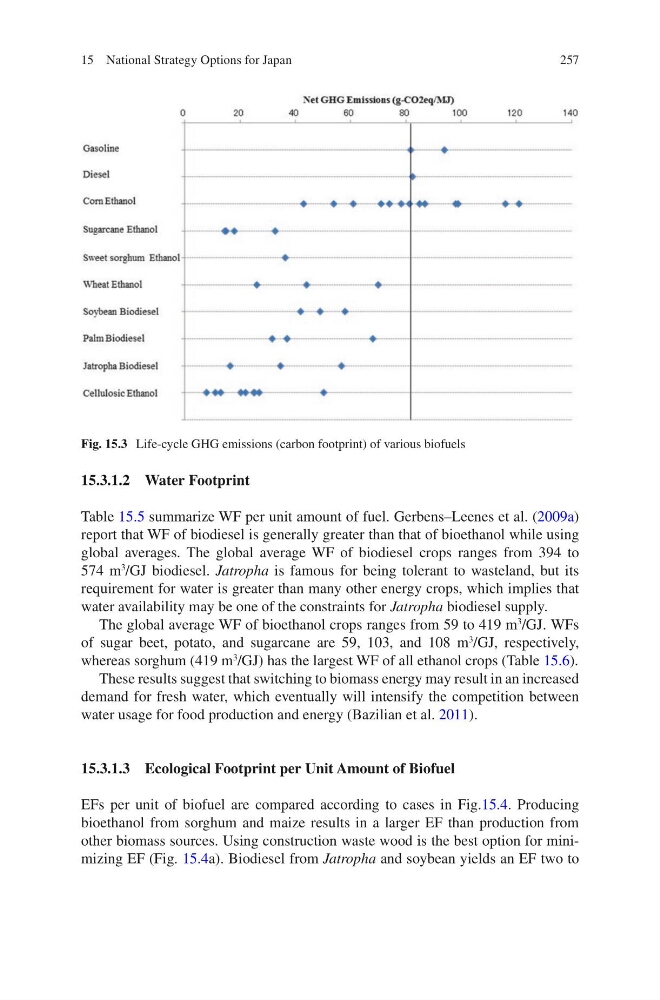
Fig. 15.3 Life-cycle GHG emissions (carbon footprint) of various biofuels
15 National Strategy Options for Japan
15.3.1.2 Water Footprint
Table 15.5 summarize WF per unit amount of fuel. Gerbens–Leenes et al. (2009a)
report that WF of biodiesel is generally greater than that of bioethanol while using
global averages. The global average WF of biodiesel crops ranges from 394 to
574 m
3
/GJ biodiesel. Jatropha is famous for being tolerant to wasteland, but its
requirement for water is greater than many other energy crops, which implies that
water availability may be one of the constraints for Jatropha biodiesel supply.
The global average WF of bioethanol crops ranges from 59 to 419 m
3
/GJ. WFs
of sugar beet, potato, and sugarcane are 59, 103, and 108 m
3
/GJ, respectively,
whereas sorghum (419 m
3
/GJ) has the largest WF of all ethanol crops (Table 15.6).
These results suggest that switching to biomass energy may result in an increased
demand for fresh water, which eventually will intensify the competition between
water usage for food production and energy (Bazilian et al. 2011).
15.3.1.3 Ecological Footprint per Unit Amount of Biofuel
EFs per unit of biofuel are compared according to cases in Fig.15.4. Producing
bioethanol from sorghum and maize results in a larger EF than production from
other biomass sources. Using construction waste wood is the best option for minimizing EF (Fig. 15.4a). Biodiesel from Jatropha and soybean yields an EF two to
Fig. 15.3 Life-cycle GHG emissions (carbon footprint) of various biofuels
15 National Strategy Options for Japan