

139
(Mekhilef et al. 2011). Oil palm agriculture can be highly productive, but at the
same time it depends on the agricultural practices adopted (Sheil et al. 2009;
Woittiez et al. 2017). Several studies have confirmed the large biodiesel potential
from oil palm in Indonesia and Malaysia (e.g., Mukherjee and Sovacool 2014), but
there is a need for more rational allocation of land resources to meet multiple objectives related to food, bioenergy, and biodiversity conservation (Harahap et al. 2017).
10.2.2.2 Food Crops and Woodland/Grassland Products (Provisioning
Services)
As mentioned in Sect. 10.1, palm oil is the most widely produced vegetable oil
globally, being a major component of the food industry. Biofuel feedstock production can sometimes entail the direct diversion of crops from food-related uses,
potentially contributing to, among others, reduced local food availability and
increases in food prices (Gasparatos et al. 2011; Schoneveld 2010) (Sect. 10.2.4.3).
Mekhilef et al. (2011) report that close to 40% of Malaysian palm oil had been allocated for fuel production, putting pressure on remaining amount for vegetable oil
demand.
The direct and indirect LUCC effects of oil palm expansion may affect local food
production (particularly rice cultivation) either due to the direct loss of arable land
or reduced water availability for agriculture (e.g., Oosterveer et al. 2014).
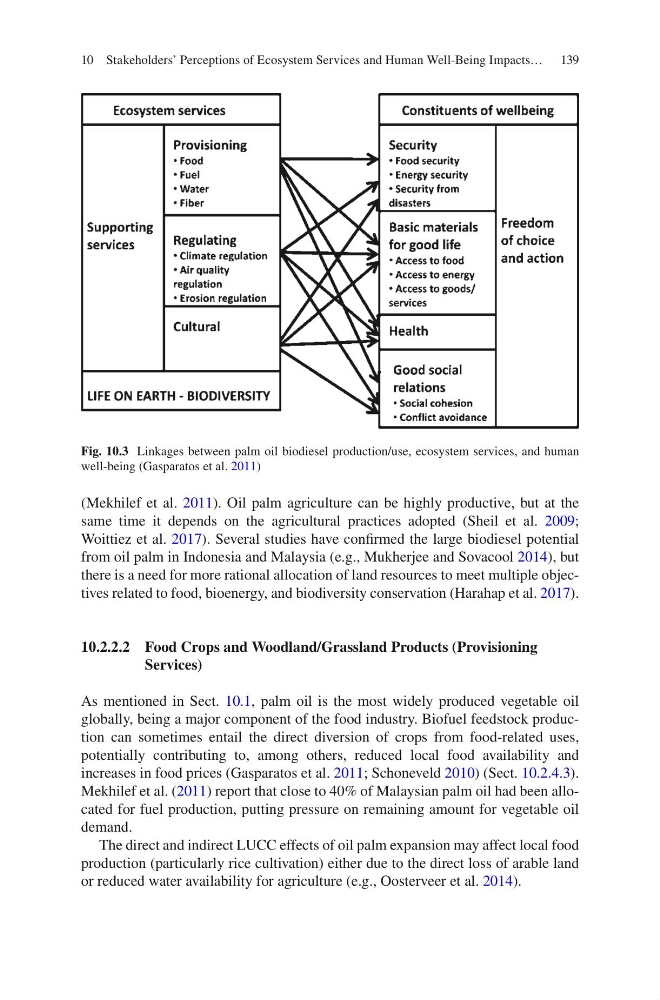
Fig. 10.3 Linkages between palm oil biodiesel production/use, ecosystem services, and human
well-being (Gasparatos et al. 2011)
10 Stakeholders’ Perceptions of Ecosystem Services and Human Well-Being Impacts…
(Mekhilef et al. 2011). Oil palm agriculture can be highly productive, but at the
same time it depends on the agricultural practices adopted (Sheil et al. 2009;
Woittiez et al. 2017). Several studies have confirmed the large biodiesel potential
from oil palm in Indonesia and Malaysia (e.g., Mukherjee and Sovacool 2014), but
there is a need for more rational allocation of land resources to meet multiple objectives related to food, bioenergy, and biodiversity conservation (Harahap et al. 2017).
10.2.2.2 Food Crops and Woodland/Grassland Products (Provisioning
Services)
As mentioned in Sect. 10.1, palm oil is the most widely produced vegetable oil
globally, being a major component of the food industry. Biofuel feedstock production can sometimes entail the direct diversion of crops from food-related uses,
potentially contributing to, among others, reduced local food availability and
increases in food prices (Gasparatos et al. 2011; Schoneveld 2010) (Sect. 10.2.4.3).
Mekhilef et al. (2011) report that close to 40% of Malaysian palm oil had been allocated for fuel production, putting pressure on remaining amount for vegetable oil
demand.
The direct and indirect LUCC effects of oil palm expansion may affect local food
production (particularly rice cultivation) either due to the direct loss of arable land
or reduced water availability for agriculture (e.g., Oosterveer et al. 2014).
Fig. 10.3 Linkages between palm oil biodiesel production/use, ecosystem services, and human
well-being (Gasparatos et al. 2011)
10 Stakeholders’ Perceptions of Ecosystem Services and Human Well-Being Impacts…