

26
radiation are considered. An exponential wind profile is prescribed. SLUCM treats
surface skin temperatures at the roof, wall, and road and temperature profiles within
roof, wall and road layers as prognostic variables. The heat fluxes from each surfaces are calculated using the Monin-Obuchov similarity theory and finally the
canyon drag coefficient and friction velocity is computed using a similarity stability
function for momentum. Figure 1.15 presents the conceptual design of SLUCM
with the fluxes between street canyon air and the surrounding surfaces (road and
walls) and the fluxes from/to the building roofs.
For high resolution downscaling with dynamic resolution of 10 km for the
Central Europe we use SUBBATS scheme at 1 km resolution as already mentioned
above. However, as the parameterization used till now in RegCM4 did not recognised the urban effects, an improvement can be achieved by implementing more
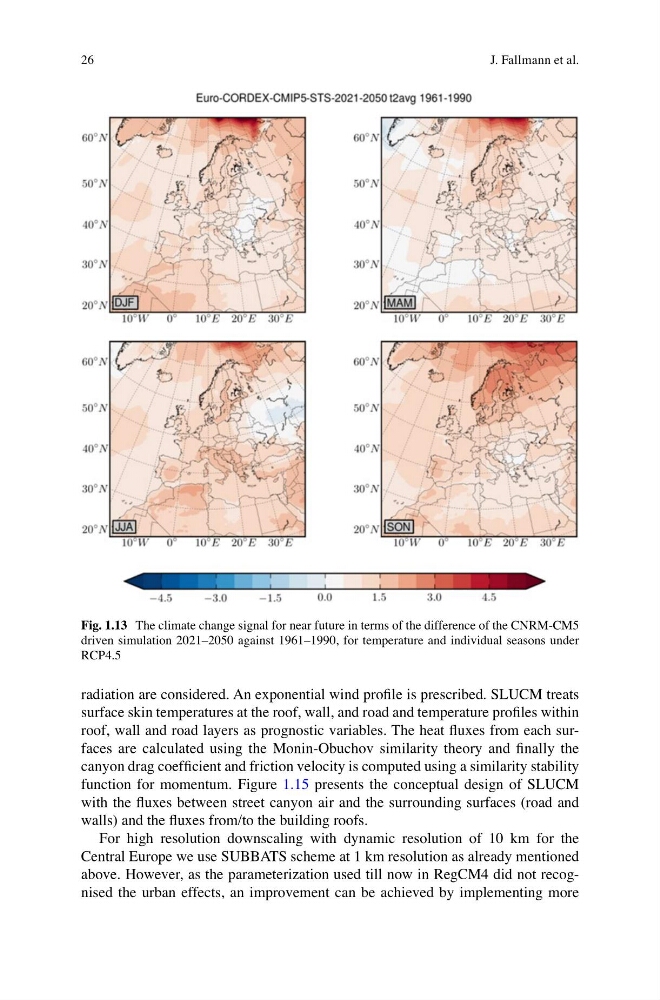
Fig. 1.13 The climate change signal for near future in terms of the difference of the CNRM-CM5
driven simulation 2021–2050 against 1961–1990, for temperature and individual seasons under
RCP4.5
J. Fallmann et al.
radiation are considered. An exponential wind profile is prescribed. SLUCM treats
surface skin temperatures at the roof, wall, and road and temperature profiles within
roof, wall and road layers as prognostic variables. The heat fluxes from each surfaces are calculated using the Monin-Obuchov similarity theory and finally the
canyon drag coefficient and friction velocity is computed using a similarity stability
function for momentum. Figure 1.15 presents the conceptual design of SLUCM
with the fluxes between street canyon air and the surrounding surfaces (road and
walls) and the fluxes from/to the building roofs.
For high resolution downscaling with dynamic resolution of 10 km for the
Central Europe we use SUBBATS scheme at 1 km resolution as already mentioned
above. However, as the parameterization used till now in RegCM4 did not recognised the urban effects, an improvement can be achieved by implementing more
Fig. 1.13 The climate change signal for near future in terms of the difference of the CNRM-CM5
driven simulation 2021–2050 against 1961–1990, for temperature and individual seasons under
RCP4.5
J. Fallmann et al.