

330
As urban island is affected by several factors such as green areas in the city,
location and design of the land use, types of building and roofi ng materials, layout
of buildings, and their energy effi ciency, including spatial development of the city,
we examined some of the characteristics of the city of Ljubljana. We carried out
some pilot actions to draw attention to the importance of taking into account the
effects of the urban heat island in the planning of land use and activities in the city.
In 2010 the Municipal spatial plan (Internet 2 ) was adopted defi ning the planned
land use with special focus on urban land uses and future development of green
areas (Fig. 12.8 ).
In order to minimize the effects of the urban heat island the basic strategic objective of the Ljubljana city is to create an interconnected and transparent network of
open public spaces of high quality. During several last decades an action called
»Ljubljana – My Town« has been under way. It stimulates the facades’ renovation
all over the important public areas or representative areas.
One of the most important measures is preserving the city green areas and protecting the city forests as a part of green wedges. A specifi c feature of the city is its
green ring, a way along barbed wire, which encircled the city during the WW2
being a popular recreational area. The focus area is the axis along the river of
Ljubljanica and green areas along the Sava river, the Gruber’s canal, the Špica bank,
and the Gradaščica and Glinščica brooks.
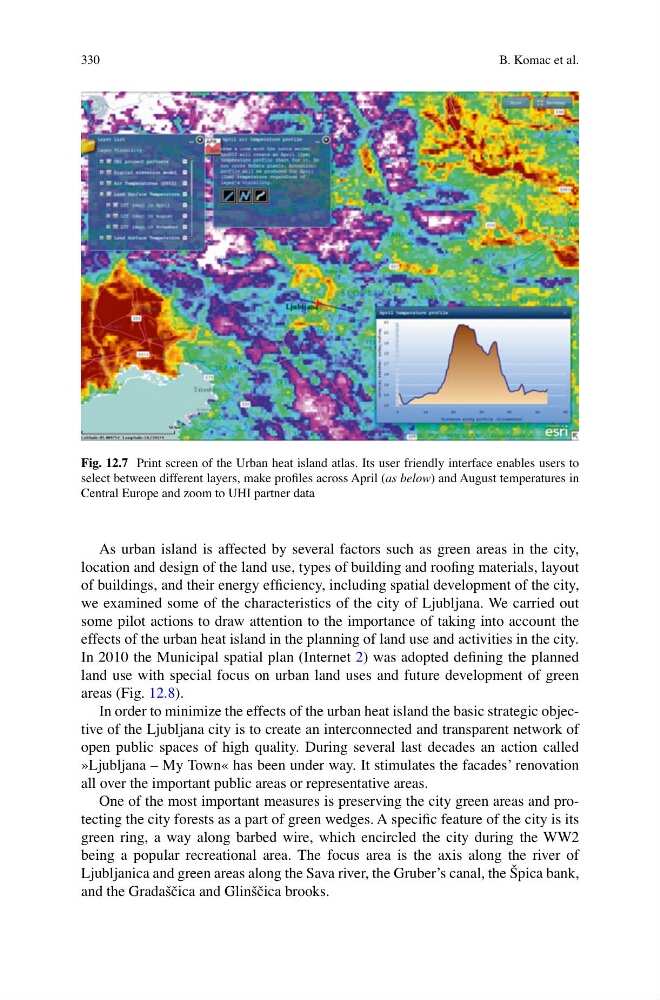
Fig. 12.7 Print screen of the Urban heat island atlas. Its user friendly interface enables users to
select between different layers, make profi les across April ( as below ) and August temperatures in
Central Europe and zoom to UHI partner data
B. Komac et al.
As urban island is affected by several factors such as green areas in the city,
location and design of the land use, types of building and roofi ng materials, layout
of buildings, and their energy effi ciency, including spatial development of the city,
we examined some of the characteristics of the city of Ljubljana. We carried out
some pilot actions to draw attention to the importance of taking into account the
effects of the urban heat island in the planning of land use and activities in the city.
In 2010 the Municipal spatial plan (Internet 2 ) was adopted defi ning the planned
land use with special focus on urban land uses and future development of green
areas (Fig. 12.8 ).
In order to minimize the effects of the urban heat island the basic strategic objective of the Ljubljana city is to create an interconnected and transparent network of
open public spaces of high quality. During several last decades an action called
»Ljubljana – My Town« has been under way. It stimulates the facades’ renovation
all over the important public areas or representative areas.
One of the most important measures is preserving the city green areas and protecting the city forests as a part of green wedges. A specifi c feature of the city is its
green ring, a way along barbed wire, which encircled the city during the WW2
being a popular recreational area. The focus area is the axis along the river of
Ljubljanica and green areas along the Sava river, the Gruber’s canal, the Špica bank,
and the Gradaščica and Glinščica brooks.
Fig. 12.7 Print screen of the Urban heat island atlas. Its user friendly interface enables users to
select between different layers, make profi les across April ( as below ) and August temperatures in
Central Europe and zoom to UHI partner data
B. Komac et al.